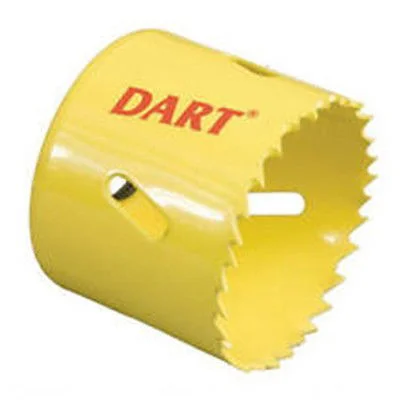
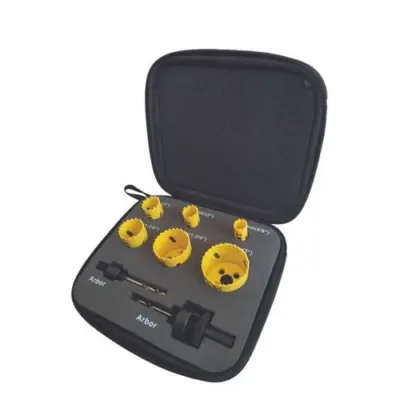
Premium M42 grade 8% cobalt HSS holesaws from Dart. Constant pitch tooth pattern reduces chatter on thin sheet metal and cuts cleanly through stainless steel. Available in a wide range of sizes from 14mm up to 210mm.
Can’t find it? We’ll source it.
No worries! We can usually get this in for next-day delivery or source an alternative. Drop your email and we’ll get straight back to you with options.
Nice one — request received. Check your email to confirm, and we’ll get pricing and availability over to you.
Size
Price
QTY
121mm
£24.60£29.52
127mm
£27.99£33.59
111mm
£19.72£23.66
14mm
£3.83£4.60
16mm
£3.83£4.60
19mm
£3.95£4.74
20mm
£4.07£4.88
25mm
£4.91£5.89
29mm
£5.99£7.19
32mm
£5.99£7.19
35mm
£6.59£7.91
38mm
£6.83£8.20
41mm
£7.43£8.92
44mm
£7.55£9.06
51mm
£8.15£9.78
64mm
£9.59£11.51
65mm
£9.59£11.51
67mm
£9.59£11.51
70mm
£9.95£11.94
76mm
£10.43£12.52
79mm
£10.55£12.66
83mm
£10.79£12.95
102mm
£14.39£17.27
105mm
£17.75£21.30
114mm
£20.39£24.47
140mm
£29.75£35.70
152mm
£29.99£35.99
177mm
£34.79£41.75
210mm
£39.59£47.51
200mm
£37.19£44.63
The Dart cobalt holesaw is built for cutting metal that would eat through a standard bimetal saw in short order. Made from M42 grade HSS with 8% cobalt content, these are the ones you reach for when stainless steel, hardened sheet, or awkward alloys are on the job sheet. The cobalt content raises the heat resistance of the steel significantly, which means the teeth stay sharp longer and the saw keeps cutting where cheaper options give up.
The constant pitch tooth pattern is what sets these apart from a budget holesaw. On thin sheet metal in particular, variable pitch can cause the teeth to bite unevenly and produce that irritating chatter that walks the saw off line and leaves a rough edge. A consistent pitch keeps the cut smooth, reduces vibration, and gives you a cleaner hole with less finishing work. Anyone who has ever tried to cut a clean circle in a stainless steel panel will know exactly why this matters.
Where the Dart Cobalt Holesaw Earns Its Keep
These are a serious tool for serious applications. Electricians cutting through steel consumer unit backplates, plumbers working with stainless pipework, fabricators drilling fixing holes in mild or stainless sheet. The wide size range, from 14mm right up to 210mm, means you can get the specific size you need rather than settling for something close. That said, they are more than capable on softer materials too, though spending money on cobalt to cut timber or plastic would be a bit like using a racing tyre on a forklift.
M42 Grade Steel
M42 is a high-speed steel alloy with a cobalt addition that improves red hardness, meaning the cutting edge holds its temper even when heat builds up at the tip. This is the grade used in professional quality drills and taps for a reason. For repetitive or production work on metal, the longer tool life easily justifies the slightly higher outlay per saw compared to standard bimetal options.
Available individually across the full size range, so you can buy exactly what the job needs without committing to a kit of sizes you may never use.
Pro Tip: Use cutting fluid or even a drop of light oil on the pilot drill and saw teeth when cutting stainless, it dramatically reduces heat build-up and keeps the teeth sharp for far longer.
Dart cobalt holesaws are used wherever clean, accurate holes are needed in metal. That includes cutting knockouts in steel enclosures and consumer unit backplates, opening conduit entry holes in steel trunking, and drilling through stainless steel sheet for pipework or fixings. Fabricators use them on mild steel, tool steel and structural sections. They also see regular use in HVAC and mechanical engineering work where precision and a clean edge matter more than speed.
Best For
Stainless steel sheet
Mild steel and structural steel
Hardened sheet metal
Steel consumer unit backplates
Steel enclosures and trunking
Thin sheet metal where chatter is a problem
Works With
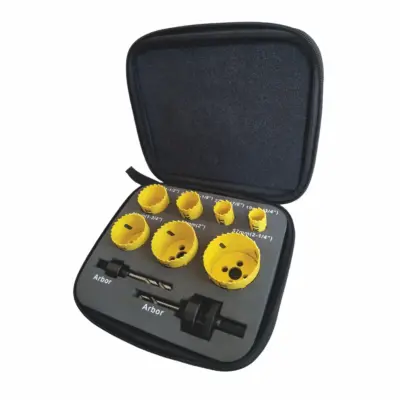
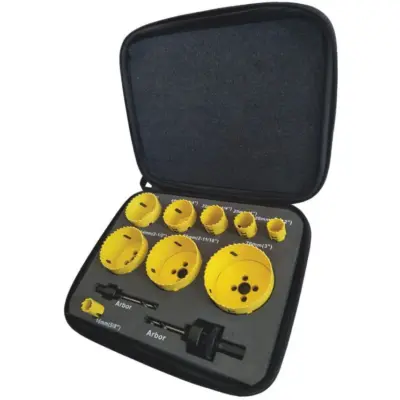
Standard holesaw arbors
Corded and cordless drills
Pillar drills
Magnetic base drills
Key Specifications
M42 grade HSS steel
8% cobalt content
Constant pitch tooth pattern
Sizes from 14mm to 210mm
Sold individually
Not suitable for: Not the right choice for cutting wood, plasterboard, or plastics where a standard bimetal holesaw would do the job at a lower cost. Not suitable for masonry or concrete.
Fit the holesaw to a suitable arbor with pilot drill in place. Mark your centre point, apply light pressure and start the drill at a moderate speed. Let the teeth do the work. Forcing it generates heat and blunts the teeth fast.
When cutting stainless or harder materials, apply cutting fluid regularly and reduce speed compared to mild steel. Clear swarf from the teeth periodically to prevent clogging, which can cause binding and heat build-up. On thinner sheet, use a backing piece of timber or scrap metal to support the workpiece and prevent the sheet from flexing as the saw breaks through.
Select the correct holesaw size for the application and fit it securely to a compatible arbor with pilot drill installed
Mark the centre point of the hole clearly on the workpiece
Apply cutting fluid or light oil to the saw teeth, especially when working on stainless steel
Begin drilling at a moderate, controlled speed, applying steady and even pressure
Clear swarf from the teeth regularly during the cut to prevent clogging
Reduce speed and increase fluid application as the saw approaches breakthrough
Support thin sheet metal from beneath to prevent flexing and distortion as the saw cuts through
What makes a cobalt holesaw better than a standard bimetal for cutting stainless steel?
The 8% cobalt content in M42 grade steel improves red hardness, meaning the cutting edge holds up much better as heat builds at the tip. Stainless work generates significant friction heat and a standard bimetal saw will lose its edge quickly. The cobalt grade keeps cutting longer and cleaner.
Do these fit standard holesaw arbors?
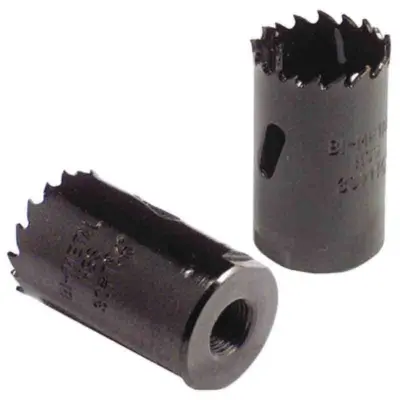
Yes. Dart cobalt holesaws use a standard thread fitting compatible with most common holesaw arbors. Check your arbor is rated for the saw diameter you are using, particularly at the larger sizes.
What speed should I run these at when cutting steel?
Lower speeds work better on harder metals. As a rough guide, larger diameter saws need slower speeds, and stainless steel needs a slower speed than mild steel. Pushing the speed too high generates heat that blunts the teeth. Apply cutting fluid and let the saw do the work at a controlled pace.
Manufactured from M42 high-speed steel with an 8% cobalt addition, which raises the alloy's red hardness and resistance to thermal softening under cutting loads. The constant pitch tooth geometry reduces harmonic vibration during cutting, particularly relevant when working on thin-gauge sheet metal. The cobalt content makes these saws effective on work-hardening materials such as austenitic stainless steel that can defeat conventional bimetal saws.

Reviews
There are no reviews yet.