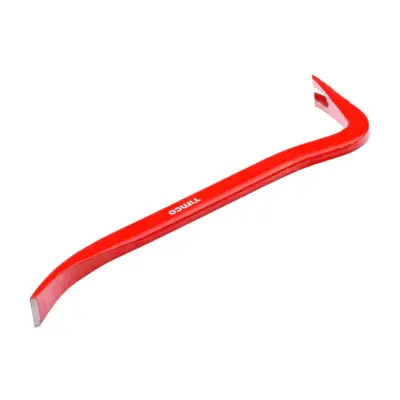
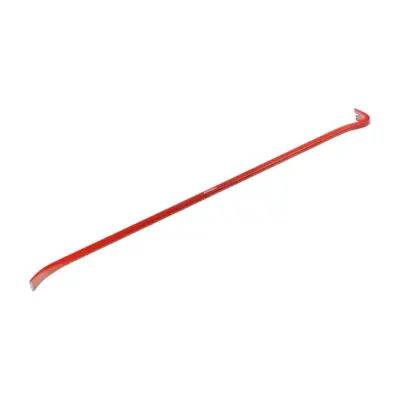
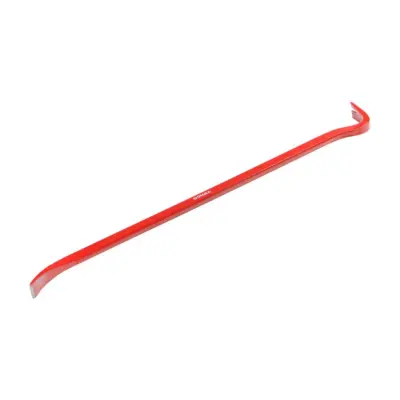
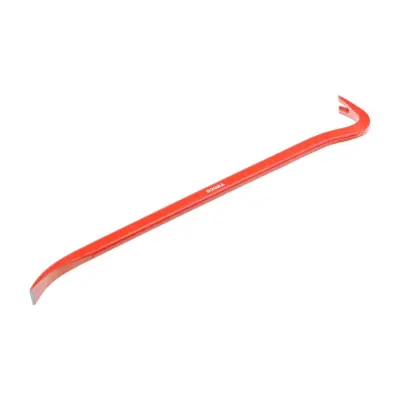
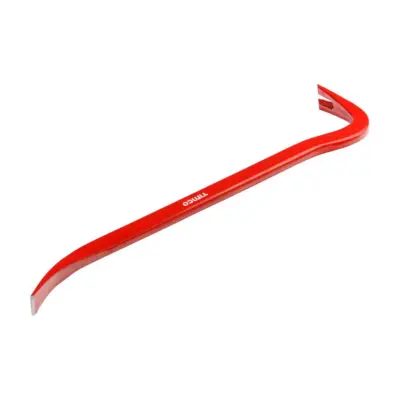
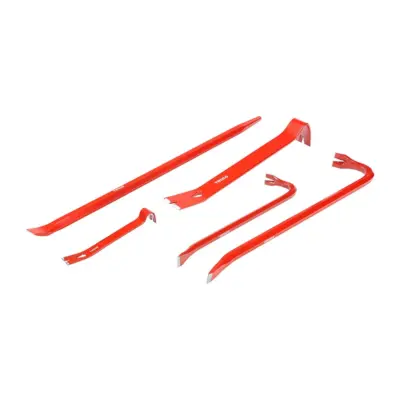
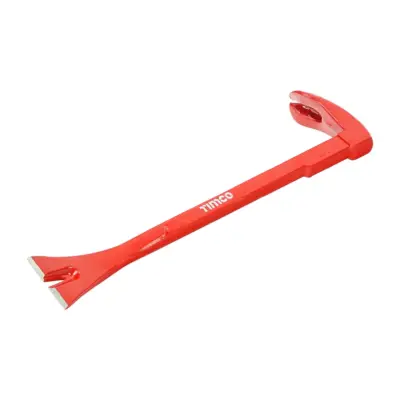
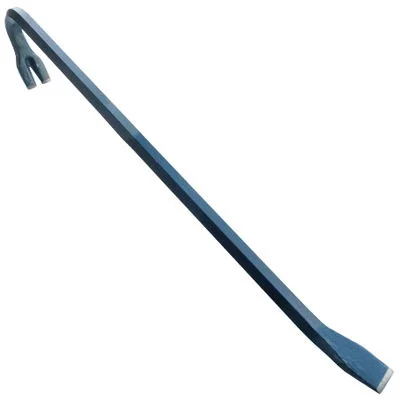
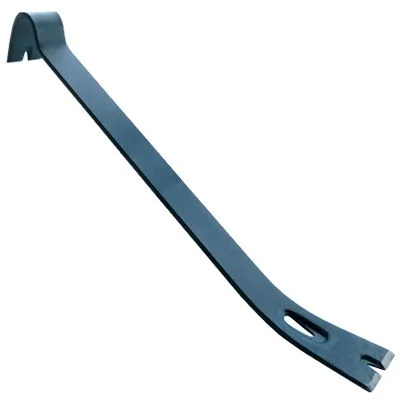
Beam section heavy duty wrecking bar with goose neck, chisel end and claw nail-puller. Available in five sizes from 350mm to 1200mm. Built for demolition, strip-out work and pulling fixings where finesse was never part of the brief.
Size
Price
QTY
350mm (14")
£6.37£7.64
450mm (18")
£6.37£7.64
600mm (24")
£9.09£10.91
900mm (36")
£21.52£25.82
1200mm (48")
£29.08£34.90
A heavy duty wrecking bar is one of those tools that earns its keep the moment you reach for it. Whether you’re pulling nails, levering up floorboards, splitting timber, or persuading something that doesn’t want to move, having the right bar in the right length makes the difference between a frustrating afternoon and getting it done properly. These bars are made in a beam section profile, which gives them serious rigidity under load without the weight of a solid bar. One end is shaped into a goose neck with a claw for pulling nails and fixings. The other is a flat chisel end for getting into gaps, lifting, and general levering work.
Five sizes are available: 350mm (14 inch), 450mm (18 inch), 600mm (24 inch), 900mm (36 inch), and 1200mm (48 inch). That range matters more than it might seem. The 350mm is a short, controlled bar for tight spaces and lighter strip-out jobs. At the other end of the scale, the 1200mm gives you the kind of mechanical advantage that lets one person do what would otherwise need two. Pick the size that matches the job, or keep a couple of lengths on the van and reach for the right one without thinking about it.
Where Heavy Duty Wrecking Bars Get Used on Site
The goose neck and claw end work well on nail-pulling duties throughout timber-frame strip-out, pallet dismantling, and formwork removal. Get the claw positioned correctly under the nail head and a short lever stroke usually does it cleanly. The chisel end is the one you reach for when you need to split timber joints, lift paving slabs, get under skirting boards, or work into gaps that won’t accommodate anything wider.
Size and Leverage
The longer bars are the ones that deal with the jobs you’d otherwise need a Stillson wrench or second pair of hands for. Levering out old door frames, shifting embedded timber, lifting heavy stone flags, or working in situations where brute force is legitimately the right tool. The beam section profile means the bar flexes less under load than a comparable flat bar, which matters when you’re putting your weight through it. It also means the claw and chisel ends are working from a stable base rather than twisting under load.
These heavy duty wrecking bars are priced for tradespeople who go through site tools regularly and don’t see the point in spending a fortune on something that lives in the back of a van and gets used hard. Stock one of each size, or grab the lengths you know you reach for most. Either way, you’re covered.
Pro Tip: When pulling nails with the claw end, position a scrap of timber under the goose neck as a fulcrum point — it protects the surface you're working on and gives you a much cleaner lever stroke with less effort.
Wrecking bars turn up on almost every kind of strip-out or demolition job. Joiners use them for removing door frames and skirting boards without unnecessary damage. Groundworkers reach for the longer lengths when lifting paving flags or shifting embedded pegs and stakes. Roofers keep one handy for splitting battens and lifting sheet material. On timber-frame jobs, claw ends deal with nailed connections that a hammer alone won't shift cleanly.
Pallet dismantling, formwork striking, concrete shutter removal, floorboard lifting, and general site clearance are all everyday uses. The chisel end is useful anywhere you need to get purchase in a tight joint or gap, and the claw handles fixings from light wire nails up to heavy framing nails without much argument.
Best For
Nail and fixing removal
Timber strip-out and demolition
Floorboard and skirting removal
Formwork and shutter striking
Paving slab lifting
General site strip-out
Available In
350mm (14 inch)
450mm (18 inch)
600mm (24 inch)
900mm (36 inch)
1200mm (48 inch)
Key Features
Beam section profile for rigidity under load
Goose neck with nail-pulling claw
Flat chisel end for levering and splitting
Five sizes for different jobs and leverage requirements
Heavy duty construction for repeated site use
Not suitable for: Not suitable for work where the surface finish needs to be preserved — the chisel and claw ends will mark or damage materials they contact. Not intended as a striking tool; do not use with a hammer or mallet on the bar body.
Choose the bar length that suits the job. Shorter bars for controlled work in tight areas; longer bars where mechanical advantage matters more than precision. Get the claw seated fully under the nail head before applying lever pressure, and use a timber offcut under the goose neck when working close to a finished surface.
For chisel end work, start at a joint or existing gap rather than trying to force the tip into solid material. A sharp tap with a hammer on the chisel end can help seat it before you lever. Apply steady, controlled pressure rather than sudden force, especially with the longer bars where leverage can build quickly.
Select the appropriate bar length for the job — shorter for control, longer for heavy leverage
For nail pulling, position the claw fully under the nail head with the goose neck resting on the surface
Place a timber offcut under the goose neck if working near a surface you want to protect
Apply steady downward lever pressure on the bar to draw the nail cleanly
For chisel end work, locate an existing joint, gap or edge to start from
Seat the chisel end with a firm tap if needed before applying lever force
Use controlled, progressive pressure rather than sudden force to avoid losing control of the bar
Which size wrecking bar should I go for if I only buy one?
The 600mm (24 inch) is probably the most practical single size for general site use. It's long enough to give useful leverage on most jobs, short enough to work in reasonably tight spaces, and light enough to carry and use comfortably for extended periods. If most of your work involves heavy demolition or lifting large slabs and frames, go up to the 900mm instead.
Can these bars be used with a hammer or struck with a mallet?
No. These are lever and prying tools, not striking bars. Hitting the body of a wrecking bar with a hammer puts load into it in a way it's not designed for and can cause failure or injury. If you need a bar you can drive with a hammer, look at cold chisels or dedicated bolster bars instead.
Constructed in a beam section profile rather than flat or round bar stock, which improves stiffness along the working axis and reduces flex under heavy lever loads. The goose neck claw is formed at one end for nail extraction, with the curve providing clearance to work the claw under nail heads on a flat surface. The opposite end is dressed to a flat chisel profile for prying and splitting applications. Available in five lengths to suit different leverage and access requirements.

Reviews
There are no reviews yet.