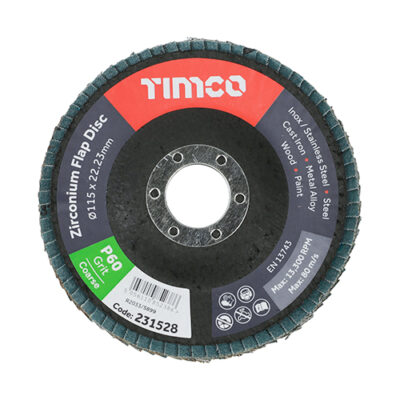
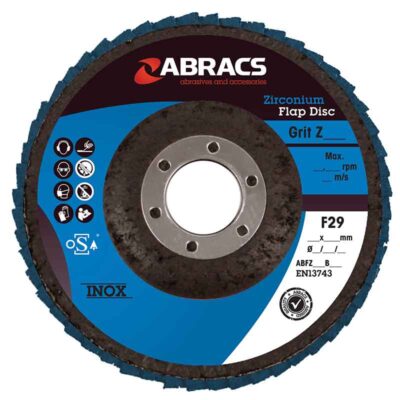
Heavy duty zirconium flap discs built for grinding, weld dressing, paint removal and surface finishing. Type 29 profile suits flat and curved work. Significantly longer service life than standard aluminium oxide discs.
Trade QTY discounts — the more you buy, the more you save
Quantity
Discount
You Save
Price/unit from
Buy 10+
10%
£0.13£0.16
£1.16£1.39
Discount applies across all variants of this product.
Add 10 to unlock 10% off
010+
Size
Price
Best Price
QTY
115mm 120 grit
£1.29£1.55
£1.16£1.39
115mm 80 grit
£1.29£1.55
£1.16£1.39
115mm 40 grit
£1.29£1.55
£1.16£1.39
115mm 60 grit
£1.29£1.55
£1.16£1.39
Zirconium flap discs are the working tradesperson’s choice when aluminium oxide just isn’t cutting it fast enough — or lasting long enough. These 115mm heavy duty discs are built for serious material removal, weld dressing, and surface prep work where you need consistent cut throughout the life of the disc, not just for the first ten minutes. The zirconium abrasive grain self-sharpens as it wears, which is what keeps the cut rate up from the first pass to the last.
The claim on the tin is up to 30 times longer life compared to standard aluminium oxide abrasives. That’s a bold number, but zirconium’s self-sharpening properties are well documented and the difference in wear rate is genuinely significant. On heavy steel grinding or repeated weld dressing jobs, you’ll go through a lot fewer discs. Over a full job, that adds up to real money saved and fewer disc changes, which is the sort of thing that matters when you’re on the clock.
Where These Zirconium Flap Discs Get Used
The Type 29 profile — a slight conical angle rather than flat — is what makes these particularly useful. It puts more abrasive in contact with the surface at a low grinding angle, which suits both flat plate work and curved or profiled sections. Fabricators and metalworkers use this profile for blending welds, removing mill scale, and prepping surfaces before paint or coating.
Grit Selection
Available in 40, 60, 80 and 120 grit. The 40 and 60 grits are your aggressive stock removal and weld dressing options. Eighty grit sits in the middle ground, good for general prep and blending. The 120 is your finishing pass, leaving a cleaner scratch pattern before priming or coating. Having the range available means you can run the same disc platform through from rough to finish without switching disc types mid-job.
Sold in boxes of 10 at trade pricing. At £1.29 each, these are priced to be used properly rather than rationed.
Pro Tip: Run these at the recommended angle of around 15 degrees to the workpiece rather than flat to the surface — you get the best cut rate and the disc lasts considerably longer.
These discs are used across fabrication shops, construction sites, and general metalwork wherever steel needs grinding, blending or prepping. Common applications include weld dressing on structural steel, removing mill scale before painting, stripping old paint or rust from flat plate, and blending surface imperfections on curved sections. The Type 29 profile handles both flat and contoured surfaces well, making them a go-to for pipework, box section, and sheet metal alike.
Best For
Weld dressing
Heavy stock removal
Paint and rust stripping
Mill scale removal
Surface blending and prep before coating
Works With
Standard 115mm angle grinders
Flat and curved steel surfaces
Structural steel
Sheet metal and plate
Pipework and box section
Key Specifications
Diameter: 115mm
Type 29 conical profile
Zirconium abrasive grain
Available grits: 40, 60, 80, 120
Sold in boxes of 10
Up to 30x longer life vs aluminium oxide
Not suitable for: Not suitable for use on wood, plastics or masonry. These are metal grinding discs and should not be used on non-metallic materials.
Fit the disc to your 115mm angle grinder and check it is seated and locked properly before starting. Work at a low grinding angle of approximately 15 degrees to the surface — this is where the Type 29 profile performs best and where you will get the most out of the abrasive. Keep the disc moving steadily across the workpiece rather than dwelling in one spot.
Start with a coarser grit for heavy removal or weld dressing, then step up through 80 and 120 grit to refine the surface finish as required. Let the disc do the work — applying excessive pressure accelerates wear and generates unnecessary heat in the workpiece.
Select the appropriate grit for the job: 40 or 60 for heavy removal, 80 for general prep, 120 for finishing
Fit the disc to a 115mm angle grinder and ensure the backing plate and nut are properly tightened
Inspect the disc briefly before use — do not use if the flaps are damaged or the backing plate is cracked
Position the disc at roughly 15 degrees to the workpiece surface
Apply moderate, consistent pressure and keep the disc moving across the surface
Step up through finer grits progressively to achieve the required surface finish
Allow the disc to stop fully before setting the grinder down after use
What is the difference between a Type 27 and Type 29 flap disc?
Type 27 is a flat profile, suited to direct flat grinding. Type 29 has a slight conical angle which puts more abrasive in contact at a low working angle, giving better stock removal on both flat and curved surfaces. For most fabrication and weld dressing work, Type 29 is the more practical choice.
Why choose zirconium over aluminium oxide flap discs?
Zirconium grain self-sharpens as it wears, which maintains a consistent cut rate throughout the life of the disc. Aluminium oxide dulls progressively and requires more pressure to cut as it wears. On heavy steel work, the difference in disc life is substantial, which offsets the slightly higher cost per disc.
What angle grinder size do these discs fit?
These are 115mm diameter discs and fit standard 115mm angle grinders with a compatible spindle size. Most common angle grinders in the 115mm class use an M14 spindle thread, but always confirm your grinder's spindle before fitting.
The abrasive material is zirconium alumina, a harder and tougher grain than standard aluminium oxide. It fractures in a controlled way under load, continuously exposing fresh sharp cutting edges rather than glazing over. The Type 29 conical backing structure is designed to increase abrasive contact area at standard grinding angles, improving both cut rate and consistency across the disc surface.

Reviews
There are no reviews yet.