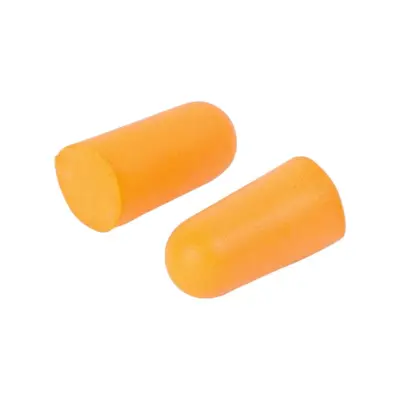
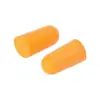
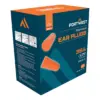
Lightweight polyurethane foam ear plugs with a tapered body and slow expansion design. SNR 34dB rated for strong noise reduction. Comfortable enough for all-day wear on site, in workshops, or anywhere loud.
QTY
Price
QTY
Refill Box 500 prs
£29.95£35.94
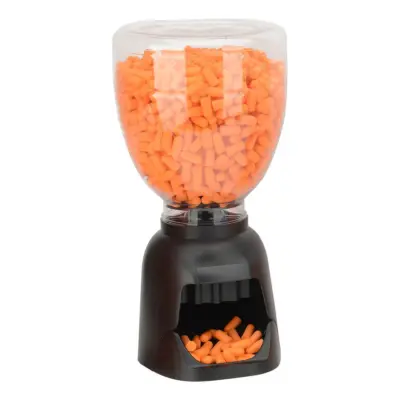
Dispenser 500 prs
£54.95£65.94
Pk 5 prs
£1.59£1.91
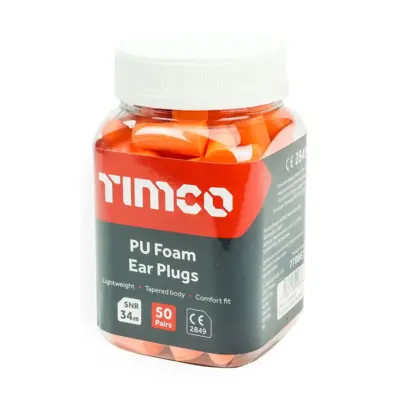
Jar 50 prs
£7.59£9.11
200
£18.75£22.50
Foam ear plugs are one of those bits of PPE that people either wear religiously or leave rattling around the bottom of a toolbox. These polyurethane ones make a reasonable case for the former. Made from a lightweight, flexible PU foam with a tapered body, they’re designed to be rolled down, inserted, and left to do their job quietly — which is exactly what you want from hearing protection.
The slow expansion rate is the key feature here. It gives you a few seconds to position the plug correctly in the ear canal before the foam expands to fill the space. That matters more than it sounds. A plug that expands too fast either doesn’t seat properly or goes in at an angle, and you end up with a 34dB rating that’s performing more like 20dB in practice. Get the fit right and these will give you consistent, reliable attenuation throughout the working day.
Where Foam Ear Plugs Make the Most Difference
SNR 34dB puts these in the upper tier for disposable foam plugs. That level of attenuation is appropriate for high-noise environments: grinding, chasing, drilling, angle grinding, generator work, disc cutting, or anything involving sustained exposure above 85dB. They’re widely used in construction, manufacturing, engineering workshops, and on plant-heavy sites.
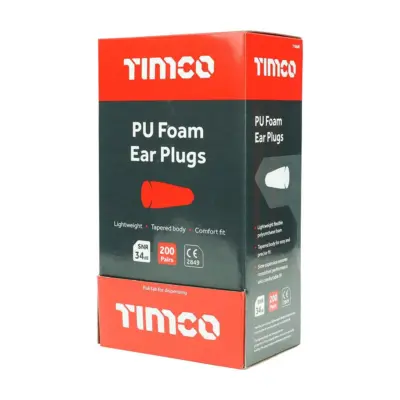
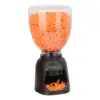
The tapered profile also helps with fitment across different ear canal sizes, which is useful when you’re handing these out to multiple workers rather than relying on one-size-fits-all. Available in multiple pack formats including jar, box, and dispenser options, so whether you’re stocking a site welfare unit or just keeping a few pairs in a van drawer, there’s a sensible quantity for the job.
Pro Tip: Always roll the foam tip down to a thin cylinder before inserting, reach over your head with the opposite hand to gently pull the ear upward, then hold the plug in place for a few seconds while it expands fully — skipping this step is why most people think disposable plugs don't work.
These foam ear plugs are used wherever noise levels create a risk of hearing damage over time. On construction sites that means disc cutters, breakers, and generators. In workshops it's lathes, grinders, and bench saws. They're also common in manufacturing, recycling facilities, airports, event venues, and any industrial setting where sustained loud noise is part of the job rather than the exception.
Best For
Disc cutting and grinding
Demolition and breaking work
Woodworking and manufacturing
Generator and plant operation
General site noise exposure
Available In
Pair of 5
Jar of 50 pairs
Box of 200 pairs
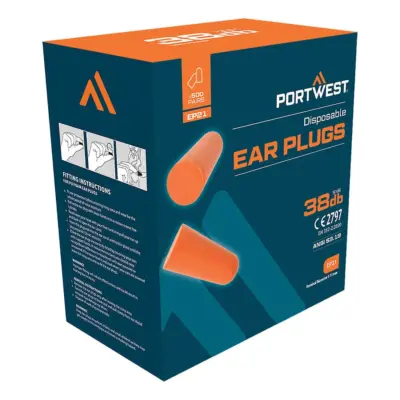
Dispenser of 500 pairs
Refill box of 500 pairs
Key Features
SNR 34dB noise reduction rating
Lightweight polyurethane foam construction
Tapered body for accurate positioning
Slow expansion for a consistent, comfortable fit
Disposable single-use design
Not suitable for: Not suitable for use in environments requiring verbal communication or where awareness of surrounding sounds is a safety requirement. Not reusable — replace after each shift or sooner if soiled or misshapen.
Roll the plug firmly between your fingers until it forms a tight, thin cylinder. Reach over your head with the opposite hand to gently pull the top of your ear upward, opening the canal slightly. Insert the compressed plug and hold it in place with a finger for around 20 to 30 seconds while the foam expands. A well-fitted plug should feel snug but not painful, and background noise should reduce noticeably. If it works loose or feels uneven, remove and repeat the process.
Wash and dry your hands before handling the plugs
Roll the plug between your fingers to compress it into a thin, even cylinder
Reach over your head with the opposite hand and gently pull the top of your ear upward
Insert the compressed plug into the ear canal while still tightly rolled
Hold the plug in place with light finger pressure for 20 to 30 seconds
Release and check the fit — the plug should feel snug and noise should be clearly reduced
Discard after use and replace with a fresh pair for the next shift
What does SNR 34dB mean in practice?
SNR stands for Single Number Rating. It's a standardised figure indicating how much noise the ear plug reduces in real-world use. SNR 34dB is at the higher end for disposable foam plugs, making these appropriate for noisy trades like disc cutting, breaking, and heavy plant work. The actual protection you get depends on correct fitting — a poorly seated plug won't deliver anywhere near the rated attenuation.
Are these ear plugs reusable?
These are designed as disposable, single-use ear plugs. You can get a second wear from a clean pair if they've only been used briefly and are still in good shape, but the foam degrades and loses its expansion properties over time. For consistent protection, replace them at the start of each shift.
Which pack size should I order for a site dispensing station?
The 500-pair dispenser or refill box is the most practical option for a welfare unit or tool store where multiple workers need daily access. The 200-pair box suits smaller crews or contractors who want to keep stock in a van. Jar packs of 50 are handy for individual trades or keeping in a work bag.
Constructed from slow-recovery polyurethane foam, these ear plugs achieve a Single Number Rating of 34dB, placing them in the high-attenuation category for disposable hearing protection. The PU foam material is lightweight and flexible, with a tapered cylindrical profile that accommodates a range of ear canal geometries. The controlled expansion rate allows for accurate manual positioning prior to full seating.

Reviews
There are no reviews yet.