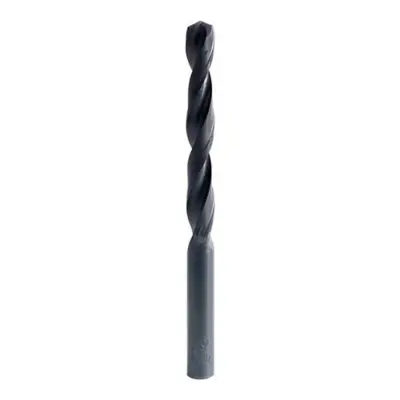
Roll forged HSS jobber drill bits with a 135° split point for fast, accurate drilling with no drift. Black oxide finish, manufactured to DIN338. Suitable for steel, iron, wood and hard plastics.
Available options and pricing for HSS Roll Forged Metric Drill Bits - Pk, with quantity selectors and a running total
Size
QTY
SKU
Price
QTY
Total
1.0mm
10
HSS-1
£1.78£2.14
—
1.5mm
10
HSS-15
£1.96£2.35
—
2.0mm
10
HSS-2
£2.09£2.51
—
2.2mm
10
HSS-22
£2.37£2.84
—
2.5mm
10
HSS-25
£2.29£2.75
—
3.0mm
10
HSS-3
£2.39£2.87
—
3.2mm
10
HSS-32
£2.49£2.99
—
3.5mm
10
HSS-35
£2.49£2.99
—
4.0mm
10
HSS-4
£2.89£3.47
—
4.2mm
10
HSS-42
£3.19£3.83
—
4.5mm
10
HSS-45
£3.27£3.92
—
4.9mm
10
HSS-49
£3.39£4.07
—
5.0mm
10
HSS-5
£3.47£4.16
—
5.5mm
10
HSS-55
£4.11£4.93
—
6.0mm
10
HSS-6
£4.74£5.69
—
6.5mm
10
HSS-65
£5.04£6.05
—
7.0mm
10
HSS-7
£6.24£7.49
—
7.5mm
10
HSS-75
£7.41£8.89
—
8.0mm
5
HSS-8
£4.26£5.11
—
8.5mm
5
HSS-85
£4.48£5.38
—
9.0mm
5
HSS-9
£4.98£5.98
—
9.5mm
5
HSS-95
£5.28£6.34
—
10.0mm
5
HSS-10
£5.87£7.04
—
10.5mm
5
HSS-105
£6.48£7.78
—
11.0mm
5
HSS-11
£6.91£8.29
—
12.0mm
5
HSS-12
£8.49£10.19
—
12.5mm
5
HSS-125
£9.46£11.35
—
13.0mm
5
HSS-13
£9.91£11.89
—
These HSS roll forged metric drill bits are a solid, no-nonsense choice for everyday drilling across a wide range of materials. The roll forging process aligns the grain structure of the steel along the length of the bit, which means better strength and a longer working life compared to cut-from-bar alternatives. If you’re going through packs of drill bits at a rate that hurts your wallet, these are worth a look.
The 135° split point is the detail that makes the real difference on site. It locates on the material immediately, so the bit doesn’t wander before it bites. You get cleaner entry, faster penetration, and less time faffing about with a centre punch on flat surfaces. For anyone drilling repetitive holes in sheet steel or structural sections, that adds up quickly.
Where HSS Roll Forged Metric Drill Bits Earn Their Keep
The black oxide finish provides a degree of lubrication and basic corrosion resistance during use. It won’t protect a neglected bit sitting in a damp toolbox for six months, but it does help with heat dissipation and reduces friction during cutting, which is exactly where cheap uncoated bits tend to fail early.
Manufactured to DIN338, these bits conform to the standard jobber length specification used across European tooling. That matters when you’re working with drill guides, stands, or any setup where consistent flute length and shank diameter are expected. No surprises.
Sizing and Pack Options
Available from 1.0mm right through to 13.0mm in a good spread of increments, with packs of five or ten depending on the size. The smaller diameters tend to go quickly, so having a few in reserve makes sense. They cover the most common fixing and pilot hole sizes used in general construction, engineering, and fabrication work. At this price point, keeping a full set stocked is genuinely practical rather than aspirational.
Pro Tip: When drilling steel with HSS bits, use a cutting fluid or even a drop of oil on the entry point to reduce heat buildup and you will get noticeably more holes per bit before the edge starts to dull.
These metric HSS drill bits are used across general construction, steel fabrication, joinery, and light engineering. They handle pilot holes for screws and fixings, clearance holes through sheet steel and box sections, and general-purpose drilling through timber and hard plastics. Electricians use smaller diameters for cable routing, while structural workers rely on the larger sizes for bolt clearances. The full size range from 1.0mm to 13.0mm covers the vast majority of day-to-day drilling tasks without needing to reach for a specialist bit.
Best For
Drilling mild steel and structural sections
Pilot holes for screws and fixings
Clearance holes in sheet metal
Drilling hardwood and hard plastics
General fabrication and construction work
Compatible With
Corded and cordless drills
Drill presses and pillar drills
Standard keyless and keyed chucks
Drill guides and jigs
Key Specifications
High speed steel (HSS) construction
Roll forged for improved grain strength
135° split point for fast location
Black oxide finish
Manufactured to DIN338
Sizes: 1.0mm to 13.0mm
Available in packs of 5 or 10
Not suitable for: Not suitable for drilling hardened steel, masonry, ceramic tiles, or glass. For stainless steel, a cobalt-grade bit would be a better choice as standard HSS dulls quickly on work-hardening materials.
Fit the bit securely into the chuck and check it is centred before starting. On flat or curved metal surfaces, the 135° split point will locate without a centre punch in most cases, though a punch mark does help on very smooth stock. Start at a moderate speed and apply steady forward pressure rather than forcing the pace.
Keep speeds appropriate to the diameter: smaller bits need higher RPM, larger bits need lower RPM and more torque. Apply cutting fluid or oil when drilling steel to manage heat. If the bit starts squealing or the swarf comes out discoloured blue or black, you are running too hot and the edge will suffer for it.
Select the correct diameter bit for the hole or fixing size required
Insert the bit fully into the chuck and tighten securely, checking for runout before drilling
Mark the drill position with a punch or pencil depending on the material
Set drill speed appropriate to bit diameter and material, lower RPM for larger bits
Apply cutting fluid or oil when drilling steel or iron to reduce heat
Apply steady, consistent pressure without forcing the bit through the material
Clear swarf regularly, particularly when drilling deep holes in metal
Allow the bit to cool between uses if drilling multiple holes in quick succession
What materials can these HSS drill bits cut through?
They are suitable for mild steel, cast iron, timber, hard plastics, and similar non-alloy materials. They are not intended for hardened steel, stainless steel, masonry, or ceramics. For stainless you would want cobalt bits, and for masonry you need SDS or standard masonry bits with a carbide tip.
What does roll forged mean and why does it matter?
Roll forging shapes the drill bit by pressing and rolling the hot steel rather than cutting away material. This aligns the grain structure along the length of the flutes, which improves toughness and resistance to breakage. In practical terms, roll forged bits tend to outlast cut-from-bar equivalents when used regularly.
Are these bits manufactured to a recognised standard?
Yes, they are manufactured to DIN338, which is the European standard for jobber-length twist drills. This covers the overall length, flute length, and shank diameter, so they will fit standard chucks and work correctly with drill guides or press setups without any surprises.
Manufactured from high speed steel with a roll forged construction, these bits conform to DIN338 jobber length specification. The 135° split point geometry reduces thrust force and minimises walking on entry. The black oxide surface treatment provides a low-friction coating that assists with heat dissipation and offers basic protection against surface oxidation during storage and use.






Reviews
There are no reviews yet.