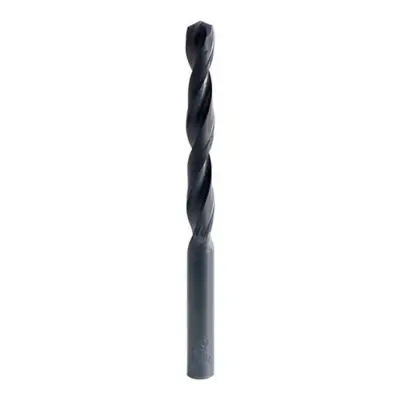
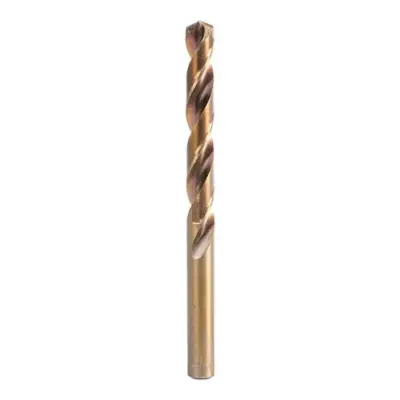
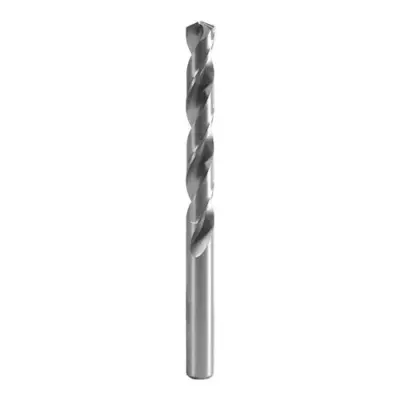
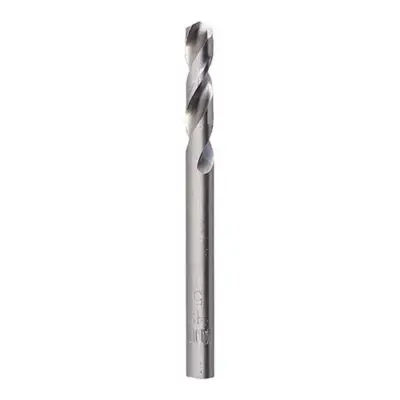
Economic HSS jobber drill bits in imperial sizes. Roll forged with a 135° split point for fast, accurate starts and clean penetration through non-alloy materials. Black oxide finish. Made to DIN338.
Size
QTY
Price
QTY
116in
10
£1.98£2.38
1/2in
5
£1.98£2.38
564in
10
£2.18£2.62
332in
10
£2.36£2.83
764in
10
£2.74£3.29
18in
10
£2.74£3.29
964in
10
£2.96£3.55
532in
10
£2.96£3.55
1164in
10
£3.36£4.03
316in
10
£3.36£4.03
1364in
10
£4.72£5.66
732in
10
£4.72£5.66
1/4in
10
£5.54£6.65
932in
10
£9.08£10.90
516in
10
£9.66£11.59
38in
5
£6.70£8.04
HSS roll forged imperial drill bits are a straightforward workhorse for anyone who still works in inches. Whether you’re drilling clearance holes for imperial fixings, working on older steelwork with imperial specifications, or just matching a thread tap size chart that dates back to before metrication, these cover the ground. The 135° split point is the detail that earns its keep here — it bites into the material immediately rather than skating around looking for purchase, which means faster penetration and less wander on the initial entry.
Roll forging is worth understanding if you haven’t thought about it before. The process compresses and aligns the grain structure of the steel rather than cutting through it, which gives a stronger, tougher bit than a ground-only alternative at the same price point. That matters when you’re drilling repetitively or pushing through harder non-alloy steels where a weaker bit would flex and drift. These are HSS steel throughout, which handles the heat generated in steel, cast iron, aluminium, wood, and most plastics without losing the edge too quickly.
Where HSS Roll Forged Imperial Drill Bits Work Best
The black oxide finish does a couple of useful things. It reduces surface friction slightly, which helps with chip evacuation, and it gives a degree of corrosion resistance for storage and general site use. It’s not a coating designed for extreme conditions, but it’s practical for trade use and beats bare bright steel when the bits end up rattling around in a damp toolbox over winter.
These are available in a range of imperial fractional sizes and come in packs of five or ten depending on the size, which makes it sensible to keep multiples of the sizes you use most. Running a drill bit to destruction and having to stop a job to find a replacement is nobody’s idea of productive. The DIN338 standard means the geometry and tolerances are consistent across the range, so you can trust the sizing when you’re matching to tapped holes or reaming to fit.
Pro Tip: When drilling steel with these, use a drop of cutting oil on the entry point — it extends the edge life noticeably, especially on the smaller imperial sizes where heat builds up fast in a thin cross-section.
These bits cover the standard range of drilling tasks where imperial sizing is needed: clearance holes for imperial bolts and screws, pilot holes for thread tapping, and general fabrication work on mild steel, aluminium, brass, and cast iron. They're equally at home in wood and most engineering plastics. Common trades using imperial drill bits include plumbers working on older pipework, engineers dealing with American-spec equipment, and agricultural mechanics where imperial fasteners are still the norm.
Best For
Drilling mild steel and non-alloy metals
Aluminium and brass
Cast iron
Hardwood and softwood
Engineering plastics
Imperial fixing clearance holes
Thread tapping pilot holes
Available In
1/16in
5/64in
3/32in
7/64in
1/8in
9/64in
5/32in
11/64in
3/16in
13/64in
7/32in
15/64in
1/4in
5/16in
3/8in
1/2in
Key Specifications
HSS roll forged steel
135° split point tip
Black oxide finish
Manufactured to DIN338
Imperial fractional sizing
Packs of 5 or 10
Not suitable for: Not suitable for drilling hardened steel, stainless steel, masonry, or ceramic tiles. For stainless and harder alloys, cobalt HSS bits are a better choice.
Fit the bit securely in the chuck and check it runs true before starting. On steel, use cutting oil at the entry point to reduce heat buildup and extend edge life. Start at a moderate speed and let the split point do the work — you don't need to force it. Keep consistent pressure throughout and ease off as the bit breaks through the far side to avoid snatching.
Smaller imperial sizes are more prone to snapping under sideways load, so keep the drill perpendicular to the work surface. A centre punch mark before drilling eliminates wander on smooth metal surfaces, which is especially useful when you're working to tight positional tolerances.
Mark the drill position with a centre punch to prevent the tip from wandering on smooth surfaces
Secure the workpiece so it cannot move or rotate during drilling
Insert the drill bit fully into the chuck and tighten firmly, checking it runs without visible wobble
Apply a small amount of cutting oil to the entry point when drilling metal
Set drill speed appropriate to the bit size and material — smaller bits need higher speed, larger bits need lower speed
Apply steady, even pressure and allow the split point to engage the material before increasing feed rate
Clear swarf regularly on deeper holes to prevent the flutes from packing and the bit from overheating
Ease pressure as the bit breaks through to avoid snatching or grabbing on exit
What materials can these HSS roll forged imperial drill bits cut through?
They are designed for non-alloy materials including mild steel, cast iron, aluminium, brass, hardwood, softwood, and most engineering plastics. They are not suitable for hardened steel, stainless steel, masonry, or ceramics.
What does the 135° split point do compared to a standard 118° tip?
The 135° split point self-centres on the material without needing a pilot hole or centre punch, reduces the tendency to wander, and cuts more aggressively on entry. It's particularly useful on flat or curved metal surfaces where a standard point would skate before biting.
Are these bits suitable for use in a pillar drill as well as a hand drill?
Yes. The DIN338 standard geometry means they work correctly in both handheld drills and bench or pillar drills. In a pillar drill you'll get better positional accuracy and the straight plunge action makes it easier to control feed pressure on harder materials.
Manufactured from high speed steel with a roll forged construction that aligns the grain structure for improved toughness and edge retention. The black oxide surface treatment reduces friction during cutting and provides basic corrosion resistance. Tip geometry is a 135° split point ground to DIN338 specification, which governs the overall length, flute length, shank diameter, and point angle tolerances across the full imperial size range.

Reviews
There are no reviews yet.