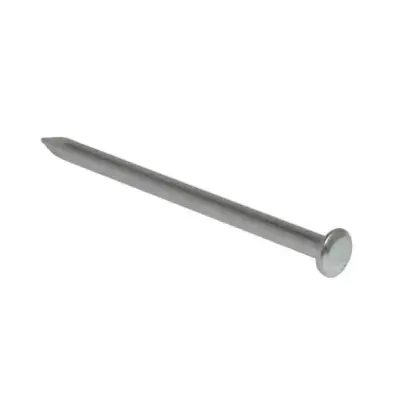
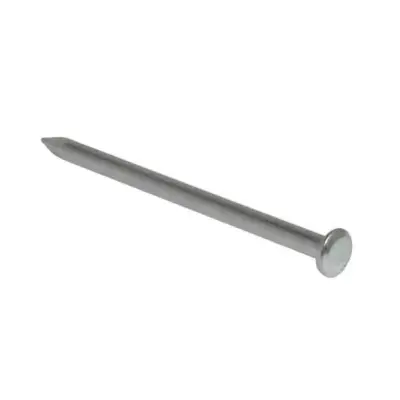
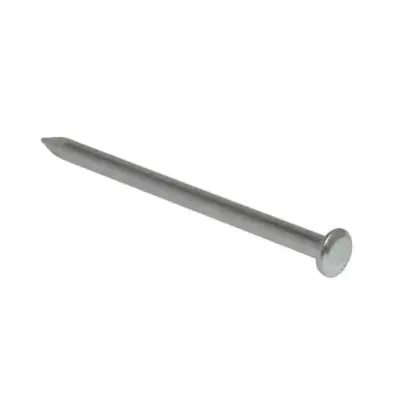
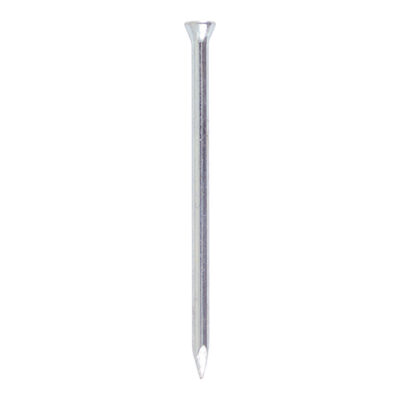
Hardened 3.5mm heavy gauge masonry nails for fixing into brick, block, concrete and mortar. Available in a full range of lengths from 50mm to 100mm. Sold in packs of 100 or 200.
Size
Price
QTY
3.5 x 50mm
£3.29£3.95
3.5 x 60mm
£3.55£4.26
3.5 x 65mm
£3.79£4.55
3.5 x 70mm
£2.23£2.68
3.5 x 75mm
£4.29£5.15
3.5 x 80mm
£2.36£2.83
3.5 x 85mm
£4.46£5.35
3.5 x 90mm
£5.29£6.35
3.5 x 100mm
£2.86£3.43
If you’ve ever tried driving a standard nail into masonry and watched it fold like a bad plan, you’ll know exactly why these exist. These 3.5mm heavy gauge masonry nails are hardened steel fixings designed to be hammered directly into brick, block, concrete and mortar without bending, snapping or going anywhere they shouldn’t. Solid, dependable, and available in nine lengths from 50mm up to 100mm — there’s a size here for most site situations.
The 3.5mm shank is the heavier gauge option, making these suitable for jobs where the lighter 2.5mm or 3mm nails just don’t cut it. Think battening out, fixing door frames, securing timber sole plates to concrete floors, or nailing off studwork directly to a masonry wall. The added diameter gives more holding power and resists lateral movement better in applications where the fixing is going to see a bit of stress.
Where Heavy Gauge Masonry Nails Earn Their Keep
On a typical build or refurb, these are one of those things you just need to have on the van. They’re used by carpenters fixing back boxes and battens, by joiners securing timber to block walls, and by general builders doing first-fix work into concrete subfloors. The 75mm and 80mm lengths tend to be the workhorse sizes for most timber-to-masonry fixing jobs, but the 100mm option gives you solid grip in deeper or denser material, and the 50mm is handy when you’re not working with much depth to play with.
The hardened steel construction means these nails resist deformation during driving — a proper masonry nail should go in clean with a hammer blow or two, not mushroom at the head and skew sideways. These are manufactured to a consistent standard throughout the shank, not just surface-treated, so they perform the same at depth as they do at the surface.
Sold in packs of 100 or 200, the pricing makes it straightforward to bulk up without committing to a full trade box when you only need a couple of lengths. At 3.5mm gauge, these sit at the heavier end of standard masonry nails — genuinely suited to structural first-fix situations rather than light pinning work.
Pro Tip: Always use a club hammer rather than a claw hammer when driving masonry nails — the added weight and balance gives a cleaner strike and reduces the chance of the nail wandering or the head deforming on impact.
Heavy gauge masonry nails at 3.5mm are used across carpentry, joinery and general building for fixing timber to masonry substrates. Common applications include fixing door linings to block walls, securing sole plates to concrete floors, nailing timber battens to brick for dry lining, and fixing studwork back to masonry. They are also used in groundwork situations where fixing into hard concrete is required. Suitable for both internal and external use depending on exposure, these are a first-fix staple for carpenters and general builders working on new build and refurbishment sites alike.
Not suitable for: Not suitable for fixing into very hard engineering brick or dense aggregate block without pre-drilling a pilot hole, as the nail may deflect or shatter. Not recommended as a replacement for resin anchors or mechanical fixings where structural load-bearing performance is required.
Mark your fixing point and ensure the masonry is sound and free from loose material. Hold the nail vertical and strike cleanly with a club hammer, keeping your blows centred on the head. Use firm, controlled strikes rather than heavy swings — the hardened steel drives well without needing excessive force.
If the masonry is particularly dense or you're working close to an edge, consider making a shallow pilot mark with a masonry punch first to help locate the nail and reduce the chance of it walking on the first blow. For fixing timber, hold the batten or frame firmly in position before driving, or pre-nail through the timber at the correct spacing before offering it up to the wall.
Mark fixing positions on the timber and transfer to the masonry surface
Check the masonry is solid and free from cracks or loose material at each fixing point
Select the correct nail length — the nail should penetrate at least 25mm into the masonry beyond the timber
Hold the nail upright at the marked point with a firm grip close to the head
Strike cleanly with a club hammer using controlled blows
Drive the nail flush with the surface of the timber — do not countersink
If a nail deflects or bends, remove it and re-drive at a fresh point slightly offset
Can these masonry nails be used in a cut nail gun or hammer drill?
No — these are hand-driven nails and are not designed for nail guns or power drivers. They should be driven with a club hammer for best results. Using them in any kind of nailer would be dangerous and is not recommended.
What is the difference between 3.5mm heavy gauge and standard masonry nails?
The 3.5mm gauge gives a larger shank diameter than lighter options such as 2.5mm or 3mm nails, which means more holding power and better resistance to lateral movement. Heavy gauge is the right choice for first-fix timber fixing, sole plates and battening where the fixing needs to carry some load or resist movement over time.
These masonry nails are manufactured from hardened high-carbon steel, which gives them the rigidity needed to be driven into dense masonry without deforming. The 3.5mm shank diameter places them firmly in the heavy gauge category. Hardening is carried out through the full body of the nail rather than surface treatment alone, ensuring consistent performance at depth. The smooth shank profile allows clean driving while still providing adequate pull-out resistance in brick and block substrates.

Reviews
There are no reviews yet.