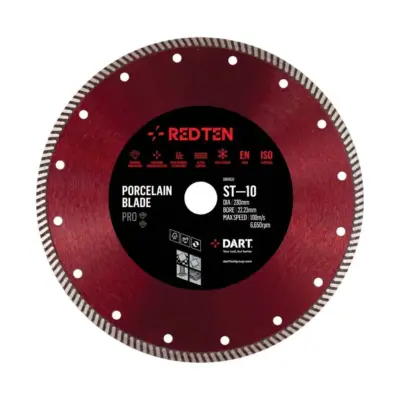
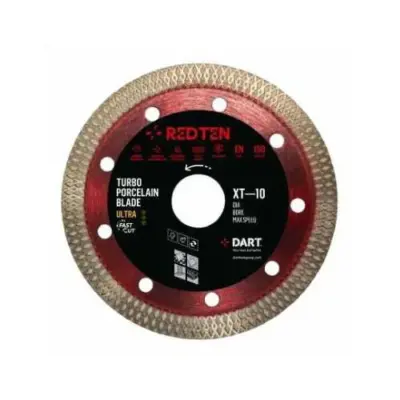
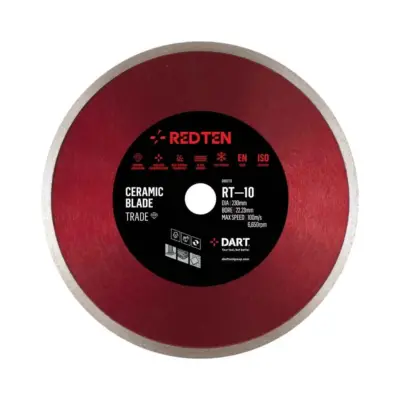
Super-thin diamond blade designed for fast, clean cuts through porcelain, ceramic, and marble tiles. Available in 100mm, 115mm, 125mm, and 300mm diameters. A 10mm segment height keeps the blade cutting efficiently without dragging.
Size
Price
QTY
300mm x 20mm
£54.66£65.59
100mm x 16mm
£13.82£16.58
115mm x 22mm
£15.94£19.13
125mm x 22mm
£16.95£20.34
The Dart Red 10 PRO ST-10 is a super-thin porcelain tile cutting blade built for tradespeople who need clean, fast results on hard tile materials. Porcelain is notoriously unforgiving — too much pressure or the wrong blade and you get chipping, cracking, or a finish that needs grinding back. This blade is designed specifically to avoid all of that. The ultra-thin kerf reduces friction, keeps heat down, and lets the diamond segment do the work rather than brute-forcing through the material.
The ST-10 designation refers to the super-thin body profile combined with a 10mm segment height. That segment height is a practical detail worth noting: a taller segment means more usable diamond, which extends blade life and keeps performance consistent as the blade wears. You get more cuts per blade before the performance starts to fall off, which matters when you are pricing jobs and ordering materials.
Where the Dart Red 10 PRO Porcelain Tile Cutting Blade Performs
This blade handles full-body porcelain, glazed ceramic, and marble with equal confidence. Full-body porcelain is one of the toughest materials a tiler encounters — it is dense, abrasive, and shows up any imperfection in the cut edge immediately. The Dart PRO ST-10 is designed to cut through this material cleanly, producing a tight, chip-free edge that needs minimal dressing before grouting.
The blade is available in four diameters: 100mm, 115mm, 125mm, and 300mm. The smaller sizes suit angle grinders used for detail cuts, trimming around pipework, or cutting floor tiles in situ. The 300mm blade fits a tile saw or bench-mounted wet saw and handles larger format floor tiles and wall tiles where you need a full straight run. Having the right diameter for the tool you are using is half the battle — undersizing or adapting the wrong blade wastes time and wears the blade unevenly.
Wet or Dry Cutting
The Dart Red 10 PRO ST-10 is suitable for both wet and dry cutting, which gives it real flexibility on site. Wet cutting on a bench saw gives the cleanest finish and longest blade life. Dry cutting with an angle grinder is fine for shorter runs, though it is worth keeping cuts brief and allowing cooling time between passes — heat is the enemy of any diamond blade, and porcelain generates more of it than softer tile materials.
The blade fits standard arbors across the size range: 16mm bore on the 100mm blade and 22mm bore on the 115mm and 125mm versions, with a 20mm bore on the 300mm. Check your tool’s spindle size before ordering — it takes about ten seconds and saves a wasted delivery.
For tilers, builders, and floor layers who cut porcelain regularly, a blade that holds its edge and cuts cleanly is not a luxury, it is the baseline. The Dart Red 10 PRO ST-10 meets that standard at a price that makes stocking a spare a straightforward decision.
Pro Tip: When dry cutting porcelain with an angle grinder, make several shallow scoring passes rather than forcing through in one go — this keeps blade temperature down and dramatically reduces edge chipping on full-body porcelain.
The Dart Red 10 PRO ST-10 is used by tilers, floor layers, and general builders cutting porcelain, ceramic, and marble tiles on both new-build and renovation projects. The smaller diameter blades are regularly used for cutting around waste pipes, door frames, and architraves where a tile saw cannot reach. The 300mm blade suits bench saws and wet tile cutters handling large format floor and wall tiles, particularly the 600x600mm and 800x800mm porcelain slabs that have become standard on commercial and residential projects.
Not suitable for: Not suitable for cutting brick, block, concrete, or stone paving — the super-thin body is optimised for tile materials and will wear rapidly on abrasive masonry. Not recommended for continuous dry cutting on large format tiles where a wet saw is available.
Fit the blade securely to your angle grinder or tile saw, checking that the bore size matches your tool's spindle before starting. For wet cutting on a bench saw, ensure the water feed is running before the blade contacts the tile — this keeps the segment cool and produces the cleanest edge. For dry cutting with an angle grinder, use light, consistent pressure and make several passes rather than pushing through in one cut.
Mark your cut line clearly on the tile face. Score lightly on the first pass to establish the line, then deepen progressively. On porcelain specifically, avoid stopping mid-cut if you can — restarting in the same groove can cause localised chipping at the pause point.
Check the blade bore matches your tool's spindle size before fitting
Fit the blade with the arrow on the blade body matching the direction of rotation on your tool
For bench saw use, start the water feed before bringing the blade to speed
Mark the cut line on the tile face using a pencil or tile marker
Score a shallow line on the first pass to establish the cut path
Deepen the cut progressively using light, even pressure — avoid forcing the blade
Complete cuts in a single continuous pass where possible to prevent edge chipping
Allow the blade to cool between cuts when dry cutting with an angle grinder
Can the Dart Red 10 PRO ST-10 be used dry on an angle grinder?
Yes, dry cutting is suitable for shorter runs. Keep individual cuts brief and allow the blade to cool between passes. Porcelain generates significant heat during cutting, and running the blade continuously without cooling will shorten its life and increase the risk of chipping.
Which diameter should I choose for cutting large format porcelain tiles?
The 300mm blade is the right choice for large format tiles on a bench-mounted wet tile saw. The smaller 100mm, 115mm, and 125mm blades are designed for angle grinder use and suit detail cuts, trimming, and smaller tiles.
What bore size does each blade use?
The 100mm blade has a 16mm bore, the 115mm and 125mm blades use a 22mm bore, and the 300mm blade uses a 20mm bore. Always confirm your tool's spindle size before ordering to make sure you get the right fit first time.
The Dart Red 10 PRO ST-10 uses a super-thin steel core with sintered diamond segments bonded at a 10mm height. The thin kerf body reduces friction and heat generation during cutting, which is particularly important when working with dense, low-porosity materials such as full-body porcelain. The diamond segment is formulated for cutting hard, abrasive tile materials including porcelain, ceramic, and marble, and the blade is rated for both wet and dry cutting applications across all available sizes.
Brand
Dart
Model
Red 10 PRO ST-10
Segment Height
10mm
Available Diameters
100mm, 115mm, 125mm, 300mm
Bore Size (100mm blade)
16mm
Bore Size (115mm and 125mm blades)
22mm
Bore Size (300mm blade)
20mm
Cutting Applications
Wet and dry
Suitable Materials
Porcelain, ceramic, marble
Size
300mm x 20mm, 100mm x 16mm, 115mm x 22mm, 125mm x 22mm
Reviews
There are no reviews yet.
Be the first to review “Dart Red 10 PRO ST-10 Super Thin Porcelain Tile Cutting Blade”Cancel Reply




Reviews
There are no reviews yet.