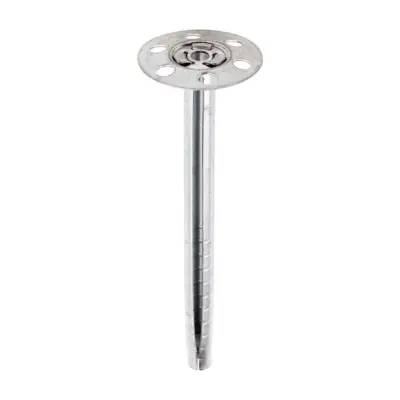
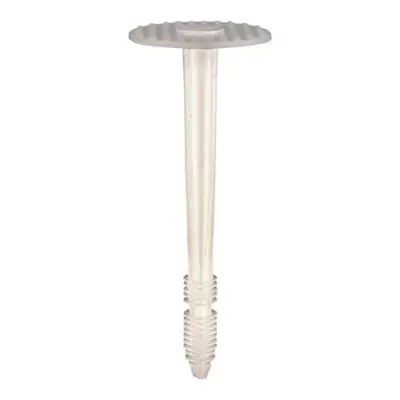
All-metal through fixings designed to anchor insulation boards securely to concrete and masonry. Large diameter head prevents pull-through. Available in 60mm, 90mm, 110mm and 140mm lengths. Sold in packs of 100.
Size
Price
QTY
8.0 x 60mm (qty:100)
£11.85£14.22
8.0 x 90mm (qty:100)
£12.83£15.40
8.0 x 110mm (qty:100)
£13.82£16.58
8.0 x 140mm (qty:100)
£16.97£20.36
Metal insulation fixings are the straightforward solution for securing rigid insulation boards to concrete and masonry substrates. Whether you are installing external wall insulation, insulating a cavity, or fixing boards to a block wall, these 8.0mm all-metal fixings do the job without drama. The large diameter head spreads load across the insulation face, stopping the fixing from pulling through the board under wind load or general movement. A marked minimum embedment depth takes the guesswork out of getting the right purchase into the substrate.
Available in four lengths, 60mm, 90mm, 110mm and 140mm, these fixings suit a wide range of insulation thicknesses and substrate types. Picking the right length is simple: add your insulation thickness to the required embedment depth for the substrate, and choose accordingly. The all-metal construction means no snapped plastic shanks mid-install, which, if you have ever had that happen halfway up a scaffold, you will appreciate more than most.
Where Metal Insulation Fixings Get Used
These fixings are most commonly used in external wall insulation systems, where rigid boards need a secure mechanical fix before render or cladding goes on. They work just as well internally, fixing boards to basement walls, plant room walls, or any masonry surface where adhesive alone is not considered sufficient. Ground workers, insulation installers and general builders all reach for metal insulation fixings at various points in a build.
A Note on Thermal Bridging
One thing worth flagging. All-metal fixings conduct heat, which is the trade-off for the extra strength. Where thermal performance is a priority, fitting plastic cover caps over the heads reduces the risk of thermal transmission through the fixing point. Timco plastic cover caps are compatible and available separately. On a commercial project or Passivhaus spec job, that extra step is worth the effort.
Supplied in packs of 100, these metal insulation fixings are priced for trade volumes. Four sizes in stock and ready to go.
Pro Tip: Always pre-drill a clean hole slightly smaller than the fixing shank in dense concrete to avoid cracking the substrate face and ensure the fixing grips properly rather than spinning.
Metal insulation fixings are used to mechanically secure rigid insulation boards to concrete and masonry walls, both internally and externally. They are a standard fixing in external wall insulation (EWI) systems, used alongside adhesive to provide the required mechanical restraint before basecoat or cladding is applied. Internally, they are used in basements, commercial plant rooms, and any situation where boards need a positive fix to a solid background. Suitable for use by insulation installers, groundworkers, and general construction trades.
Best For
External wall insulation systems
Internal insulation to masonry
Basement and below-ground insulation
Rigid board fixing to concrete
Block wall insulation boards
Compatible Surfaces
Concrete
Dense blockwork
Masonry substrates
Brick
Key Features
All-metal through fixing construction
Large diameter head to prevent pull-through
Minimum embedment depth marker
Available in 60mm, 90mm, 110mm and 140mm
8.0mm fixing diameter
Pack of 100
Not suitable for: Not suitable for fixing into timber, steel frame, or lightweight aerated blocks where a specialist fixing is required. The all-metal construction is not ideal where maximum thermal performance is the sole priority without the addition of plastic cover caps.
Drill a clean hole into the substrate at the correct depth using an SDS or hammer drill with the appropriate bit. The depth marker on the fixing shank indicates the minimum embedment required into the substrate, so account for the full insulation board thickness when selecting your fixing length.
Drive the fixing through the insulation board and into the pre-drilled hole until the head sits flush against the board face. Avoid over-driving, which can compress or crack the insulation. Where thermal performance matters, fit plastic cover caps over the heads once all fixings are placed.
Select the correct fixing length based on insulation thickness plus required substrate embedment depth
Mark fixing positions across the insulation board face, following the relevant EWI system guidelines for fixing pattern and density
Drill through the insulation board and into the substrate using an SDS drill and appropriately sized bit
Check the hole depth is sufficient using the embedment depth marker on the fixing shank
Insert the fixing through the board and into the hole
Drive home until the large diameter head sits flush with the insulation face without over-compressing the board
Fit plastic cover caps if thermal bridging reduction is required for the specification
Which length fixing do I need for my insulation thickness?
Add your insulation board thickness to the minimum embedment depth required for your substrate, typically around 25mm to 40mm into concrete or dense masonry. For example, 60mm insulation with 40mm embedment requires a 100mm fixing minimum, so you would use the 110mm option. The embedment depth marker on the shank helps confirm correct depth on site.
Do I need plastic cover caps with these fixings?
Not strictly, but they are worth using where thermal performance is part of the specification. All-metal fixings create a small thermal bridge at each fixing point. Plastic cover caps placed over the heads reduce this significantly. On commercial or energy-performance-critical projects, caps are a straightforward step that costs very little and protects the overall U-value calculation.
Can these fixings be used without adhesive in an external wall insulation system?
Mechanical fixings are generally used alongside adhesive in EWI systems rather than instead of it. The fixing pattern and number of fixings per board should follow the EWI system manufacturer's specification and any relevant wind load calculations for the building. Using fixings alone without adhesive is possible in some scenarios but would need to be confirmed against the system specification.
These 8.0mm diameter metal insulation fixings feature an all-metal shank and a wide-diameter head designed to bear against the insulation board face without pull-through under load. The integrated depth marker on the shank indicates minimum embedment into the base substrate. Available in 60mm, 90mm, 110mm and 140mm lengths to accommodate a range of insulation thicknesses and substrate requirements. Supplied in packs of 100.
Fixing Diameter
8.0mm
Available Lengths
60mm, 90mm, 110mm, 140mm
Construction
All-metal
Head Type
Large diameter flat head
Feature
Minimum embedment depth marker
Compatible Substrates
Concrete, masonry, dense blockwork
Pack Quantity
100
SKU
DTS-METAL-INSULATION-FIXINGS
Size
8.0 x 110mm (qty:100), 8.0 x 140mm (qty:100), 8.0 x 60mm (qty:100), 8.0 x 90mm (qty:100)
Reviews
There are no reviews yet.
Be the first to review “Metal Insulation Fixings”Cancel Reply

Reviews
There are no reviews yet.