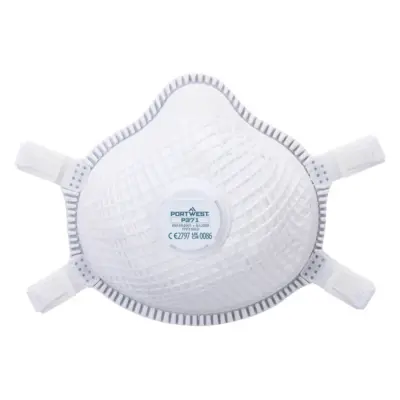
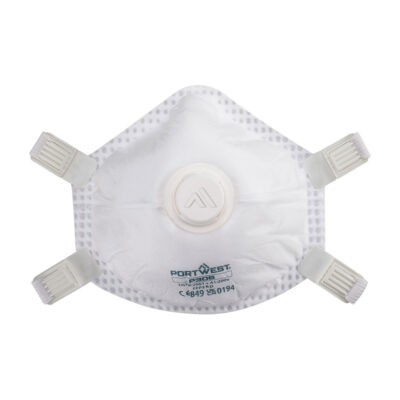
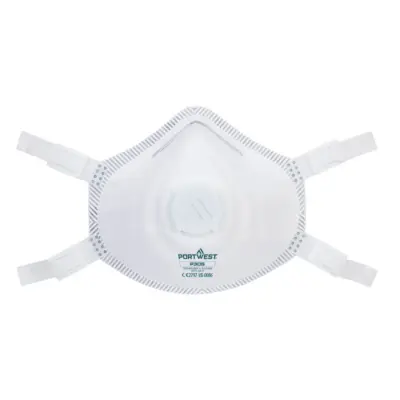
FFP3 rated, valved respirator with soft ERGONET outer cover, all-round foam gasket and wide adjustable head straps. Dolomite tested for longer filtration life. 100% metal free and CE certified to EN 149:2001+A1:2009 FFP3 NR D.
The P371 FFP3 valved respirator mask is a well-considered bit of PPE that goes beyond the basics. FFP3 is the highest protection class under EN 149, filtering at least 99% of airborne particles — so this is the mask you reach for when the dust is serious. Asbestos removal, silica-generating work, fine chemical powders, high-toxicity dusts. That kind of thing.
What makes the P371 stand out is the ERGONET outer shell. That soft net layer isn’t just for looks — it supports the filter media and keeps it clean throughout the shift, which matters if you’re working in conditions where the mask is regularly handled or stored loosely in a pocket. Without something holding the shape, the filter media can distort and the face seal suffers. The net solves that quietly and effectively.
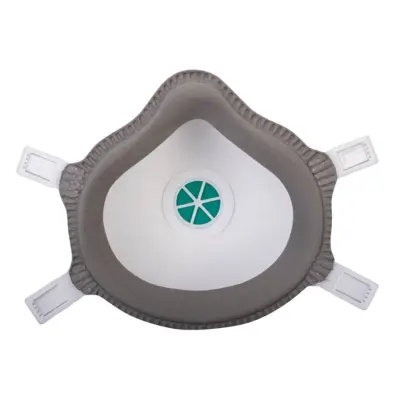
The exhalation valve is a proper high-performance unit, not an afterthought. In warm, humid environments — enclosed roof spaces, summer groundworks, plant rooms — heat and moisture build up inside a mask quickly, and that’s when people start pulling them down. The valve helps manage that, making it noticeably more comfortable to wear for extended periods.
P371 FFP3 Respirator Fit and Comfort Features
Fit matters more than most people think with FFP3 masks. The protection rating is based on a proper face seal, and if the mask isn’t sitting correctly, you’re not getting the filtration the rating promises. This mask addresses that with a moulded soft nose bridge, an all-round internal foam gasket, and wide adjustable elastic head straps. Most face shapes are covered. The foam gasket in particular does good work — it conforms to the face and holds the seal across a range of movements.
The Dolomite test certification is worth noting. This is an optional clogging resistance test that not all FFP3 masks carry. It confirms the mask maintains breathability and filtration performance when exposed to fine calcium carbonate dust over time. In practical terms, it means the mask keeps working properly well into a long shift rather than getting progressively harder to breathe through.
100% metal free, CE certified, CE Category III. Supplied in retail packaging, which also makes it easy to store and issue individually on site.
Pro Tip: Before any FFP3 mask is worn on a job involving hazardous dust, carry out a simple fit check by covering the valve and breathing in sharply — the mask should pull firmly against the face with no air leaking around the edges.
This mask is suited to trades where fine or hazardous particulates are generated in meaningful quantities. Demolition and refurbishment work involving suspected asbestos-containing materials, concrete cutting, dry grinding, and any task that produces respirable crystalline silica are the primary use cases. Pharmaceutical manufacture, chemical processing, and laboratory environments also rely on FFP3 rated protection when handling fine powders or toxic dusts.
For site workers on dusty groundworks or in confined spaces with poor ventilation, the valved design makes sustained wear more practical than an unvalved alternative. Roofers working with certain insulation materials and electricians drilling through older construction materials will find it relevant too.
Best For
Asbestos-related work
Silica dust and concrete cutting
Fine chemical and pharmaceutical powders
High-toxicity airborne particulates
Demolition and refurbishment
Confined spaces with poor ventilation
Key Features
FFP3 NR D rated — highest EN 149 class
ERGONET outer cover protects filter media
High-performance exhalation valve
All-round internal foam gasket
Moulded soft nose bridge
Wide adjustable elastic head straps
100% metal free
Dolomite clogging resistance tested
Certifications and Standards
EN 149:2001 +A1:2009 FFP3 NR D
CE certified
CE Category III
Dolomite optional clogging test (D)
Not suitable for: Not suitable for protection against gases or vapours — this is a particulate respirator only. Not intended for oxygen-deficient environments.
Put the mask on before entering the work area, not once dust is already in the air. Cup the mask over your nose and chin, pull the straps over your head and position them above and below the ears. Press the nose bridge down firmly to conform it to your face.
Carry out a fit check each time: cover the exhalation valve with your hand and breathe in — the mask should draw inward against the face with no gaps around the seal. If air leaks around the edges, readjust and try again. A mask that doesn't seal is not providing FFP3 protection, whatever the rating on the packaging says.
Inspect the mask before use — check for damage to the filter media, foam gasket or valve
Cup the mask in one hand with the nose bridge at the top and position it under your chin
Pull the lower strap over your head and position it at the base of the neck
Pull the upper strap over and position it at the crown of the head
Press the nose bridge firmly against the bridge of your nose with two fingers, moulding it to the shape
Carry out a positive pressure fit check: cover the valve, breathe out gently and check for air escaping at the edges
Carry out a negative pressure fit check: cover the valve and inhale — the mask should pull inward with no leakage
Readjust straps or nose bridge if either check fails, and repeat before entering the hazardous area
What is the difference between FFP2 and FFP3, and when do I need FFP3?
FFP2 filters at least 94% of airborne particles and covers most general dust and mist work. FFP3 filters at least 99% and is required when the hazard level is higher — specifically for work involving asbestos, highly toxic dusts, or respirable crystalline silica at elevated concentrations. If your risk assessment or method statement specifies FFP3, this is the correct mask to use.
What does the 'NR' and 'D' designation mean on this mask?
NR stands for Not Reusable — this mask is rated for single shift use only and should not be worn across multiple working days. The D indicates it has passed the optional Dolomite clogging test, which confirms the mask resists premature clogging when exposed to fine dusts, maintaining breathability and filtration throughout the working period.
The P371 is constructed from PP (polypropylene) filter media with an EVA foam gasket for the face seal. The ERGONET outer shell is a soft polymer net that supports the mask geometry and protects the filter layer from contamination and distortion. The exhalation valve is a low-resistance one-way unit designed to reduce CO2 and moisture build-up inside the mask. Certified to EN 149:2001+A1:2009 as FFP3 NR D, CE Category III — the highest category of personal protective equipment, requiring independent third-party certification.
Model
P371
Protection Class
FFP3
Standard
EN 149:2001 +A1:2009 FFP3 NR D
CE Category
III
Valve
Yes — exhalation valve
Reusability
NR (Not Reusable — single shift use)
Dolomite Tested
Yes (D)
Metal Free
Yes — 100% metal free
Materials
PP filter media, EVA foam gasket
Head Straps
Wide adjustable elastic
Reviews
There are no reviews yet.
Be the first to review “FFP3 Valved ERGONET Dolomite Respirator Mask – P371”Cancel Reply



Reviews
There are no reviews yet.