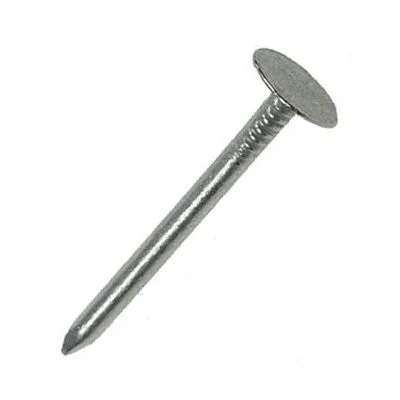
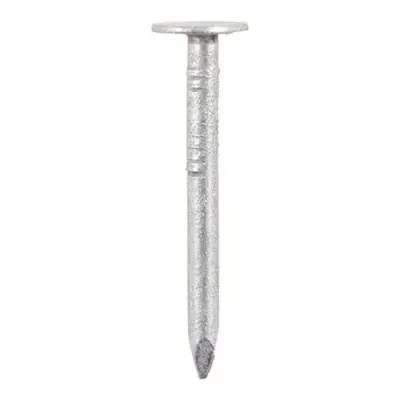
Galvanised clout nails in a 25kg bulk box. Available in a wide range of lengths and gauges, these are the standard fixing for roofing felt, slates, plasterboard, and timber battens. Solid, no-nonsense nails at a trade price worth buying.
Size
Price
QTY
20mm x 3.00
£67.98£81.58
25mm x 2.65
£69.90£83.88
30mm x 2 65
£59.90£71.88
30mm x 3 35
£59.90£71.88
40mm x 2.65
£59.90£71.88
40mm x 3 35
£59.90£71.88
50mm x 2.65
£59.90£71.88
50mm x 3 35
£59.90£71.88
65mm x 2.65
£56.90£68.28
65mm x 3.75
£56.90£68.28
75mm x 3.75
£56.90£68.28
Galvanised clout nails are one of those things every roofer, plasterer, and general builder gets through in quantity, which is exactly why buying them by the 25kg box makes sense. These nails are hot-dip or electro-galvanised to resist rust and corrosion, making them suitable for external applications where moisture is a constant. Whether you’re fixing roofing felt to decking boards, nailing slates, securing plasterboard lath, or pinning timber battens, galvanised clout nails are the go-to choice on site.
Available here in eleven size options, from 20mm x 3.00 through to 75mm x 3.75, so you can pick the right length and shank diameter for your specific job rather than making do with whatever’s in the van. The large flat head is what sets clout nails apart from standard wire nails. That wide head spreads the load and prevents thin materials, felt especially, from pulling through under wind pressure or movement. Simple idea, works every time.
Where Galvanised Clout Nails Are Used on Site
Roofing is the most common application. Felt, underlay, and sarking membranes all need to be held flat and firm before tiles or slates go on, and clout nails do that job reliably without splitting the timber beneath. The galvanising matters here because these fixings live under a roof for decades. Plain steel would be well on its way to rust before the first re-roof comes around.
Other Common Uses
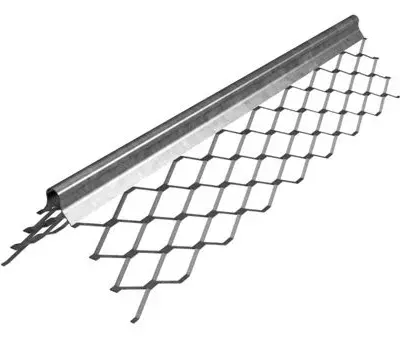
Beyond roofing, clout nails see regular use in plastering work, particularly when fixing expanded metal lath or traditional riven lath to studwork. Fencing and cladding installers also reach for them when pinning thin timber sections where a smooth, clean face finish is needed. The 25kg box quantity suits any trade setup where these nails are used regularly, reducing the number of trips to the merchant and keeping costs sensible on a per-kilo basis.
If you work across multiple job types, it’s worth keeping two or three sizes in stock. A 25mm nail that works perfectly on roofing felt would be nowhere near long enough for structural batten work, and a 75mm nail through thin felt would be something of an overstatement.
Pro Tip: When nailing roofing felt in cold weather, warm the felt slightly before fixing if you can, as cold felt is stiffer and more likely to tear around the nail head when pulled tight over battens.
Galvanised clout nails are used across roofing, plastering, fencing, and light timber construction. On roofing jobs they fix felt underlay, sarking membranes, and traditional slates to timber decks and battens. In plastering they are the standard fixing for expanded metal lath and timber lath on studwork walls and ceilings. Fencing contractors use them for pinning thin boarding and cladding panels where a neat, flat head finish is needed without over-driving.
Best For
Roofing felt and underlay
Slate and tile fixing
Expanded metal lath
Timber lath plastering
Timber battens and cladding
Fencing panels
Available Sizes
20mm x 3.00
25mm x 2.65
30mm x 2.65
30mm x 3.35
40mm x 2.65
40mm x 3.35
50mm x 2.65
50mm x 3.35
65mm x 2.65
65mm x 3.75
75mm x 3.75
Key Features
Galvanised finish for corrosion resistance
Large flat head for wide load spread
Suitable for external and exposed applications
25kg bulk box for trade use
Multiple gauge options across size range
Not suitable for: Not suitable for use with stainless steel or aluminium fixings where dissimilar metal corrosion could be an issue. Not intended for structural load-bearing connections where engineered fixings with rated capacities are required.
Select the appropriate nail length and gauge for the material being fixed. As a general guide, the nail should penetrate the substrate timber by at least twice the thickness of the material being fixed. Hold the nail vertical, strike firmly with a claw hammer or roofing hammer, and drive the head flush without over-driving into thin materials like felt, which can tear around the head if hit too hard.
For roofing felt, space nails at regular intervals along overlaps and edges, typically every 150 to 200mm, to keep the membrane flat under wind load. For lath work, nail through each lath at every stud or joist crossing point to ensure a firm, rattle-free substrate before plastering.
Select the correct nail size for your material and substrate depth
Check the timber beneath is sound and free from splits before nailing
Position the nail perpendicular to the surface
Drive firmly with a roofing or claw hammer until the head sits flush
Avoid over-driving, particularly through felt or thin timber, as the head can pull through
Space nails consistently, especially on roofing felt edges and overlaps
What is the difference between the nail gauges available, and which should I use?
The gauge refers to the shank diameter. A thicker shank gives more holding strength and is better suited to heavier or structural timber work, while a finer gauge is less likely to split thin lath or softwood. For roofing felt and light battens, the 2.65mm shank options are standard. For heavier battens, slate fixing, or anywhere you need more grip, go for the 3.35mm or 3.75mm options.
Will galvanised clout nails rust if left exposed to the weather?
Galvanising gives these nails good resistance to rust and corrosion in outdoor conditions, which is why they are the standard choice for roofing applications. They will outlast plain steel nails by a significant margin in wet or exposed environments. For genuinely aggressive coastal or marine environments, stainless steel fixings would be the more cautious choice.
How many nails are approximately in a 25kg box?
The count varies depending on the size selected. Smaller, lighter nails like the 20mm or 25mm options will give you significantly more nails per kilogram than the longer 65mm or 75mm sizes. As a rough guide, a 25kg box of 30mm x 2.65mm nails will typically contain several thousand nails, whereas the 75mm x 3.75mm box will contain considerably fewer. If you need an exact count for a specific size, contact us before ordering.
Galvanised clout nails are produced from mild steel wire, drawn to the specified shank diameter and headed with a wide, flat cap head. The galvanised coating is applied to protect against oxidisation in damp and exposed conditions. The flat head profile distributes clamping force across thin or flexible materials, reducing the risk of pull-through under load or movement.
Material
Galvanised mild steel
Head Type
Flat clout head
Box Weight
25kg
Available Sizes
20mm x 3.00, 25mm x 2.65, 30mm x 2.65, 30mm x 3.35, 40mm x 2.65, 40mm x 3.35, 50mm x 2.65, 50mm x 3.35, 65mm x 2.65, 65mm x 3.75, 75mm x 3.75
Finish
Galvanised
Application
Roofing felt, lath, timber battens, cladding
Weight
N/A
Size
20mm x 3.00, 25mm x 2.65, 30mm x 2 65, 30mm x 3 35, 40mm x 2.65, 40mm x 3 35, 50mm x 2.65, 50mm x 3 35, 65mm x 2.65, 65mm x 3.75, 75mm x 3.75
Box Quantity
25
Product Type
Galvanised Clout Nails
Reviews
There are no reviews yet.
Be the first to review “Galvanised Clout Nails – 25kg Box”Cancel Reply

Reviews
There are no reviews yet.