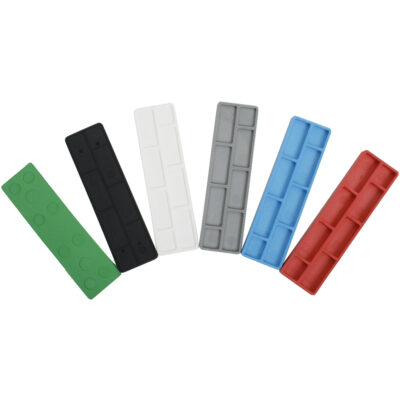
Colour-coded plastic glazing packers, 28x100mm, in thicknesses from 1mm to 6mm. Sold in 100, 300 or 1000 piece packs, or as mixed packs and tubs. They are what sits between the glass and the frame, and they are not the place to cut corners.
Available options and pricing for Glazing / Flat Packers, with quantity selectors and a running total
Variant
QTY
SKU
Price
QTY
Total
28x100mm GREEN 1mm
1000
RPSG102801
£12.84£15.41
—
28x100mm BLACK 2mm
1000
RPSG102802
£14.81£17.77
—
28x100mm WHITE 3mm
1000
RPSG102803
£15.47£18.56
—
28x100mm GREY 4mm
1000
RPSG102804
£17.60£21.12
—
28x100mm BLUE 5mm
1000
RPSG102805
£18.59£22.31
—
28x100mm RED 6mm
1000
RPSG102806
£20.24£24.29
—
28x100mm MIXED PACK 100
100
RPSGP28100
£3.47£4.16
—
28x100mm MIXED TUB 300
300
RPSGT28100
£10.44£12.53
—
Glazing packers do a quiet job. Nobody admires them once the unit is in and the beads are snapped home, but if they’re wrong or missing, everybody notices about six months later. These glazing / flat packers are 28mm x 100mm plastic strips, colour coded by thickness so you can grab the right one without squinting at a tape measure.
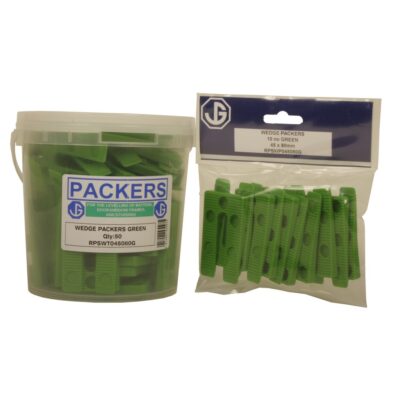
The range runs from 1mm up to 6mm. Green is 1mm, black 2mm, white 3mm, grey 4mm, blue 5mm and red 6mm. Most fitters learn the colours within a week and then wonder how they ever managed without them. You can buy single thicknesses in packs of 100, 300 or 1000, or go for the mixed pack of 100 or the mixed tub of 300 if you want a bit of everything in the van.
What Glazing / Flat Packers Are Actually For
A sealed unit should never sit directly on the frame rebate. Packers carry the weight of the glass, hold the unit central in the opening and keep it square. Setting blocks go under the glass at the bottom edge, and these flat packers fill the gaps around the perimeter and help you take up the difference between the unit and the rebate. Get the packing right and the sashes open and close cleanly. Get it wrong and you’ll be back on site wondering why a casement is dropping.
They’re also handy outside of glazing. A 28x100mm flat packer is a useful size for levelling window and door frames, packing out behind fixings, and generally taking up small gaps where a hardwood wedge would be too crude. Plastic doesn’t rot, doesn’t swell and doesn’t go soft if it sits in a damp opening, which is more than you can say for the offcuts of timber some sites still rely on.
Choosing the Right Thickness
The thickness you need depends on the gap between the glass and the rebate. Dry glaze the unit first, check the clearance all round, then build up with the colours to suit. Combining packers is perfectly normal. A white and a green gives you 4mm, for example, and it’s often easier to stack two thin ones than carry every thickness in bulk. If you’re doing a full day of mixed jobs, the mixed pack or tub saves you buying six separate bags and losing half of them under the seat.
The material is a rigid plastic that holds its shape under load, so the glass stays where you put it. The packers won’t compress over time the way softer materials can, which matters on larger or heavier units where the weight is significant.
Buying Glazing Packers in Bulk
If you’re glazing regularly, the 1000 piece packs make sense. They work out noticeably cheaper per piece, and a pack of the common thicknesses will last a long time on domestic replacement work. Smaller firms and one-man bands often prefer the mixed tub, as it keeps everything in one place and the lid stops them scattering across the van floor, which is where packers usually go to disappear.
Every thickness is held as its own stock line, so you can top up the colours you run out of fastest without reordering the lot. Black and white tend to go first, for no reason anyone has ever properly explained.
Pro Tip: Always dry fit the unit and check the gap all round before you start packing, because fitting the packers as you go is how you end up with a bind on the sash that you can only fix by taking the glass back out.
These packers are used wherever a sealed unit or glazed panel needs to be supported and held square in a frame. That means replacement double glazing, new window and door installs, conservatory roof glazing, and general frame levelling. They suit uPVC, aluminium and timber frames equally well, and glaziers, window fitters and joiners all find a use for them. They also earn their keep for small levelling and packing jobs where you need a thin, stable shim that won't compress or rot.
Best For
Packing sealed units in frames
Replacement glazing
New window and door installs
Levelling frames in openings
General packing and shimming
Works With
uPVC frames
Aluminium frames
Timber frames
Sealed glass units
Setting blocks
Glazing beads
Key Specifications
Size 28mm x 100mm
Thicknesses 1mm to 6mm
Colour coded by thickness
Rigid plastic construction
Packs of 100, 300 or 1000
Mixed packs and tubs available
Not suitable for: These are packers, not setting blocks, so they should not be used as the main load-bearing support under heavy glass in place of proper setting blocks. They are also not designed for structural packing under steel or heavy load-bearing members.
Dry fit the glass unit in the frame first and measure the gap between the glass edge and the rebate. Use the colour chart to pick the thickness you need, stacking two packers if one isn't enough.
Place the packers at the corners and along the edges as required, keeping them in line with the setting blocks so the load is carried evenly. Check the unit is central and square before you fit the beads.
Dry fit the glass unit in the frame and measure the gap to the rebate.
Match the gap to the packer thickness using the colour code.
Stack thinner packers together if a single thickness doesn't fit.
Fit setting blocks at the bottom edge to carry the weight of the glass.
Place packers at the corners and along the edges to hold the unit square.
Check the unit is central, then fit the beads and test the sash.
What do the different colours mean?
Each colour is a different thickness. Green is 1mm, black is 2mm, white is 3mm, grey is 4mm, blue is 5mm and red is 6mm. All are 28mm x 100mm.
Can I stack the packers together?
Yes. Stacking two or more packers is normal practice for building up to the thickness you need. For example, a white and a green together give you 4mm.
Should I buy single colours or the mixed pack?
If you know which thicknesses you use most, buy those in bulk as the per piece cost drops. The mixed pack of 100 or mixed tub of 300 is better if you work across different jobs and want a spread of thicknesses to hand.
These are flat plastic glazing packers measuring 28mm x 100mm, supplied in thicknesses from 1mm to 6mm. The rigid plastic construction resists compression under the weight of sealed units and is unaffected by damp, so it won't rot or swell like timber. Each thickness is colour coded for quick identification on site.
Width
28mm
Length
100mm
Thickness Range
1mm to 6mm
1mm
Green
2mm
Black
3mm
White
4mm
Grey
5mm
Blue
6mm
Red
Material
Rigid plastic
Pack Sizes
100, 300 or 1000
Variant
28x100mm BLACK 2mm, 28x100mm BLUE 5mm, 28x100mm GREEN 1mm, 28x100mm GREY 4mm, 28x100mm MIXED PACK 100, 28x100mm MIXED TUB 300, 28x100mm RED 6mm, 28x100mm WHITE 3mm
QTY
100, 300, 1000
Reviews
There are no reviews yet.
Be the first to review “Glazing / Flat Packers”Cancel Reply



Reviews
There are no reviews yet.