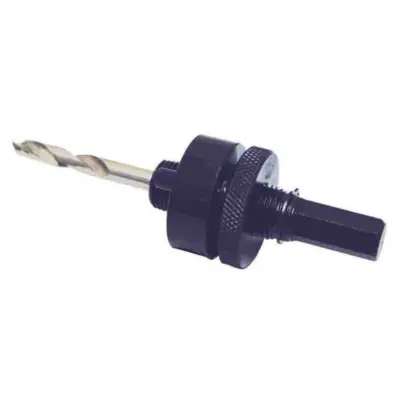
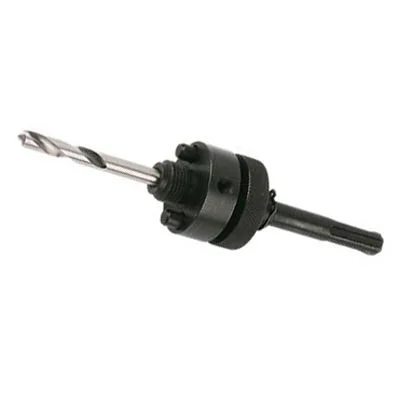
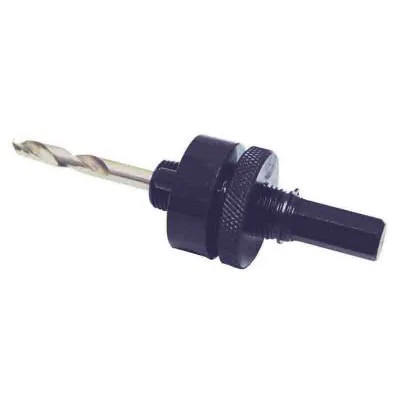
Two-size arbor range covering 14mm to 152mm holesaws. The A1 suits smaller saws from 14mm to 30mm, the A2 handles the larger 32mm to 152mm range. Simple, no-fuss holesaw drive adaptors for everyday drilling work.
Available options and pricing for Holesaw Arbors, with quantity selectors and a running total
Size
SKU
Price
QTY
Total
14 30mm
HS-ARB1
£2.89£3.47
—
32 152mm
HS-ARB2
£4.89£5.87
—
A holesaw arbor is one of those things you only think about when you haven’t got one. It’s the bit in the middle — the mandrel that drives the holesaw and holds the pilot drill in place while you’re cutting. Without the right arbor for the job, nothing spins correctly, nothing cuts cleanly, and you end up with a wobbly hole and a bad mood. These arbors cover the full working range across two sizes: the A1 fits holesaws from 14mm to 30mm, and the A2 takes care of 32mm up to 152mm, which gets you well into the large-format cutting territory used on cable entry points, soil pipe runs, and recessed downlight installations.
Both are standard shank arbors designed to chuck straight into a corded drill or cordless driver. The pilot drill sits through the centre and extends beyond the holesaw teeth, giving you a clean pilot hole to locate the cut before the main saw bites in. This keeps the saw from wandering on the surface, which matters particularly on tiles, plasterboard, and timber where a skating holesaw causes damage fast.
Holesaw Arbor Sizes and What They Cover
The A1 is your go-to for anything in the 14mm to 30mm bracket — think cable entry grommets, small conduit knockouts, and similar compact apertures. The A2 is the workhorse for 32mm right through to 152mm. That upper end of the range is what you need when you’re cutting for soil pipes, large soil stack connections, or running 100mm extract duct through a stud wall. Most tradespeople end up keeping both on the van, partly because losing an arbor mid-job is practically a rite of passage in this trade.
At this price, picking up a spare holesaw arbor while you’re ordering makes obvious sense. They get lost, left behind, or borrowed and not returned — having a backup costs less than a large coffee and saves considerably more grief.
Pro Tip: Always check the pilot drill is sitting proud of the holesaw teeth before you start cutting — if the pilot is flush or recessed, the saw will skate and you'll damage both the surface and the holesaw teeth before the cut even starts.
Holesaw arbors are used across virtually every trade that involves drilling apertures in materials. Electricians use them for back boxes, consumer unit knockouts, and cable entry points. Plumbers reach for them when cutting pipe entry holes through joists, walls, and worktops. General builders use them for soil pipe runs, downlight recesses, and ventilation duct openings. The A1 suits lighter cabinet and joinery work where smaller cutters are in use, while the A2 handles the heavier structural and services work where larger diameter cuts are needed.
Best For
Electricians drilling cable entries and back boxes
Plumbers cutting pipe apertures through joists and walls
Builders installing downlights and ventilation ducting
General trade drilling with bi-metal or carbide holesaws
Works With
A1: holesaws 14mm to 30mm
A2: holesaws 32mm to 152mm
Standard corded and cordless drills
Bi-metal holesaws
Carbide-tipped holesaws
Key Features
Pilot drill locates cut before teeth engage
Prevents holesaw wandering on smooth surfaces
Two sizes cover full standard holesaw range
Simple chuck-fit shank for quick swaps
Not suitable for: These arbors are not suitable for use with holesaws outside their stated size range. Using an A1 arbor with a holesaw above 30mm, or an A2 with a cutter below 32mm, will result in poor fit and unsafe operation.
Fit the pilot drill through the centre of the holesaw and thread it into the arbor, then tighten the locking mechanism so the drill protrudes beyond the saw teeth. Chuck the arbor shank into your drill, mark your centre point on the work surface, and locate the pilot tip on the mark before applying any pressure. Let the pilot drill engage first, then allow the holesaw teeth to bite in gradually without forcing the pace.
On harder materials such as ceramic tile or dense timber, keep speed moderate and apply steady, even pressure. Forcing the cut generates heat and blunts the holesaw quickly. On plasterboard and softwood, speed can be a little higher and the cut will be fast.
Select the correct arbor for your holesaw size: A1 for 14mm to 30mm, A2 for 32mm to 152mm
Thread the pilot drill through the centre of the holesaw and into the arbor
Tighten the arbor locking screw so the pilot drill extends clearly beyond the holesaw teeth
Chuck the arbor shank firmly into your drill or driver
Mark the centre point of your intended hole on the work surface
Place the pilot tip on the centre mark, hold the drill square to the surface, and begin cutting at moderate speed
Allow the pilot to establish the hole before the saw teeth fully engage
Maintain steady pressure without forcing — ease off if the saw starts to bind or overheat
What is the difference between the A1 and A2 holesaw arbor?
The A1 is designed for smaller holesaws from 14mm to 30mm, and the A2 covers the larger range from 32mm up to 152mm. Both use the same basic design with a central pilot drill, but the thread and collar diameter are sized to match their respective holesaw ranges. Most tradespeople keep one of each.
Will these arbors fit any brand of holesaw?
They are designed to standard dimensions that fit the majority of bi-metal and carbide holesaws on the market. The vast majority of holesaws from common brands use a standardised thread fitting. If in doubt, check that the holesaw thread matches the arbor before using.
What size pilot drill do I need for these arbors?
Most standard holesaw arbors of this type accept a 6mm pilot drill, which is the most common size supplied with holesaws. Check the arbor chuck size before buying a replacement pilot drill if yours is missing.
These arbors are manufactured to standard holesaw arbor dimensions compatible with bi-metal and carbide holesaws across the full 14mm to 152mm cutting diameter range. The A1 covers the 14mm to 30mm bracket and the A2 handles 32mm to 152mm. Both feature a central pilot drill bore and locking mechanism to secure the pilot in position during cutting. Shank dimensions are standard for use with most corded and cordless drill chucks.
A1 Arbor Size Range
14mm to 30mm
A2 Arbor Size Range
32mm to 152mm
Box Quantity
1
Compatible With
Bi-metal and carbide holesaws
SKU
HOLE-ACC
Weight
N/A
Size
14 30mm, 32 152mm
Box Quantity
1
Product Type
Holesaw Arbors & Accessories
Reviews
There are no reviews yet.
Be the first to review “Holesaw Arbors”Cancel Reply


Reviews
There are no reviews yet.