
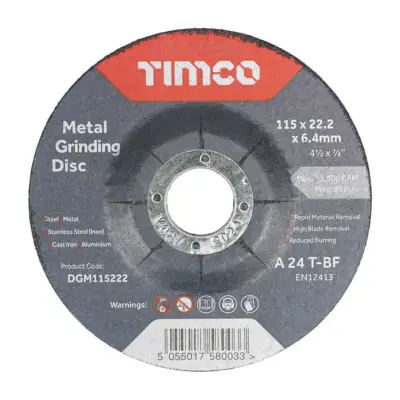
Metal Grinding Abrasive Disc – 6.4mm Thick Depressed
From £0.99£1.19 EX VATINC VAT
Fibreglass-reinforced depressed centre grinding disc for general metalworking. Aluminium oxide grit, bakelite resin bond, EN12413 compliant. Available in multiple sizes from 100mm to 230mm. Ferrous metals only.
Can’t find it? We’ll source it.
| Size | QTY | Price | QTY |
|---|---|---|---|
| 115 x 6 4 x 22.2mm | 1 | £0.99£1.19 | |
| 100 x 6.0 x 16mm | 25 | £0.99£1.19 | Out of stock |
| 100 x 6.0 x 16mm | 25 | £0.99£1.19 | Out of stock |
| 115 x 6.0 x 22.2mm | 25 | £0.99£1.19 | Out of stock |
| 125 x 6.0 x 22.2mm | 25 | £0.99£1.19 | Out of stock |
| 230 x 6.0 x 22.2mm | 15 | £0.99£1.19 | Out of stock |
The 6.4mm depressed metal grinding disc is a workhorse consumable found on practically every fabrication site, welding bay and steel fixing job in the country. Available in sizes from 100mm up to 230mm, these discs are manufactured to EN12413 with two fibreglass reinforcements, giving them the structural integrity you need when you are pushing hard against plate steel or structural sections. The depressed centre profile keeps your grinder flatter to the workpiece, which gives you better contact and more consistent results across the surface.
Each disc is produced using high grade, highly refined aluminium oxide grit bonded with a bakelite-type resin. Aluminium oxide is the standard choice for grinding ferrous metals because it cuts hard, lasts well and does not load up quickly. The resin bond keeps the grit matrix intact under the heat and friction of sustained grinding, so the disc wears evenly rather than breaking down in patches.
Where the 6.4mm Depressed Grinding Disc Gets Used
This is a general metalworking disc, so the range of applications is broad. Weld dressing is probably the most common job — running over a bead to flush it back and smooth the surface before inspection or painting. Steel preparation is another big one, whether that is removing mill scale, surface rust or old coatings before fabrication. Angle grinding down bolt heads, cleaning up cut edges, deburring plate: all standard territory for a disc like this.
The 115mm and 125mm versions are the most common sizes for day-to-day hand-held angle grinder work. The 230mm disc is more suited to larger grinders where you need to cover more ground quickly, though at that diameter you want to make sure your machine speed rating matches the disc. The 100mm disc fits smaller grinders used in tighter spaces.
EN12413 Compliance
EN12413 is the European standard that governs bonded abrasive products. It sets requirements for the mechanical properties of the disc, including burst speed testing, which matters when you consider these things spin at thousands of RPM in close proximity to your face. It is not a marketing footnote — it is the reason you should care about where your grinding discs come from. These are made to that standard, which is the baseline requirement for use in professional environments.
At under a pound a disc when bought in quantity, these are priced for trade use. Keep a stock on site and you will not be caught short mid-job.
Pro Tip: If a disc feels like it is glazing over and cutting slowly, you are more likely running too light a pressure than using a worn disc — lean into it with consistent, even force and the fresh grit will re-expose itself.
You may also like…
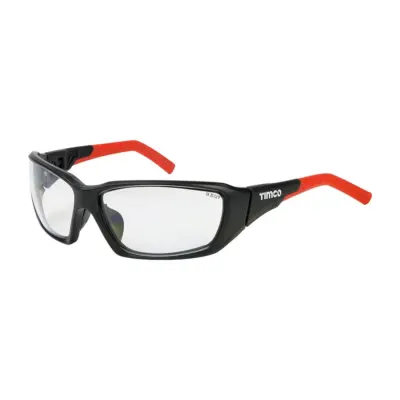
Sports Style Safety Glasses Adjustable Temples Clear
£6.43£7.72 EX VATINC VAT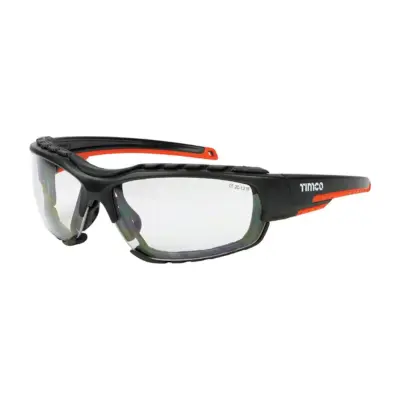
Sports Style Safety Glasses – With Foam Dust Guard – Clear
£7.23£8.68 EX VATINC VAT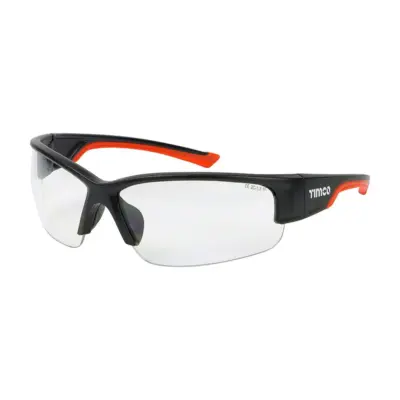
Premium Safety Glasses – Half Frame – Clear
£3.44£4.13 EX VATINC VAT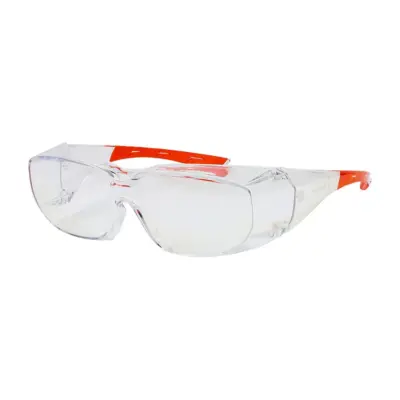
Slimfit Overspecs Safety Glasses Clear
£2.59£3.11 EX VATINC VAT
Reviews
There are no reviews yet.