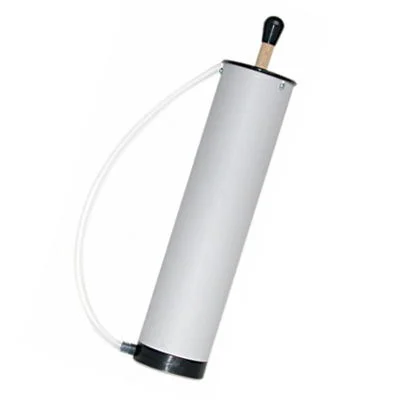
A simple hand pump for clearing dust and debris from drilled holes before chemical anchor installation. Proper hole preparation is one of the most overlooked steps in resin fixing, and this tool makes it quick and easy.
The resin blow out pump tool is one of those items that sits quietly in a bag until you realise you’ve just wasted a tube of chemical anchor because the hole wasn’t clean. Resin needs direct contact with the substrate to cure properly and bond at full strength. Dust, loose aggregate, and drilling debris all get in the way of that. This pump clears them out in seconds.
Chemical anchor systems are specified to work in clean, dry holes. That’s not a suggestion buried in the small print — it’s the basis on which the load ratings are calculated. If you’re setting threaded rods, anchor bolts, rebar, or fixings into concrete, brick, or blockwork, a clean hole is the difference between a fixing that performs and one that fails. The resin blow out pump tool handles the preparation step quickly and without needing a compressor on site.
Using a Blow Out Pump Tool for Chemical Anchor Preparation
The process is straightforward. After drilling, you insert the nozzle into the hole and pump firmly several times to force air through and eject the debris. Most manufacturers of chemical anchor systems recommend blowing out the hole a minimum of two to three times, then brushing with a wire brush, then blowing again. This pump handles both the first and final blow-out stages of that sequence.
It’s compact enough to carry in a tool belt pouch and light enough that there’s no reason not to have one with you. On sites where compressed air isn’t available — which is most sites at some point — this is the practical alternative. It works for standard hole diameters used in everyday anchor work and takes seconds per fixing.
At this price, it’s not the kind of thing you should be without if you’re regularly installing resin anchors. Skipping hole preparation to save thirty seconds is a false economy when the anchor system costs several times more than this tool.
Pro Tip: Always blow out the hole after brushing, not just before — the wire brush loosens fresh debris that will settle back to the base of the hole if you don't clear it again.
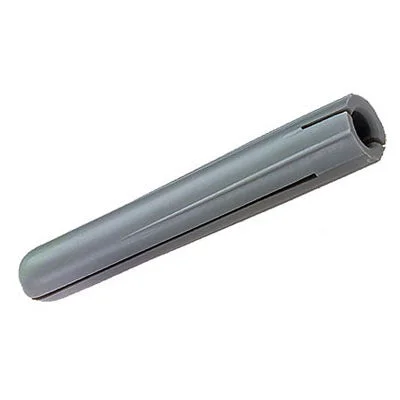
Used during the installation of chemical anchor systems in concrete, brick, stone, and blockwork. Relevant wherever threaded rod, rebar, anchor bolts, or studding are being set using resin cartridges. Common on structural fixing jobs, groundworks, steelwork connections, balustrade and handrail installations, and any application where torque loads or pull-out values need to be reliable. Also useful when setting fixings in hollow or perforated masonry where capsule or mesh sleeve systems are being used.
Best For
Chemical anchor hole preparation
Resin fixing installation
Threaded rod and rebar setting
Sites without compressed air access
Anchor bolt installation in concrete and masonry
Works With
All standard chemical anchor resin systems
Perforated and solid sleeve anchors
Drilled holes in concrete
Drilled holes in brick and blockwork
Drilled holes in natural stone
Key Features
Manual hand pump operation
No compressor required
Compact and lightweight
Suitable for standard anchor hole diameters
Reusable
Not suitable for: Not a replacement for a wire brush — blowing alone does not remove fine dust bonded to the hole walls. For large-diameter holes or high-volume anchor work, a dedicated blow-out nozzle connected to a compressor will be faster.
Insert the nozzle fully into the drilled hole and pump firmly to drive air through, ejecting loose debris from the base upward. Repeat the blow-out sequence a minimum of two to three times. Follow with a wire brush to dislodge surface dust from the hole walls, then blow out again before injecting resin. The hole should be clean and free of standing dust before the chemical anchor cartridge is used.
Drill the hole to the diameter and depth specified by the anchor manufacturer
Insert the pump nozzle fully to the base of the hole
Pump firmly two to three times to eject loose debris
Brush the hole walls with a correctly sized wire brush
Blow out again two to three times to clear the debris loosened by brushing
Check the hole is clean and dry before injecting the resin cartridge
Do I really need to blow out the hole before using chemical anchors?
Yes. Every major chemical anchor manufacturer specifies clean holes as a requirement for the published load values to apply. Dust and debris prevent the resin from bonding fully to the substrate, which reduces pull-out strength. On structural or safety-critical applications this is not a step you can skip.
Can this pump be used for all hole sizes?
It works well for the standard hole diameters used in most everyday anchor work. For very large diameter holes the volume of air per stroke may mean you need more pumps to clear the hole effectively, but it will still do the job. It is not designed for very small holes below around 6mm.
A manually operated air pump designed specifically for cleaning drilled holes prior to chemical anchor installation. Constructed for repeated site use, with a nozzle sized to fit standard anchor hole diameters. No power source required. Works by positive air displacement to force debris out of the hole from base to mouth.
Product Type
Blow Out Pump Tool
Operation
Manual hand pump
Power Required
None
Application
Chemical anchor hole preparation
SKU
BOPT
Product Type
Blow Out Tools
Reviews
There are no reviews yet.
Be the first to review “Resin Blow Out Pump Tool”Cancel Reply

Reviews
There are no reviews yet.