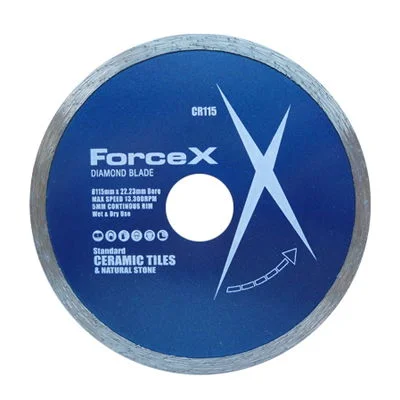
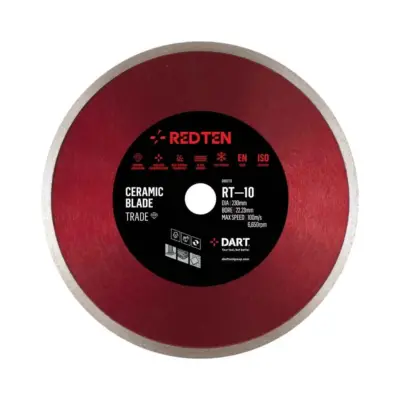
Continuous rim diamond blade for clean, chip-free cuts through ceramic tiles, floor and wall tiles, natural stone, quarry tile and slate. Available in 100mm to 125mm. Suitable for wet or dry cutting, with longer life when used wet.
Size
Price
QTY
100mm x 16mm
£3.72£4.46
110mm x 22mm
£3.46£4.15
115mm x 22mm
£3.88£4.66
A ceramic tile diamond blade sounds simple enough, and that is sort of the point. This is a continuous rim blade designed specifically to cut ceramic and similar materials without cracking, chipping, or leaving you re-grouting a tile you have just destroyed. The continuous rim segment is what does the work here — rather than a segmented edge that can snatch or tear, the unbroken rim glides through the surface, producing a clean cut edge straight off the blade. No tidying up. No chip-out on the face.
These blades are available in 100mm x 16mm, 110mm x 22mm, 115mm x 22mm and 125mm x 22mm, covering the most common angle grinder and tile cutter sizes used on site. The 110mm size comes supplied with reduction bushes to fit a range of spindle sizes, which saves messing around sourcing adapters separately.
Where Ceramic Tile Diamond Blades Get Used
In practice, you will reach for one of these any time you are cutting ceramic or porcelain wall tiles, floor tiles, quarry tile, slate, or general natural stone. They are equally at home in a bathroom refit or a larger commercial tiling job. Because these materials are hard and brittle, the continuous rim matters — a blade built for masonry or concrete will not give you the same face finish and is far more likely to crack a tile on the cut.
Wet or Dry Cutting
These blades can be run wet or dry. Dry cutting is perfectly fine for short runs and avoids the hassle of water on site. That said, running them wet will noticeably extend blade life — water carries heat away from the rim and keeps the diamond bond from wearing faster than it needs to. If you are doing volume cutting, set up a wet feed and you will get considerably more cuts per blade before it starts to drag.
At this price point, having a spare or two on the van costs next to nothing. Handy when a blade gives up halfway through a job with three tiles left to cut.
Pro Tip: Always let the blade do the work at a consistent, steady feed rate — forcing the cut generates heat that degrades the diamond bond faster, especially on dry cuts.
Ceramic tile diamond blades are used across tiling and renovation work wherever clean, precise cuts are needed on hard, brittle surfaces. Bathroom and kitchen tiling jobs are the obvious application, but these blades also handle floor tile installation, quarry tile cutting in utility and commercial spaces, slate cutting for hearths or flooring features, and general natural stone trimming. They work with angle grinders at the smaller sizes and with bench-mounted or hand-held tile cutters depending on diameter.
Best For
Ceramic wall and floor tiles
Porcelain tiles
Natural stone
Quarry tile
Slate
Wet or dry cutting
Available In
100mm x 16mm
110mm x 22mm
115mm x 22mm
125mm x 22mm
Key Features
Continuous rim segment for chip-free cuts
Wet or dry use
Extended life when used wet
Reduction bushes supplied with 110mm size
Fits standard angle grinder spindles
Not suitable for: Not intended for cutting reinforced concrete, hard engineering brick, or general masonry. Using this blade on abrasive materials such as sand-and-cement render will wear the rim quickly and will not produce the clean finish it is designed for.
Fit the blade to your angle grinder or tile cutter, ensuring the spindle size matches and the blade is properly seated and secured. Mark your cut line clearly on the tile face. For dry cutting, keep the tool moving at a steady pace without forcing the blade through. For extended use or thicker tiles, introduce a water feed to the cut to manage heat and preserve blade life.
Support the tile properly when cutting to avoid cracking from flex. Cutting freehand on an unsupported tile is a good way to waste material. A simple straight edge clamped to the tile face keeps cuts accurate and gives the blade something to track against.
Check the blade diameter and bore match your angle grinder or tile cutter
Fit the blade securely, ensuring the flange is tightened and the blade runs true
Mark the cut line on the tile using a pencil or tile marker
Support the tile on a flat, firm surface with the cut line clear of the support
Start the cut at a steady, consistent feed rate without applying excessive pressure
For wet cutting, direct a controlled water flow to the cutting zone throughout the cut
Allow the blade to stop completely before setting the tool down or inspecting the cut
Can I use this blade dry, or does it have to be wet?
You can use it either way. Dry cutting is fine for occasional cuts and short runs. Running it wet extends blade life considerably because water manages the heat at the rim — if you are doing a full day of cutting, it is worth setting up a wet feed.
Will this blade cut porcelain as well as standard ceramic tiles?
Yes. Porcelain is harder than standard ceramic, so expect slightly slower cutting and a little more wear on the blade, but a continuous rim diamond blade handles it well. Keep your feed rate steady and do not rush the cut.
What does the 16mm bore on the 100mm blade mean for fitting?
The bore is the hole that fits onto the grinder spindle. The 100mm blade has a 16mm bore, so it fits grinders with a 16mm spindle. Check your tool's spindle diameter before ordering — the 110mm, 115mm and 125mm sizes all have a 22mm bore, which is the standard fit for most 4- and 5-inch angle grinders.
The blade uses a continuous sintered diamond rim bonded to a steel core. The unbroken rim profile distributes cutting load evenly, reducing the impact and vibration that causes tile cracking. Suitable for both wet and dry operation, with water use recommended where prolonged cutting is needed to manage heat build-up and preserve bond integrity.
Rim Type
Continuous
Available Sizes
100mm x 16mm, 110mm x 22mm, 115mm x 22mm, 125mm x 22mm


Reviews
There are no reviews yet.