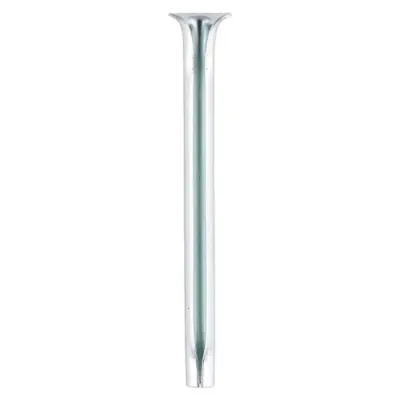
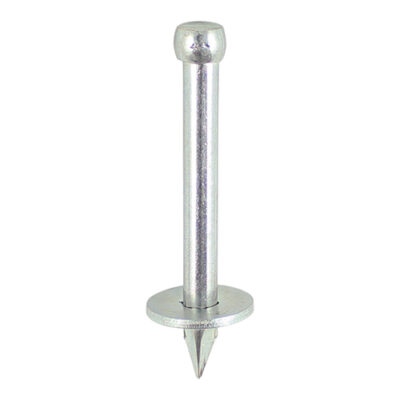
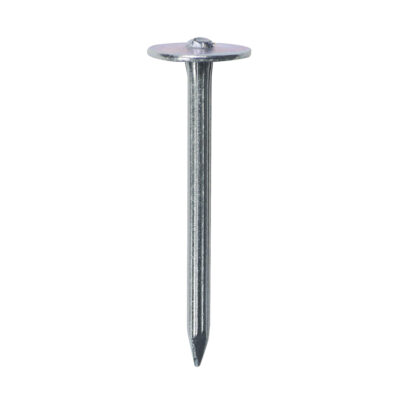
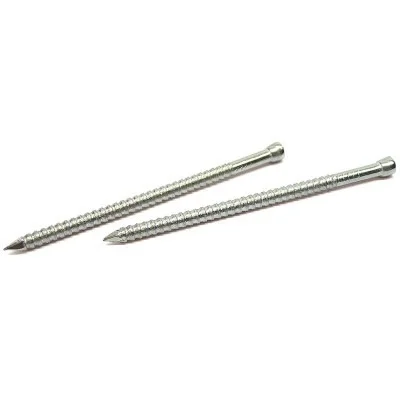
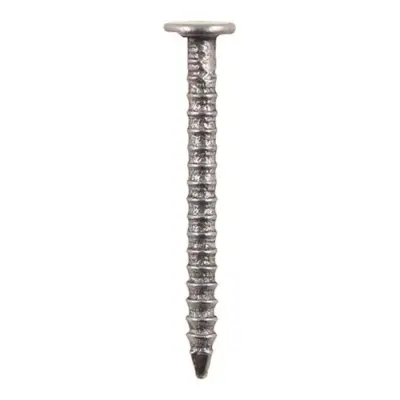
Timco zinc express nails are hardened masonry fixings designed for rapid anchoring into concrete and masonry. Available in a range of sizes, they drive directly into the substrate without pre-drilling, making them a quick and reliable choice for battens, frames, and interior timber work.
Size
QTY
Price
QTY
6.0 x 50mm
200
£8.85£10.62
6.0 x 60mm
100
£4.80£5.76
6.0 x 80mm
100
£5.65£6.78
8.0 x 70mm
100
£6.47£7.76
8.0 x 90mm
50
£3.74£4.49
8.0 x 110mm
50
£4.24£5.09
8.0 x 130mm
50
£5.23£6.28
8.0 x 150mm
50
£5.99£7.19
8.0 x 180mm
50
£7.45£8.94
Timco zinc express nails are hardened, rapid-set anchors designed for fixing directly into concrete and masonry. Available in sizes from 6.0 x 50mm up to 8.0 x 180mm, these nails drive straight into the substrate using a hammer or nail gun, with no pre-drilling required. For anyone fixing battens, sole plates, or stud frames to masonry walls or concrete floors, express nails are one of the fastest methods available on site.
Despite being one of the simpler items in a fixing bag, zinc express nails are genuinely underestimated. They offer a solid mechanical anchor in dense substrates and work well where speed matters more than adjustability. The zinc coating provides basic corrosion resistance, which is enough for interior applications and protected internal environments. If you are fixing a timber frame to a block wall or securing floor battens to a concrete slab, these nails will do the job efficiently and without fuss.
Where Timco Express Nails Are Used on Site
Express nails are most commonly used by carpenters and general builders when fixing timber to masonry or concrete backgrounds. Typical jobs include securing wall battens before boarding, fixing sole plates during partitioning work, and attaching timber grounds ahead of skirting or architrave installation. The range of sizes available means you can match the nail length to the thickness of the timber being fixed, with enough penetration into the substrate to hold securely.
Choosing the Right Size
The 6.0mm diameter nails in the shorter lengths suit lighter battens and thinner timber sections, while the 8.0mm diameter nails in longer lengths are better suited to fixing thicker structural timbers or sole plates where a more substantial anchor is needed. As a general guide, aim for at least 25–30mm of penetration into the masonry substrate beyond the face of the timber being fixed.
Boxes are available in quantities of 50, 100, and 200, so you can buy to suit the job rather than stockpiling more than you need. Priced at £3.74, these represent solid everyday value for a fixing that earns its place on every site van.
Pro Tip: Drive express nails at a slight angle, around 10 to 15 degrees, rather than dead perpendicular when fixing sole plates to concrete, as this increases pull-out resistance and reduces the chance of the nail walking on a hard aggregate surface.
Timco zinc express nails are used in interior masonry and concrete fixing applications where speed of installation is important. Typical uses include fixing timber battens to block or brick walls, securing sole plates and bottom rails for stud partition frames, attaching timber grounds and pads to concrete floors and walls, and general carpentry work where timber meets a masonry background. They are a standard site fixing for carpenters, first fix joiners, and general builders working on new build and refurbishment projects.
Not suitable for: Not suitable for exterior or permanently wet environments where enhanced corrosion protection is required. Not recommended for use in soft, aerated, or lightweight concrete blocks where pull-out resistance may be compromised.
Timco zinc express nails are driven directly into masonry or concrete using a club hammer or nail gun. No pilot hole is required in most standard masonry substrates. Position the timber, hold the nail firmly against the face, and drive it in with steady blows to avoid bending. For harder aggregates, a centre punch mark can help locate the nail point before driving begins.
Ensure the nail length selected provides a minimum of 25–30mm penetration into the substrate past the back face of the timber. For sole plates and heavily loaded battens, space nails at no more than 600mm centres and use the larger 8.0mm diameter nails for added holding strength.
Select the correct nail length to give at least 25–30mm penetration into the masonry beyond the back face of the timber.
Position the timber in its final location and hold or brace it securely before driving.
Place the nail point against the face of the timber at a slight angle of around 10 to 15 degrees for improved pull-out resistance.
Drive the nail using a club hammer with firm, controlled blows, keeping the nail as straight as possible.
On very hard substrates, use a centre punch to mark the nail position before driving to prevent the point from skating.
Space nails at a maximum of 600mm centres for battens and sole plates under load.
Do Timco zinc express nails require pre-drilling before driving?
No. Express nails are designed to be driven directly into concrete and masonry without pilot holes. This is what makes them fast to use on site. On particularly hard or dense substrates, a centre punch mark can help locate the nail point, but no drilling is needed.
Are zinc express nails suitable for outdoor or exposed applications?
The zinc coating on these nails provides basic corrosion protection and is suitable for interior and dry conditions. They are not recommended for permanently wet or exterior exposed environments. For external fixings, a hot-dip galvanised or stainless option would be more appropriate.
What is the difference between the 6.0mm and 8.0mm diameter nails?
The 6.0mm nails are suited to lighter battens and thinner timber sections where a moderate anchor is sufficient. The 8.0mm nails offer greater shear and pull-out resistance and are better suited to fixing thicker structural timbers, sole plates, or anywhere the fixing is under more load.
Timco zinc express nails are manufactured from hardened steel with a zinc coating applied to provide basic protection against surface corrosion in interior conditions. The hardened shank allows the nail to be driven directly into concrete and dense masonry without deforming. The nail geometry is designed to displace rather than crack the substrate during driving, maintaining a tight mechanical fit in the surrounding material.




Reviews
There are no reviews yet.