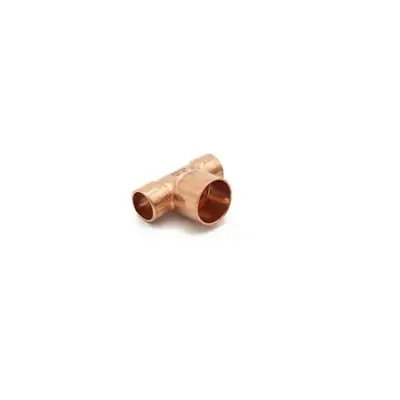
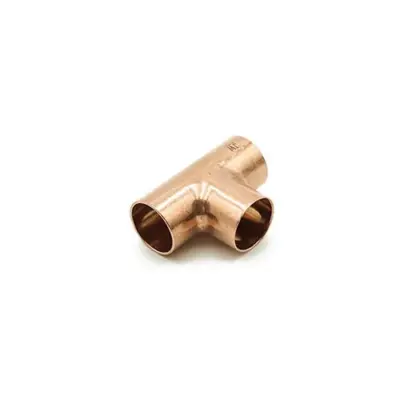
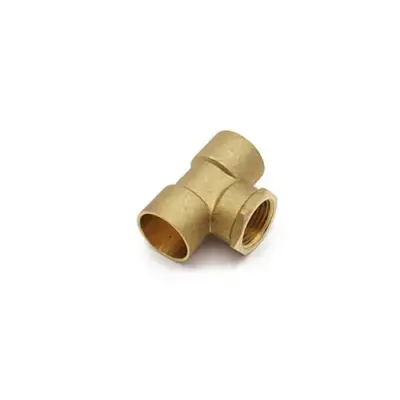
WRAS approved end feed reduced tees in a range of sizes from 15mm to 28mm. Suitable for domestic and commercial copper pipework installations. Sold in trade quantities with bulk pricing available.
Size
QTY
Price
QTY
15 x 15 x 22mm
25
£30.00£36.00
22 x 15 x 15mm
25
£18.00£21.60
22 x 15 x 22mm
25
£28.00£33.60
22 x 22 x 15mm
25
£19.20£23.04
28 x 15 x 28mm
10
£18.72£22.46
28 x 28 x 15mm
10
£11.36£13.63
28 x 28 x 22mm
10
£16.00£19.20
An end feed reduced tee is one of those fittings that earns its place on every plumber’s van. Where pipework needs to branch off at a smaller diameter than the main run, this is the fitting that makes it happen cleanly and reliably. Available in a solid range of sizes from 15 x 15 x 22mm through to 28 x 28 x 22mm, these copper fittings cover the most common domestic and commercial configurations you’ll encounter on the tools.
WRAS approval matters here. The Water Regulations Advisory Scheme certification means these fittings have been independently assessed as safe for use in contact with drinking water supplies in the UK. That’s not just a nice badge to have — in many commercial and new-build situations it’s a requirement, and specifying approved fittings keeps you covered from a compliance standpoint.
End feed fittings work by drawing solder into the joint by capillary action once the pipe and fitting are properly cleaned, fluxed, and heated. The reduced tee follows exactly the same principle, with three sockets to solder up rather than two. The internal stop positions the pipe correctly so there’s no guesswork about insertion depth, and the copper construction conducts heat evenly during soldering, which helps you get clean, consistent joints without cold spots.
Where the End Feed Reduced Tee Gets Used
These fittings turn up constantly in central heating systems, domestic hot and cold water pipework, and commercial plumbing installations. Reducing a 28mm main to feed a 22mm or 15mm branch is exactly the kind of situation this fitting is designed for, whether you’re running off to feed a bathroom zone, a towel rail circuit, or a cold supply to an appliance.
Sold in box quantities of 10 or 25 depending on size, they’re priced for trade use rather than a one-off DIY job. If you’re fitting out a new build or doing a full system refurbishment, buying in box quantities makes sense both practically and on cost. Keep a few of each common size in the van and you’ll rarely find yourself stuck on a simple branch job.
Pro Tip: Clean the pipe end and fitting socket thoroughly with wire wool or emery cloth before fluxing, and always wipe excess flux from the outside of the joint before heating — flux left on the copper surface will cause discolouration and can accelerate corrosion over time.
End feed reduced tees are used wherever a copper pipe run needs to branch off at a different diameter. This comes up constantly in domestic plumbing, from cold water mains that step down to feed individual appliances, to central heating circuits where a 28mm or 22mm flow pipe needs to branch into a 15mm zone. They're equally at home in commercial plumbing where WRAS compliance is a specification requirement.
Installers fitting underfloor heating manifold supplies, bathroom circuits, or utility connections will reach for these regularly. Anywhere a straight tee won't do because the branch needs to run at a smaller bore, the reduced tee fills the gap.
Best For
Central heating pipework
Domestic hot and cold water systems
Commercial plumbing installations
Branching 28mm or 22mm mains to 15mm circuits
WRAS-compliant installations
Available Sizes
15 x 15 x 22mm
22 x 15 x 15mm
22 x 15 x 22mm
22 x 22 x 15mm
28 x 15 x 28mm
28 x 28 x 15mm
28 x 28 x 22mm
Key Properties
WRAS approved
Copper construction
Capillary end feed solder joint
Internal pipe stop for correct insertion depth
Suitable for potable water contact
Sold in boxes of 10 or 25
Not suitable for: Not suitable for use with plastic or push-fit pipe systems. These are solder-only end feed fittings and require proper soldering equipment and technique to make a sound joint.
Before fitting, cut the pipe square and deburr the end. Clean the outside of the pipe and the inside of each fitting socket with wire wool or emery cloth until the copper is bright. Apply flux to both surfaces, assemble the joint, and apply heat evenly around the fitting with a blowtorch until the solder flows into the joint by capillary action. Remove the heat and allow to cool before disturbing.
With a tee fitting you have three joints to complete. Work methodically around the fitting rather than trying to heat all three at once. Wipe away any excess solder or flux residue with a damp cloth while the fitting is still warm.
Cut pipe ends square using a pipe slice or hacksaw and remove any burrs with a deburring tool
Clean the outside of each pipe end and the inside of all three fitting sockets with wire wool or emery cloth until bright copper is visible
Apply a thin, even coat of flux to both the pipe ends and the fitting sockets
Assemble the fitting onto the pipes and check alignment before soldering
Apply heat evenly around the first socket with a blowtorch until the fitting reaches soldering temperature
Feed solder into the joint and allow capillary action to draw it in until a ring of solder is visible around the socket mouth
Repeat for the remaining two sockets
Wipe excess flux and solder from the outside of each joint with a damp cloth while still warm
Allow the fitting to cool fully before pressure testing or backfilling
What does WRAS approved mean and do I need it?
WRAS stands for the Water Regulations Advisory Scheme. Fittings that carry this approval have been tested and confirmed as safe for contact with drinking water under UK water regulations. For domestic installations it's good practice; for many commercial, new-build, and local authority jobs it's a contractual or regulatory requirement. Using WRAS approved fittings keeps you compliant and avoids any awkward conversations with building control.
How do I read the size markings on a reduced tee?
The three dimensions refer to the three sockets in order: the two inline sockets first, then the branch outlet. So a 28 x 28 x 22mm tee has two 28mm inline sockets and a 22mm branch, while a 22 x 15 x 15mm tee has a 22mm inline socket, a 15mm inline socket, and a 15mm branch. If in doubt, check which socket is the odd one out on the fitting itself.
These reduced tees are manufactured from copper to standard end feed capillary fitting dimensions, relying on solder and flux to form a watertight joint through capillary action. The copper material provides good thermal conductivity for consistent soldering and is compatible with both lead-free and traditional solder. WRAS approval confirms suitability for potable water applications under UK water fittings regulations.
Approval
WRAS Approved
Material
Copper
Joint Type
End Feed Capillary Solder
Available Sizes
15 x 15 x 22mm, 22 x 15 x 15mm, 22 x 15 x 22mm, 22 x 22 x 15mm, 28 x 15 x 28mm, 28 x 28 x 15mm, 28 x 28 x 22mm
Box Quantity
10 or 25 (size dependent)
Application
Hot and cold water, central heating
Size
15 x 15 x 22mm, 22 x 15 x 15mm, 22 x 15 x 22mm, 22 x 22 x 15mm, 28 x 15 x 28mm, 28 x 28 x 15mm, 28 x 28 x 22mm
Box Quantity
10, 25
Reviews
There are no reviews yet.
Be the first to review “End Feed reduced tee”Cancel Reply

Reviews
There are no reviews yet.