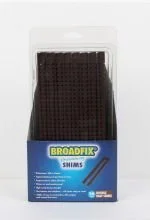
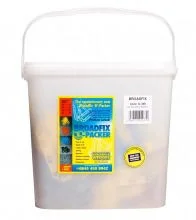
A bag of 120 mixed flat packers for levelling, aligning and shimming frames, windows, doors and structural elements on site. Lightweight, stackable and straightforward to use.
Flat packers are one of those things you don’t think about until you need them, and then you need a lot of them. This bag contains 120 mixed flat packers, giving you a solid range of thicknesses to work with when setting door frames, window frames, studwork, steel posts or anything else that needs precise levelling or alignment before fixing off.
The mixed selection in this bag means you can stack combinations to hit the exact gap you’re working to, rather than forcing a single packer in and hoping for the best. Anyone who’s spent ten minutes hammering a slightly too-thick packer into a frame reveal while the client watches will appreciate having options to hand.
Where Flat Packers Make the Difference
In practice, flat packers earn their keep during first and second fix alike. Setting out a door lining square and plumb in a rough opening often needs a couple of thin packers at the head and one or two on the jambs to get it right. Same goes for window frames, where even a well-plastered reveal rarely gives you a perfectly flat bearing surface. Steel post bases, kitchen unit carcasses, stair strings, skirting grounds — flat packers turn up in all of them.
They’re also useful during structural installs where base plates need to be levelled before grouting or bolting down. A proper set of flat packers does the job cleanly without wedging bits of tile or folded lead into the gap, which is what happens when you don’t have any on site.
Bag Size and Site Use
120 flat packers per bag is a practical quantity for a working tradesperson. Enough to cover a full door and window schedule on a smaller job, or to keep a decent stock in the van for reactive work. They’re lightweight, take up almost no space and are the kind of item that pays for itself the first time you’re not hunting round the skip for something to pack under a frame.
Pro Tip: When stacking flat packers to hit a specific tolerance, work in pairs either side of the fixing point to distribute load evenly and stop the frame pulling out of plumb when the fixings are tightened.
Flat packers are used across general building, carpentry, joinery and installation trades wherever frames, units or structural members need to be levelled, shimmed or aligned before permanent fixing. Common applications include door and window frame installation, kitchen fitting, stud wall setting out, steel post base levelling, stair installation and skirting board grounds. They're equally at home on new builds, refurbishments and commercial fit-outs.
Best For
Door and window frame installation
Kitchen unit levelling
Steel post and base plate setting
Stud wall and timber frame alignment
Stair string installation
Skirting and architrave grounds
Works With
Timber door and window frames
UPVC frames
Steel base plates
Kitchen carcasses
Masonry and blockwork openings
Timber stud partitions
Key Features
120 packers per bag
Mixed thickness selection
Stackable for precise adjustment
Lightweight and easy to carry on site
No preparation required
Not suitable for: Not intended for permanent structural load-bearing use without adequate fixings and grout or adhesive to lock the position. Not suitable as a replacement for purpose-made horseshoe packers in glazing applications where specific tolerances are required.
Flat packers require no preparation. Select the thickness or combination needed to fill the gap between the frame and the structural opening, stack as required, and insert at the appropriate bearing points before checking for level and plumb. Once the frame is correctly positioned, fix through in the normal way. The packers remain in place permanently behind the frame.
Offer up the frame or unit to establish how much packing is needed at each bearing point
Select individual flat packers or stack multiples to match the required gap
Insert packers at the correct positions, typically at fixing and load-bearing points
Check the frame for level, plumb and square before fixing
Adjust packer combinations as needed until the frame sits correctly
Fix through the frame in the normal way, locking the packers in position
How many different thicknesses are in the mixed bag?
The bag contains a mixed selection of flat packer thicknesses, which lets you stack combinations to achieve precise tolerances rather than relying on a single size. The exact range of thicknesses included is listed in the technical specifications.
Can these flat packers be used outdoors or in damp conditions?
Plastic flat packers are generally suitable for use in damp and external conditions as they won't compress, rot or corrode over time. They're commonly used in external door and window frame installations where moisture is a factor.
Is 120 packers enough for a full door and window schedule?
For a typical domestic job with several door frames and a few windows, 120 packers will usually cover you comfortably. Larger projects or jobs with a lot of frames may require more than one bag, but a single bag is a solid starting point for most site requirements.
Flat packers of this type are typically manufactured from polypropylene or a similar rigid plastic, giving a consistent bearing surface that won't compress under load or degrade with moisture exposure. They are produced to uniform thickness tolerances, making them reliable for stacking to specific dimensions. Suitable for general construction and installation use across a range of substrates and frame types.
Pack Quantity
120
Material
Plastic (polypropylene)
Pack Type
Bag
SKU
BFXBSP120
Reviews
There are no reviews yet.
Be the first to review “Flat Packers – Bag, 120 per”Cancel Reply




Reviews
There are no reviews yet.