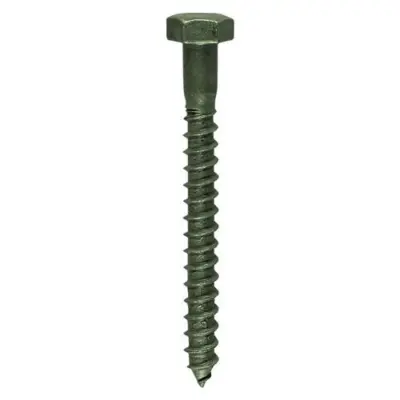
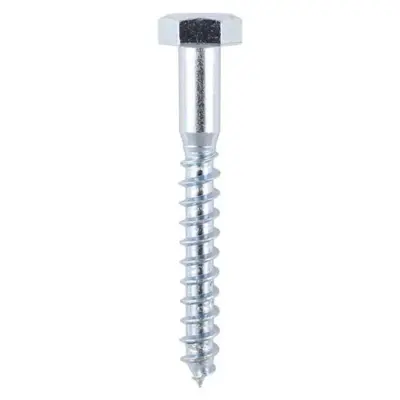
In-Dex green exterior coach screws with hex head and olive green coating rated to 500 hours salt spray resistance. Conforming to DIN571, these are a solid choice for roofing, fencing, decking and landscaping fixings into timber.
Can’t find it? We’ll source it.
No worries! We can usually get this in for next-day delivery or source an alternative. Drop your email and we’ll get straight back to you with options.
Nice one — request received. Check your email to confirm, and we’ll get pricing and availability over to you.
Size
Price
QTY
10.0 x 100mm
£1.79£2.15
Out of stock
10.0 x 150mm
£1.79£2.15
Out of stock
6.0 x 40mm
£1.79£2.15
Out of stock
6.0 x 50mm
£1.79£2.15
Out of stock
6.0 x 75mm
£0.89£1.07
8.0 x 120mm
£1.79£2.15
Out of stock
8.0 x 50mm
£1.79£2.15
Out of stock
8.0 x 75mm
£1.79£2.15
The In-Dex green exterior coach screw is one of those fixings that just gets the job done without drama. Available in sizes from 6.0 x 40mm right up to 10.0 x 150mm, these hex head screws are built for outdoor work where a standard zinc-plated screw would give up long before the job needed it to. The olive green coating provides a minimum 500 hours salt spray resistance — useful when you are working on exposed structures, coastal sites, or anywhere that sees more weather than a Yorkshire hillside.
The hex head design means you are driving these with a spanner or socket rather than a screwdriver bit, which gives you far more torque when you need it. Ideal for pulling timber tight and sinking the head cleanly without rounding anything off. The sharp point and deep single thread bite in quickly and hold firmly — pull-out resistance is solid, which matters on anything carrying load or subject to movement over time.
Where Green Exterior Coach Screws Are Used on Site
These conform to DIN571, the standard for wood screws with hex heads, so you know what you are getting in terms of thread profile and geometry. Consistency across the box matters on a big job — the last thing you want is screws behaving differently halfway through a decking run or a fence panel installation.
Nylon Plugs and Masonry Applications
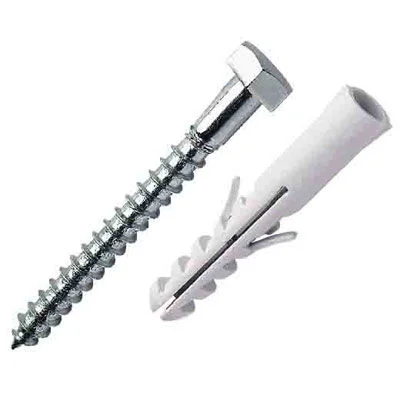
Alongside direct timber-to-timber fixing, the hex head coach screw is the go-to choice for fixing into nylon plugs in masonry. A common setup on external timber cladding, gate posts and garden structures where you are anchoring into brick or block. The chunky hex head distributes load well at the surface and does not pull through when the fixing is done properly.
The olive green finish blends reasonably well with treated timber, which is a small but welcome detail on visible fixings. Nobody is expecting a decorative finish on a coach screw, but it is better than bare silver on a brown fence post.
Pro Tip: Always drill a pilot hole at around 70% of the screw shank diameter before driving coach screws into hardwood or dense treated softwood, otherwise you risk splitting the timber right at the end of a long fixing run.
In-Dex exterior coach screws are used across a wide range of outdoor fixing applications. Fencing, decking, pergolas, garden structures, gate posts and timber cladding are the obvious ones. Roofers use them for fixing battens and structural timbers where a screwed fixing is preferred over nails. Landscapers reach for them when building raised beds, sleeper walls and retaining structures. The olive green coating makes them a practical choice anywhere that long-term weather exposure is a concern rather than a short-term one.
Best For
Fencing and gate post fixing
Decking and timber structures
Roofing and batten fixing
Landscaping and sleeper walls
Fixing into nylon plugs in masonry
Exterior timber cladding
Available Sizes
6.0 x 40mm
6.0 x 50mm
6.0 x 75mm
8.0 x 50mm
8.0 x 75mm
8.0 x 120mm
10.0 x 100mm
10.0 x 150mm
Key Properties
Olive green coating
500 hours minimum salt spray resistance
Hex head drive
Sharp point for easy entry
Deep single thread for high pull-out resistance
Conforms to DIN571
Not suitable for: Not suitable for use in direct contact with stainless steel fittings or highly acidic treated timber where a stainless steel fixing would be the correct choice. Not intended for structural steel connections.
Drill a pilot hole before driving, particularly in denser timbers. Use a spanner, socket wrench or impact driver with a hex socket attachment to drive the screw in. Do not overdrive: once the head is firm against the surface, stop. Overdriving compresses the timber and reduces the holding strength of the fixing.
When fixing into masonry via a nylon plug, ensure the plug is the correct diameter for the screw size and is fully seated before driving. The hex head allows you to apply steady controlled torque without the head slipping, which is particularly helpful when driving at awkward angles.
Select the correct screw size for the timber thickness and load requirement
Mark the fixing position and drill a pilot hole at approximately 70% of the screw shank diameter
For masonry applications, drill to the correct plug size, clear the hole of dust and insert the nylon plug fully
Position the coach screw and start it by hand or with a socket to keep it square
Drive using a spanner, socket wrench or impact driver with a hex socket until the head is firm against the surface
Check the fixing is tight and the head is seated without having crushed or split the surrounding timber
Do these coach screws need a pilot hole?
In softer timbers you can sometimes get away without one, but drilling a pilot hole is always recommended. It prevents splitting, makes driving easier and gives a cleaner, stronger fixing. In hardwoods and dense treated timber, skipping the pilot hole is asking for trouble.
What does 500 hours salt spray resistance actually mean in practice?
Salt spray testing is an accelerated corrosion test used to assess coating durability. A 500 hour rating means the coating has held up through the equivalent of prolonged harsh coastal exposure in controlled test conditions. It is a solid benchmark for exterior use, though it is not a guarantee of a specific service life in the field — actual performance depends on local conditions.
Can I use these with ACQ or other preservative-treated timber?
Modern preservative treatments, particularly copper-based ones like ACQ and CCA alternatives, can be aggressive on standard coatings. For treated timber in very exposed or wet conditions, check the timber manufacturer's recommendations. For most standard exterior applications, the olive green coating on these screws provides adequate protection, but if in doubt on a critical structural fixing, stainless steel is the safer call.
In-Dex exterior coach screws conform to DIN571, which specifies the thread form, dimensions and mechanical requirements for hexagon head wood screws. The olive green electroplated coating provides a minimum 500 hours salt spray resistance to ISO 9227. The deep single-lead thread is designed for maximum pull-out resistance in timber substrates. Available in 6mm, 8mm and 10mm diameters across a range of lengths from 40mm to 150mm.
Standard
DIN571
Head Type
Hexagon
Coating
Olive green electroplated
Salt Spray Resistance
500 hours minimum
Available Diameters
6.0mm, 8.0mm, 10.0mm
Available Lengths
40mm, 50mm, 75mm, 100mm, 120mm, 150mm
Drive Type
Hex spanner / socket
Point Type
Sharp point
Thread Type
Deep single thread
Pack Quantity
10
Box Quantity
10
Size
6.0 x 40mm, 6.0 x 50mm, 8.0 x 120mm, 10.0 x 100mm, 10.0 x 150mm, 6.0 x 75mm, 8.0 x 50mm, 8.0 x 75mm
Reviews
There are no reviews yet.
Be the first to review “Exterior Coach Screw HEX – Index”Cancel Reply

Reviews
There are no reviews yet.