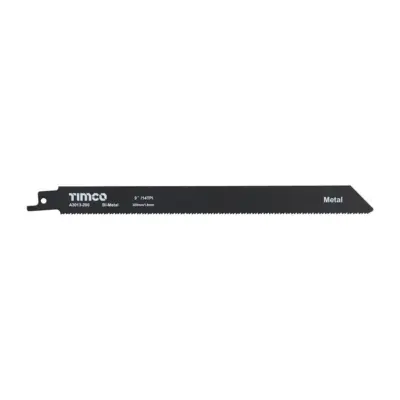
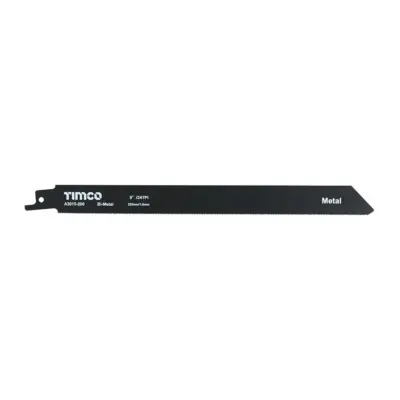
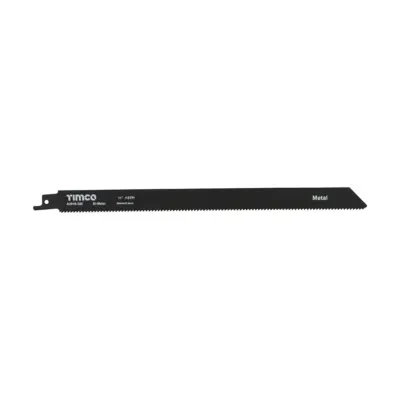
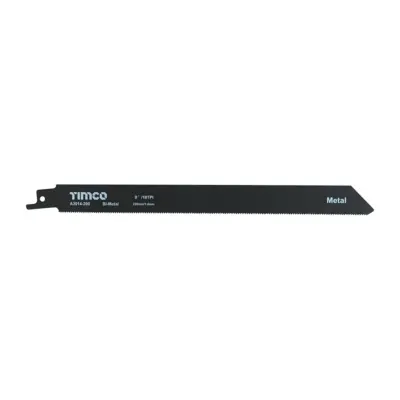
225mm bi-metal reciprocating saw blades for cutting non-ferrous metals. HCS body with HSS cutting edge for strength and flexibility. Milled and wavy set teeth deliver a fine, straight cut with extended blade life. Sold in packs of 5.
The S1122BF bi-metal reciprocating saw blade is built for cutting non-ferrous metals cleanly and consistently. At 225mm, it sits in a useful mid-length range — long enough to work through pipe, sheet and section without hunting for a longer blade, short enough to stay controlled in tighter spaces. Each blade combines a high carbon steel body with a high speed steel cutting edge, which is the point of bi-metal construction: the body flexes without snapping, and the teeth hold their edge far longer than a standard HCS blade would manage on metal.
Milled and wavy set teeth — often abbreviated to MWS — are the detail worth paying attention to here. The wavy set staggers the tooth profile across the blade, which reduces vibration and produces a finer cut finish. On non-ferrous materials like aluminium, copper, or brass, this matters. A coarse aggressive tooth pattern tears rather than cuts, leaving a ragged edge that takes time to clean up. The MWS geometry avoids that.
Where S1122BF Bi-Metal Reciprocating Saw Blades Perform Best
These blades are well suited to trade situations where you are cutting non-ferrous metal regularly: pipework, conduit, profile sections, sheet goods, and similar materials. Electricians, plumbers, and general builders all reach for a reciprocating saw when access is awkward, and a blade that holds its edge across a full day of cutting is worth more than a cheap blade that dulls after an hour. The bi-metal construction is specifically what makes the difference here. Shatter resistance is better than mono-material blades, which matters when you are cutting overhead or in a confined space and do not want fragments going anywhere unexpected.
Pack of 5 makes this a sensible site purchase. Blades do wear, and having spares to hand avoids the usual mid-job scramble. At this price point per blade, the cost per cut is low, particularly given the extended service life the HSS edge provides compared to standard blades.
Pro Tip: When cutting aluminium or other soft non-ferrous metals, a drop of cutting fluid or even a smear of light oil on the blade will reduce galling and help the blade run cooler, noticeably extending its working life.
These blades are used wherever a reciprocating saw is the practical choice for cutting non-ferrous metal: aluminium sections, copper pipe, brass fittings, conduit and cable tray. Plumbers and electricians rely on them for cut-ins during first and second fix, while general builders use them for stripping out and demolition work where metal profiles need removing quickly. They are also handy for cutting non-ferrous flashing and sheet material during roofing and cladding work.
Not suitable for: Not designed for cutting hardened steel, stainless steel, or ferrous metals such as structural mild steel — use a blade specified for those materials. Also not suitable for wood cutting applications.
Fit the blade into the reciprocating saw chuck with the tool unplugged or the battery removed. Ensure it is fully seated and locked before use. When starting a cut in sheet or thin-wall material, let the saw reach speed before making contact with the workpiece to avoid tooth snatching. Apply steady, moderate pressure — forcing the blade slows the cut and generates excess heat. For pipe and section, support the workpiece where possible to reduce vibration and improve cut quality.
Remove the battery or disconnect the saw from power before fitting the blade.
Insert the blade fully into the chuck and confirm it is locked securely.
Mark your cut line clearly on the workpiece.
Start the saw and allow it to reach full speed before bringing it into contact with the material.
Apply consistent, moderate forward pressure — do not force the blade through the cut.
For thin-wall or sheet material, keep the shoe of the saw pressed firmly against the surface to reduce chatter.
Allow the blade to cool briefly between extended cuts to preserve edge life.
Can these blades be used to cut mild steel or ferrous metals?
These blades are designed specifically for non-ferrous metals such as aluminium, copper, and brass. While bi-metal construction is more durable than standard HCS blades, these are not the right choice for mild steel, structural steel, or other ferrous materials. Using them on ferrous metals will blunt the teeth quickly and may damage the blade.
Will these blades fit my reciprocating saw?
S1122BF blades use a standard universal shank fitting that is compatible with the vast majority of reciprocating and sabre saws on the market, including Bosch, Makita, DeWalt, Milwaukee, Hikoki, and others. If your saw accepts standard T-shank or universal reciprocating blades, these will fit.
The S1122BF blade uses a bi-metal construction with a high carbon steel body for flex and impact resistance, bonded to a high speed steel cutting edge for hardness and wear resistance. The milled and wavy set tooth profile reduces vibration and produces a finer cut finish on non-ferrous materials. At 225mm blade length, they are suited to general trade cutting tasks requiring reach and control.
Blade Length
225mm
Construction
Bi-metal (HCS body with HSS cutting edge)
Tooth Set
Milled and Wavy Set (MWS)
Application
Non-ferrous metal cutting
Pack Quantity
5
Model Reference
S1122BF
Shank Type
Universal
Box Quantity
5
Size
225mm
Reviews
There are no reviews yet.
Be the first to review “Reciprocating Saw Blades – Metal Cutting – Bi-Metal – S1122BF”Cancel Reply


Reviews
There are no reviews yet.