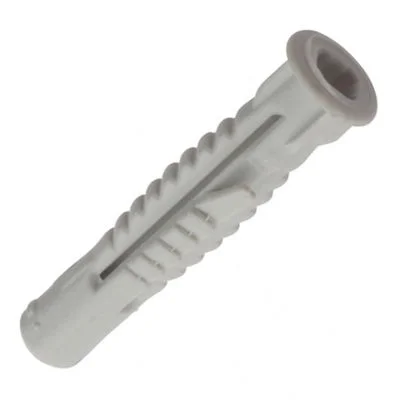
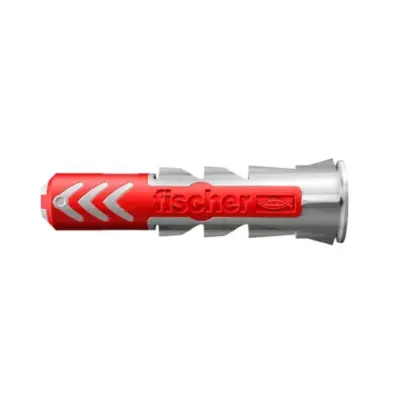
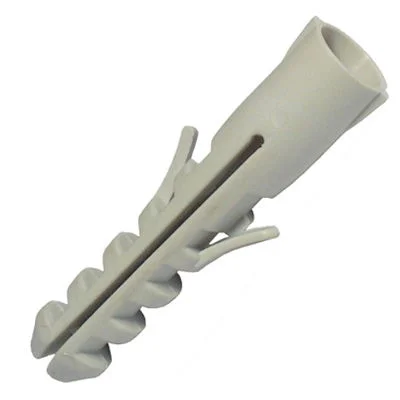
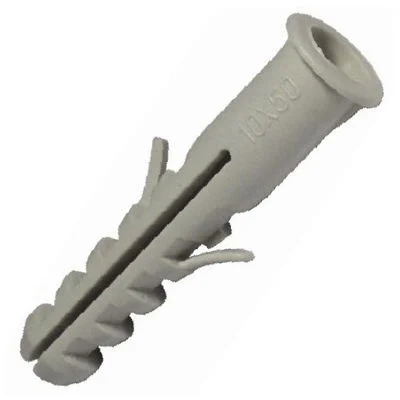
Nylon wall plugs designed for lightweight blockwork, aerated block and plasterboard. Expand faster and further than standard plugs. Suitable for M6, M8 and M10 fixings. Quick to install and reliable in softer substrates where normal plugs let you down.
Size
Price
QTY
M6 x 38mm
£0.65£0.78
M8 x 51mm
£1.19£1.43
M10 x 61mm
£1.78£2.14
Nylon wall plugs might seem like the kind of thing you grab without thinking, but use the wrong type in aerated block and you’ll know about it the moment you try to tighten the screw. These universal nylon wall plugs are specifically designed to work in softer substrates where a standard plug simply won’t grip properly. Whether you’re fixing into lightweight blockwork, Thermalite-type aerated blocks, or plasterboard, these plugs expand faster and further than conventional plugs, giving you a solid fixing without splitting the surrounding material.
Made from 100% nylon throughout, they won’t corrode, won’t deform under normal load, and they’re not going to crack during installation if you’re using a powered driver at a sensible torque setting. The flexibility of nylon is actually what makes them work here. In a soft or hollow substrate, you need a plug that can adapt as it expands, taking up the voids and irregular surfaces that aerated block tends to have. A brittle plastic plug in the same situation tends to shear or pull straight through.
Where These Nylon Wall Plugs Are Used
These plugs are a go-to for fixings in internal partition walls, plasterboard dry-lining, and the kind of lightweight block used throughout modern new-build construction. If you’re installing shelving, battens, radiator brackets, or service runs through aerated blockwork, these are the plugs that make the job clean and repeatable.
Sizing
Available in M6 x 38mm, M8 x 51mm and M10 x 61mm to cover the most common screw gauges used in general building and first-fix work. The range gives you enough depth in the plug to get proper purchase even in block that’s a bit soft or inconsistent in density.
If you’re buying in quantity for a project or stocking up the van, these are available in bulk with genuine trade pricing. No need to keep popping to the merchants for a box at a time.
Pro Tip: When drilling into aerated block for these plugs, use a standard masonry bit rather than SDS, and go steady on the speed. Oversize the hole even slightly and you lose the expansion effect entirely.
These nylon wall plugs are used across a wide range of internal fixing jobs where the substrate is softer than standard brick or dense concrete block. Plasterboard fixings, aerated blockwork, lightweight insulating block, cellular concrete and similar materials all benefit from this type of plug. They are used by general builders, joiners, dry-lining contractors and maintenance teams fixing everything from battens and brackets to conduit clips and radiator pipework.
Best For
Lightweight blockwork
Aerated and Thermalite-type blocks
Plasterboard fixings
Dry-lining and partition walls
Internal bracket and batten fixings
Compatible Fixings
M6 screws
M8 screws
M10 screws
General purpose machine screws
Self-tapping fixings in appropriate sizes
Key Properties
100% nylon construction
Greater expansion than standard wall plugs
Faster expansion in soft substrates
Corrosion-resistant material
Available in M6 x 38mm, M8 x 51mm and M10 x 61mm
Not suitable for: Not suitable for use in solid brick, dense concrete or stone where standard masonry plugs are the better choice. Not rated for structural or heavy-duty fixings in overhead applications.
Drill a clean hole to match the plug diameter using a standard masonry bit. Avoid SDS where possible in softer block to prevent oversize holes. Tap the plug flush with the surface and drive the screw to expand the plug firmly against the substrate. Do not overtighten, particularly in plasterboard, or you risk pulling through.
Select the correct plug size to match your screw gauge and required fixing depth
Fit a standard masonry drill bit to match the plug diameter
Drill to the required depth in the substrate, keeping the bit straight
Clear dust from the hole before inserting the plug
Tap the plug in flush using a hammer until it sits level with the surface
Drive the screw steadily, stopping once the fixing is firm and secure
Can I use these nylon wall plugs in solid brick or concrete?
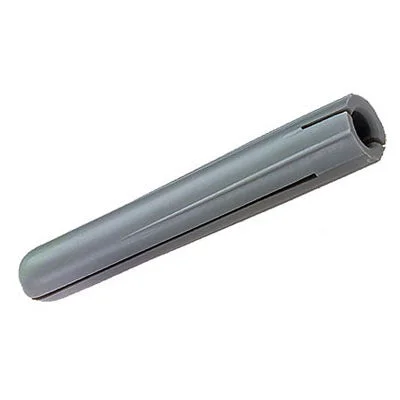
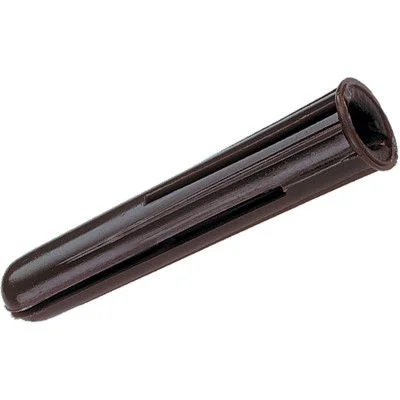
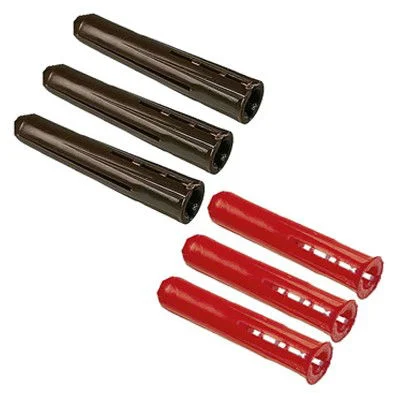
They will work in a pinch but they are not the right tool for the job. These plugs are designed for softer substrates like aerated block and plasterboard. In solid brick or dense concrete, a standard red, brown or blue masonry plug gives better grip and is the sensible choice.
What makes these different from ordinary wall plugs?
The nylon construction and plug geometry are designed to expand more quickly and across a wider area than conventional plugs. In soft or voided materials, this gives a much firmer fixing. A standard plug in aerated block often just spins or pulls through because it cannot take up the irregularities in the hole.
Which size should I use for standard M8 screws?
The M8 x 51mm plug is the correct match for M8 screws. The 51mm length gives good depth in the substrate for a solid fixing. If you are fixing into plasterboard only, check that your screw length is appropriate for the board thickness and any backing material behind it.
Manufactured from 100% nylon, these plugs offer good flexibility and resistance to deformation during expansion, which is what makes them effective in low-density substrates. Nylon has inherent corrosion resistance, making these suitable for damp internal environments. The plug geometry is designed to produce a wider expansion profile than standard conical plugs, distributing load across a greater surface area in soft or hollow block materials.

Reviews
There are no reviews yet.