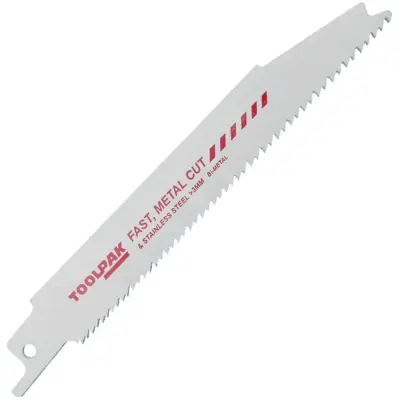
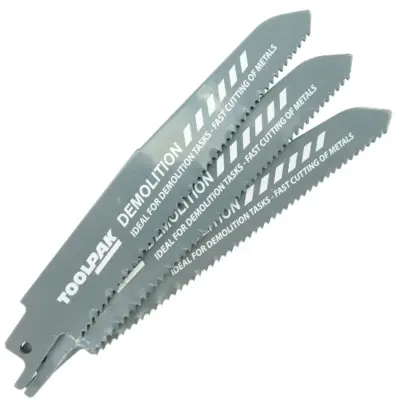
Bi-metal progressive reciprocating saw blade, 150mm with 13/8 TPI. Cuts mild steel, stainless, cast iron, non-ferrous metals and pipe over 3mm. Universal shank fitting. Similar spec to the S123XF. Pack of 5.
The S123XF 150mm metal reciprocating saw blade is a bi-metal progressive blade designed for cutting a wide range of metals on site. With a 13/8 TPI progressive tooth pitch, it handles everything from mild and stainless steel to cast iron, non-ferrous metals, and pipe sections. The universal shank fits all standard reciprocating saw machines, so there’s no messing about with adapters or compatibility issues before you’ve even made a cut.
Progressive tooth blades are worth understanding if you haven’t used them before. Rather than a fixed TPI across the full blade length, the tooth pitch varies, which means the blade can self-feed into the material more efficiently, reduce vibration during the cut, and extend blade life compared to a standard fixed-pitch blade. For metal work specifically, this matters — you get cleaner entry into the cut and less tooth stripping when you’re pushing through something with a hard outer skin, like certain grades of stainless or cast iron sections.
What the S123XF 150mm Reciprocating Saw Blade Cuts
This blade is suited to metal sections over 3mm thick, which covers most structural steel, box section, angle iron, pipe, and profiles you’ll encounter on a typical job. Non-ferrous metals between 3mm and 8mm are also well within its range, so aluminium extrusion, copper pipe, and similar materials are no problem. Stainless steel can chew through lesser blades quickly, but the bi-metal construction here — high speed steel teeth bonded to a flexible alloy steel back — holds up far better than HSS-only alternatives.
Bi-Metal Construction
The bi-metal format is the real reason this blade performs across such a range of materials. HSS teeth give cutting performance, the flexible backing prevents snapping under the flex and vibration of reciprocating action. It’s a blade that does its job without drama, which on a busy site is exactly what you want.
Supplied in a pack of five, this is sensible trade buying. You’re not paying tool shop retail for a single blade and running out halfway through a job. Keep a pack in the site bag and you’re covered.
Pro Tip: When cutting stainless steel or cast iron, run your saw at a lower stroke speed and let the blade do the work — forcing the pace generates heat that blunts HSS teeth fast and defeats the point of paying for bi-metal.
These blades are used wherever site work involves cutting metal sections that are too awkward, too large, or too embedded for an angle grinder or hacksaw. Plumbers cutting copper and steel pipe in tight runs, fabricators trimming box section and angle iron, and demolition workers cutting out old steel fixings all reach for a reciprocating saw with a blade like this. The 150mm length gives enough reach for most structural sections and pipe diameters without being unwieldy in confined spaces.
Cast iron soil pipe, non-ferrous extrusions, mild steel profiles, and stainless fittings all fall within this blade's capability. It's the kind of blade that earns its place in a general site kit because the range of metals it handles means you're rarely caught without the right tool for the cut.
Best For
Mild and structural steel sections
Stainless steel pipe and profiles
Cast iron soil and drainage pipe
Non-ferrous metals 3mm to 8mm
Metal pipe and box section over 3mm
Compatible With
All standard reciprocating saw machines
Universal fitting shank — no adapter needed
Corded and cordless reciprocating saws
Key Specifications
Blade length: 150mm
TPI: 13/8 progressive
Tooth type: progressive pitch bi-metal
Construction: HSS teeth on flexible alloy steel back
Similar specification to S123XF
Pack quantity: 5
Not suitable for: Not suited to wood, composite materials, or thin sheet metal under 3mm where a finer fixed-pitch blade would give a cleaner cut. Not intended for use in jigsaws or any saw other than a reciprocating sabre saw machine.
Fit the blade into your reciprocating saw with the machine unplugged or battery removed. The universal shank clicks into the blade clamp in the same way as any standard recip blade. Make sure it's fully seated before you start cutting.
For metal sections, start the cut at a low stroke speed to let the teeth bite cleanly before increasing pace. Keep the shoe plate pressed firmly against the workpiece to reduce vibration and blade flex, which matters more with metal than with wood. Use cutting fluid or a light spray of oil on stainless steel and cast iron to reduce heat build-up and extend blade life noticeably.
Remove the battery or unplug the saw before fitting the blade
Insert the universal shank into the blade clamp and confirm it is fully locked
Mark your cut line clearly on the metal section
Press the saw shoe firmly against the workpiece to stabilise the cut
Start at a low stroke speed to establish the cut before increasing pace
Apply cutting oil or fluid when cutting stainless steel or cast iron
Allow the blade to cut at its own pace rather than forcing it through
Inspect the blade after heavy use and replace before teeth become too worn to cut cleanly
Will this blade fit my reciprocating saw?
Yes, in almost all cases. These blades use a universal fitting shank which is the industry standard for reciprocating saws from all major manufacturers including Bosch, DeWalt, Milwaukee, Makita and others. If your saw takes standard recip blades, this will fit.
What is the difference between a progressive blade and a standard fixed TPI blade?
A progressive blade has a varying tooth pitch along its length rather than a fixed number of teeth per inch throughout. This helps the blade feed into material more smoothly, reduces vibration, and puts less shock load on individual teeth. For metal cutting, it generally means longer blade life and a cleaner cut, particularly when working through harder materials like stainless steel or cast iron.
Bi-metal construction with high speed steel teeth laser-welded to a flexible alloy steel backing. The 13/8 TPI progressive pitch varies along the blade length to improve feed rate and reduce vibration during the cut. At 150mm in length, the blade covers a practical range of metal section thicknesses and pipe diameters. The universal shank is machined to the standard fitting dimension used across the reciprocating saw industry. Specification is similar to the established S123XF pattern blade.


Reviews
There are no reviews yet.