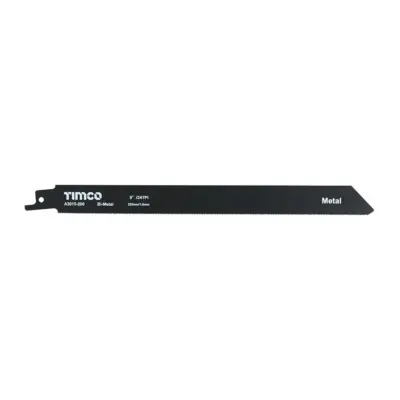
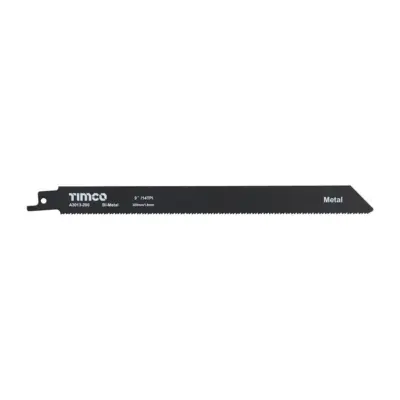
225mm bi-metal reciprocating saw blades for cutting thin sheet metal. HCS body with HSS cutting edge for strength and flex. Milled and wavy set teeth give a clean, straight cut with an extended service life.
The S1122AF bi-metal reciprocating saw blade is designed for cutting thin sheet metals cleanly and consistently. At 225mm in length, it sits in the mid-range for recip blades and covers most metal cutting tasks you will encounter on site or in the workshop. The bi-metal construction combines a high carbon steel body with a high speed steel cutting edge — the body absorbs the vibration and flex that would snap a lesser blade, while the HSS teeth hold their sharpness far longer than a standard carbon blade ever would.
Milled and wavy set teeth are what give this blade its character. The wavy set staggers the tooth geometry across the width of the cut, which does two things: it reduces snatching on thin material, and it produces a notably finer finish than a standard aggressive-set blade. If you have ever had a recip blade chatter its way through sheet metal like it is trying to escape, the MWS tooth pattern is the fix for that.
Where the S1122AF Bi-Metal Reciprocating Saw Blade Earns Its Keep
Sheet metal work is the obvious home for this blade — ductwork, steel cladding, box section, and similar thin-gauge material. The wavy tooth profile keeps the blade tracking straight rather than wandering, which matters on long cuts through metal where a drifting blade becomes a problem quickly. The shatter-resistant body also means it handles the occasional knock against a fixing or unexpected change in material thickness without snapping mid-cut.
Cost Per Cut Over a Full Job
Bi-metal blades cost more up front than basic carbon alternatives, but the extended edge life means you are swapping blades far less often. On a long run of metal cutting, that adds up. Fewer blade changes also means fewer interruptions, which is the kind of efficiency that does not show up in a spec sheet but absolutely shows up on the day rate. These come in a pack of five, which is a sensible quantity for a decent-sized job or for keeping a fresh stock in the van.
Pro Tip: When cutting thin sheet metal with a recip saw, use a slower stroke speed and let the blade do the work — forcing the pace generates heat that shortens blade life and can distort the cut edge.
These blades are at home wherever thin sheet metal needs cutting on site. Heating and ventilation engineers use them for steel ductwork and trunking, while general builders will reach for them when cutting box section, angle iron, or steel cladding. They are equally useful in fabrication workshops where smaller lengths of flat sheet and profiled metal need trimming cleanly. Any job that involves a reciprocating saw and metal sheet under around 3mm thick is squarely in this blade's territory.
Not suitable for: Not intended for cutting thick steel sections, hardened steel, or non-ferrous materials such as aluminium or copper pipe, where a specifically rated blade would be a better choice. Not recommended for wood cutting applications.
Fit the blade securely into the reciprocating saw's chuck before switching on, and check it is locked properly — a loose blade in thin sheet metal will chatter and wander immediately. For thin sheet work, a slower stroke speed gives you more control and produces a cleaner cut. Clamp or support the workpiece where possible to reduce vibration.
Let the blade reach full speed before making contact with the material. Apply steady, consistent forward pressure without forcing. On longer cuts, allow the blade to cool periodically if you are pushing it hard. The wavy set tooth pattern does most of the work for you — trust it rather than fighting it.
Ensure the reciprocating saw is unplugged or the battery removed before fitting the blade
Insert the S1122AF blade into the chuck and confirm it is fully locked in place
Clamp or secure the metal workpiece to minimise vibration during cutting
Set the saw to a moderate stroke speed before starting the cut
Bring the blade to full speed before making contact with the metal
Apply steady forward pressure and follow your cut line without forcing the pace
Allow the blade to cool on extended cuts by pausing briefly between passes
What thickness of metal are these blades suited to?
The S1122AF is designed for thin sheet metal work. The milled and wavy set tooth pattern is optimised for sheet gauges typically up to around 3mm. For heavier sections or structural steel, a blade with a coarser, more aggressive tooth pitch would be a more appropriate choice.
Will these blades fit my reciprocating saw?
These blades use a standard universal shank fitting, which is compatible with the vast majority of reciprocating and sabre saws from leading brands on the market. If your saw accepts standard recip blades, these will fit.
The S1122AF blade uses a bi-metal construction, bonding a high carbon steel body to a high speed steel cutting edge. This combination gives the blade its shatter resistance and flexibility across a range of operating temperatures, while the HSS teeth resist wear far better than a single-material blade. The milled and wavy set tooth geometry reduces vibration on thin material and promotes straight, clean cuts with minimal burr.
Model
S1122AF
Blade Length
225mm
Construction
Bi-metal
Body Material
High Carbon Steel (HCS)
Cutting Edge Material
High Speed Steel (HSS)
Tooth Type
Milled and Wavy Set (MWS)
Application
Metal cutting
Pack Quantity
5
SKU
S1122AF-A3015-200
Box Quantity
5
Size
225mm
Reviews
There are no reviews yet.
Be the first to review “Reciprocating Saw Blades – Metal Cutting – Bi-Metal – S1122AF”Cancel Reply


Reviews
There are no reviews yet.