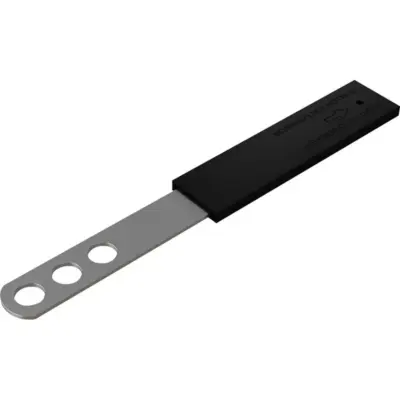
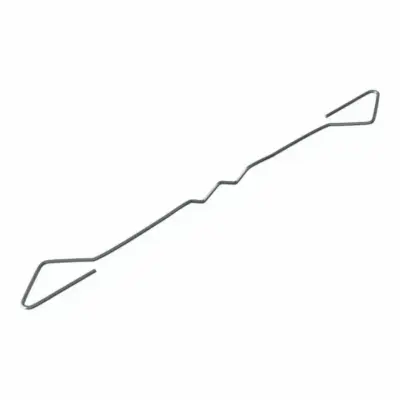
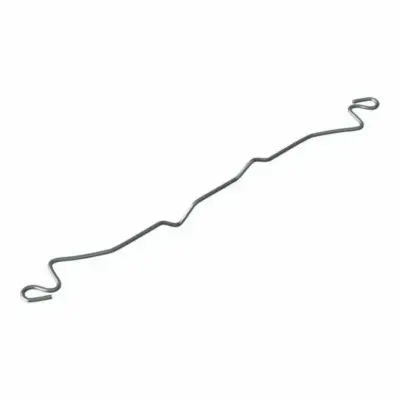
Stainless steel debonding slip ties for forming traditional vertical movement joints in brick and masonry walls. Supplied complete with debonding sleeve. Available in 175mm, 200mm, 225mm and 250mm lengths, sold individually or in boxes of 250.
Size
Price
QTY
175mm & Sleeve (QTY: Each)
£0.75£0.90
175mm & Sleeve (QTY: 250 65p each)
£162.50£195.00
200mm & Sleeve (QTY: Each)
£0.79£0.95
200mm & Sleeve (QTY: 250 69p each)
£172.50£207.00
225mm & Sleeve (QTY: Each)
£0.89£1.07
225mm & Sleeve (QTY: 250 79p each)
£197.50£237.00
250mm & Sleeve (QTY: Each)
£0.99£1.19
250mm & Sleeve (QTY: 250 89p each)
£222.50£267.00
Slip ties for movement joints are a straightforward but critical component in any brickwork or masonry build where vertical expansion joints are required. These stainless steel debonding ties allow a wall panel to expand and contract freely along the joint plane, while still providing lateral restraint against wind load. Without them, movement joints are either structurally compromised or rely entirely on the adjacent wall ties to do a job they were not designed for.
Each tie has a perforated end, which bonds into the mortar bed on one leaf, and a plain end, which sits inside the debonding sleeve on the other side of the joint. The sleeve prevents the plain end from bonding to the mortar, so the tie can slide as the masonry moves. That sliding action is what makes the whole system work. Leave a 10mm gap at the end of the tie within the sleeve to give the brickwork room to expand without the tie bottoming out.
Where Stainless Steel Slip Ties Are Used in Masonry Construction
These slip ties for movement joints are used wherever a vertical expansion joint is incorporated into a brick or blockwork panel. On longer runs of brickwork, movement joints are typically needed at intervals to prevent cracking caused by thermal expansion, moisture movement, or structural settlement. The ties are installed in the mortar bed joints at 300mm vertical centres along the joint, with conventional cavity wall ties placed either side of the joint to maintain lateral stability across the full panel.
The ties suit both new build and remedial work. In new build cavity walls, the slip ties are built in as the wall rises. In retrofit situations, where an expansion joint is cut back into an existing wall, the same ties can be installed as part of the remedial repair. The stainless steel construction means there is no concern about long-term corrosion in either exposed or cavity conditions.
Working Alongside a Movement Joint Build-Up
These ties are one part of a complete movement joint detail. Traditional vertical movement joints also typically involve a removable timber batten during construction to maintain a consistent joint width, followed by a compressible filler or fire-stopping material once the structure is complete. The slip ties handle the structural side of the joint; the filler handles weather exclusion and, where required, fire performance. Neither replaces the other, and both need to be detailed correctly for the joint to perform as intended.
Available in 175mm, 200mm, 225mm and 250mm lengths to suit different cavity and wall configurations. Each size is supplied with its debonding sleeve as standard. Buy individually to make up a specific quantity, or in boxes of 250 for larger projects where the price per tie drops considerably. At these lengths, the ties cover the most common cavity widths encountered on UK residential and commercial masonry construction.
Pro Tip: Install the debonding sleeve with the closed end facing the joint, leaving a 10mm gap between the tip of the tie and the end of the sleeve, so the tie has room to slide under thermal expansion without bottoming out and transferring load across the joint.
Stainless steel slip ties are used by bricklayers and masonry contractors wherever vertical movement joints are required in brick or blockwork construction. They are installed in the horizontal mortar bed joints at 300mm vertical centres along the joint line, typically on runs of brickwork exceeding around 6 metres, at returns, and at junctions with other structural elements. Conventional cavity wall ties are placed either side of the joint to provide continuous lateral restraint across the panel.
These ties suit new build cavity walls and remedial projects where an expansion joint is cut back into completed brickwork. They are used on housing, commercial buildings, and external masonry cladding panels where differential movement between panels must be accommodated without cracking the face work.
Best For
Vertical movement joints in brick and masonry walls
New build cavity wall construction
Remedial expansion joint installation
Residential and commercial masonry panels
Walls with long runs requiring movement accommodation
Available In
175mm with sleeve (each or box of 250)
200mm with sleeve (each or box of 250)
225mm with sleeve (each or box of 250)
250mm with sleeve (each or box of 250)
Key Properties
Stainless steel construction for long-term corrosion resistance
Perforated end bonds into mortar; plain end debonds via sleeve
Allows lateral wall movement while restraining wind load
Debonding sleeve supplied with every tie
Install at 300mm vertical centres along joint
10mm expansion gap required at sleeve end
Not suitable for: Not suitable as a replacement for standard cavity wall ties away from movement joints. These ties are specifically designed for use at vertical expansion joints and should not be used as general wall ties across a continuous cavity.
Slip ties for movement joints are installed in the mortar bed joints as the wall is built, positioned at 300mm vertical centres along the line of the vertical expansion joint. The perforated end is set into the mortar on one side of the joint and the plain end, inside its debonding sleeve, sits on the other side. Make sure the sleeve is orientated so there is a 10mm clearance gap at the tip of the tie to allow for brickwork expansion.
Place conventional cavity wall ties in the courses immediately either side of the movement joint to maintain lateral stability across the panel. In remedial situations where the joint is cut into existing brickwork, the slip ties can be installed using a suitable masonry anchor or resin fix into cut slots in the mortar joints. During construction, a removable timber batten is commonly used to maintain a consistent joint width until the structure is complete and the joint filler or fire-stop material can be installed.
Mark out the vertical movement joint position on the wall before laying begins
Install a removable timber batten at the joint position to maintain consistent joint width during construction
Fit the debonding sleeve onto the plain end of the tie, ensuring a 10mm gap remains at the tip of the tie
Bed the perforated end of the tie into the mortar on one side of the joint at 300mm vertical centres
Allow the sleeved plain end to sit freely on the opposite side of the joint without bonding into the mortar
Install conventional cavity wall ties in the courses immediately either side of the movement joint
Continue laying brickwork, repeating tie installation at every 300mm of height along the joint
Once construction is complete, remove the timber batten and fill the joint with a compressible filler or fire-stop material as specified
What is the difference between a slip tie and a standard cavity wall tie?
A standard cavity wall tie bonds into mortar on both sides of the cavity, creating a fixed connection between the two leaves. A slip tie has a debonding sleeve on one end that prevents bonding on that side of the joint, allowing the masonry to move horizontally along the joint plane. Slip ties are specifically for use at vertical movement joints, not as general cavity wall ties.
How far apart should slip ties be installed vertically along a movement joint?
Slip ties should be installed at 300mm vertical centres along the movement joint, set into the horizontal mortar bed joints as the wall is built. Conventional cavity wall ties should also be placed in the courses either side of the joint to maintain lateral restraint across the full wall panel.
Which length slip tie do I need for my cavity wall?
The correct length depends on your cavity width and the embedment required into each leaf. As a general guide, 175mm ties suit narrower cavities around 50mm, while 200mm, 225mm and 250mm ties suit wider cavities up to around 100mm. The tie needs sufficient embedment into mortar on the bonded side while the sleeved plain end spans the full cavity width.
These movement joint slip ties are manufactured from stainless steel, providing corrosion resistance suitable for use in cavity wall conditions and exposed masonry applications without the need for additional protective coating. Each tie body features a perforated section at one end to key into the mortar bed joint, and a plain section at the other end that sits within the supplied debonding sleeve. The sleeve material prevents adhesion to mortar, allowing free lateral movement across the joint plane while the tie continues to provide resistance to perpendicular wind loading.
Material
Stainless steel
Available lengths
175mm, 200mm, 225mm, 250mm
Supplied with
Debonding sleeve
Installation centres
300mm vertical centres along joint
Expansion gap at sleeve
10mm minimum
Pack options
Individual (each) or box of 250
Application
Vertical movement joints in brick and masonry walls


Reviews
There are no reviews yet.