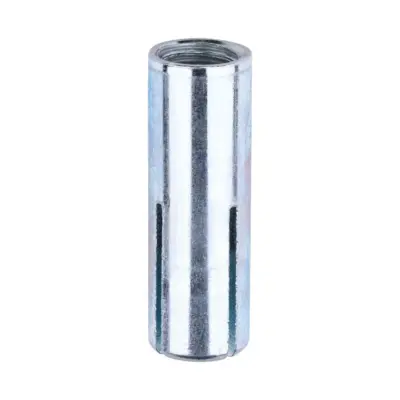
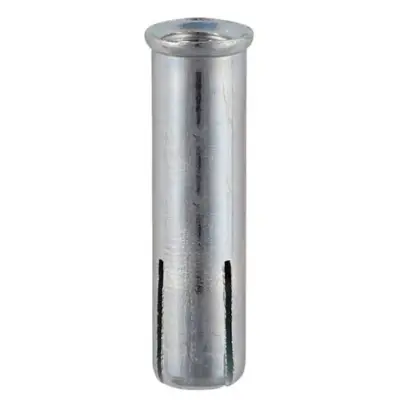
Steel internally threaded drop in anchors for heavy duty fixing into concrete. Hammer set, non-flammable, and BS 7671 compliant. Can be set flush or below the surface. Available in M6, M8, M10 and M12.
Available options and pricing for Drop In Anchors, with quantity selectors and a running total
Size
QTY
SKU
Price
QTY
Total
M6 x 25mm
100
DROP-M6
£4.69£5.63
—
M8 x 30mm
100
DROP-M8
£4.94£5.93
—
M10 x 40mm
50
DROP-M10
£4.48£5.38
—
M12 x 50mm
50
DROP-M12
£7.68£9.22
—
Drop in anchors are about as straightforward as fixings get, but get them wrong and you will know about it. These are internally threaded expansion anchors designed specifically for use in solid concrete. You set them with a hammer and setting tool, they expand against the bore of the hole, and they are not going anywhere. Available in M6, M8, M10 and M12 sizes, with box quantities to suit both one-off jobs and bulk trade use.
The construction is all steel throughout, which matters for two reasons. First, the load capacity is what you would expect from a fixing going into structural concrete. Second, and increasingly important on commercial and public sector work, these anchors are non-flammable. They conform to BS 7671 18th edition requirements, which specifies that wiring support systems must use materials that are unlikely to collapse prematurely in a fire. If you are installing cable management, trunking brackets or containment in a building where fire performance matters, these are the correct anchors to be using.
Where Drop In Anchors Get Used
One detail worth knowing: this standard version can be set below the surface of the concrete, not just flush. That means you can recess the anchor and use a longer bolt, or simply keep the fixing out of sight where the application calls for it. It is a small thing, but on finished surfaces or architectural concrete it saves a lot of awkwardness.
Once set, the anchor accepts a standard metric bolt or threaded rod. That flexibility is what makes drop in anchors so common across electrical, mechanical and structural trades. You are not locked into a proprietary fixing system. Any M6, M8, M10 or M12 bolt will do the job.
These are sold in boxes of 50 or 100, and in bulk quantities of 1000 for those who go through them at volume. Roofers, electricians, mechanical contractors and groundworkers all tend to keep a stock of these on the van.
Pro Tip: Always use the correct setting tool for the anchor size and drive it until the tool bottoms out against the anchor barrel, an under-set anchor will pull out under load and give no visible warning before it does.
Drop in anchors are used wherever a clean, load-bearing threaded socket is needed in concrete. Common applications include fixing cable tray brackets, conduit saddles, HVAC equipment, handrails, mezzanine structures, plant room pipework and suspended ceiling grids. They are a standard choice on any commercial or industrial site where fixings go into poured concrete slabs, walls or columns.
The fire performance compliance makes them particularly well suited to electrical and mechanical installation work in buildings where BS 7671 wiring regulations apply, including schools, hospitals, offices and public buildings.
Best For
Cable tray and trunking brackets
HVAC and mechanical plant fixings
Handrail and balustrade posts
Suspended ceiling grid supports
Pipework and conduit in concrete
Structural and mezzanine work
Compatible With
Standard metric bolts and threaded rod
M6 x 25mm anchor
M8 x 30mm anchor
M10 x 40mm anchor
M12 x 50mm anchor
Key Specifications
All steel construction
Non-flammable fixing
BS 7671 18th edition compliant
Hammer set with setting tool
Can be set below surface level
Internally threaded expansion anchor
Not suitable for: Not suitable for use in hollow block, aerated concrete, brick or any soft or crumbling substrate. Drop in anchors require solid, dense concrete to expand and hold correctly.
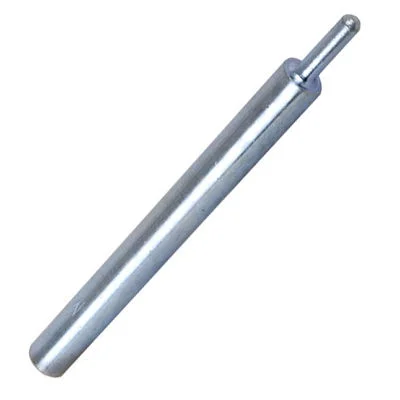
Drill a hole to the correct diameter and depth for the anchor size using a carbide-tipped masonry bit. The hole must be clean and free of dust before insertion, so blow it out with an air line or use a hole cleaning brush. Drop the anchor into the hole, flush or below surface as required, then use the correct size setting tool and a hammer to drive the expander plug down until the tool stops. Do not guess this step.
Once set, thread your bolt or rod directly into the anchor. Check the torque rating for the anchor size if the application is structural or safety-critical.
Select the correct drill bit diameter for the anchor size being used
Drill to the full required depth in solid concrete using a hammer drill
Clean the hole thoroughly with an air line or cleaning brush to remove all dust
Drop the anchor into the hole, positioning it flush or below the surface as needed
Insert the correct setting tool into the anchor barrel
Strike the setting tool firmly with a hammer until it bottoms out against the anchor
Thread your bolt or rod into the anchor and tighten to the appropriate torque
What is the difference between a drop in anchor and a through bolt anchor?
A drop in anchor sits entirely within a blind hole and accepts a bolt from above, leaving a clean threaded socket in the concrete. A through bolt anchor passes through the fixture and expands as it is tightened. Drop in anchors are better where you need a pre-set socket before the fixture goes on, or where access to the back of the fixing is not possible.
Do I need a special tool to set these anchors?
Yes. A setting tool specific to the anchor size is required. It drives the internal expander plug down into the anchor body until the anchor is fully expanded. Without it you cannot guarantee the anchor is properly set, and an under-set drop in anchor can pull out under load with no visible warning beforehand.
Are these anchors suitable for overhead fixing in concrete ceilings?
Yes, drop in anchors are widely used for overhead applications including suspended ceilings, cable tray hangers and pipework supports. Because they are fully expanded within the concrete before any load is applied, they are well suited to this type of work. Always verify the load rating for the anchor size against your application requirements.
These drop in anchors are manufactured from steel throughout, providing the strength and non-combustible properties required for fire-rated installations. They conform to the support and fixing requirements of BS 7671 18th edition, which governs wiring installations in the UK and specifies that support materials must resist premature collapse in fire conditions. The expansion mechanism is driven mechanically using a setting tool, locking the anchor into the concrete bore without adhesive or chemical cure time.
Material
All steel
Anchor Type
Internally threaded hammer set expansion anchor
Available Sizes
M6 x 25mm, M8 x 30mm, M10 x 40mm, M12 x 50mm
Setting Method
Hammer and setting tool
Fire Performance
Non-flammable
Standard
BS 7671 18th Edition compliant
Substrate
Solid concrete
Thread Type
Internal metric thread
Box Quantities
50, 100, 1000
Weight
N/A
Size
m10 x 40, M10 x 40mm, m12 x 50, M12 x 50mm, m6 x 25, M6 x 25mm, m8 x 30, M8 x 30mm
Box Quantity
100, 1000, 50
Product Type
Drop In Anchors
Reviews
There are no reviews yet.
Be the first to review “Drop In Anchors”Cancel Reply


Reviews
There are no reviews yet.