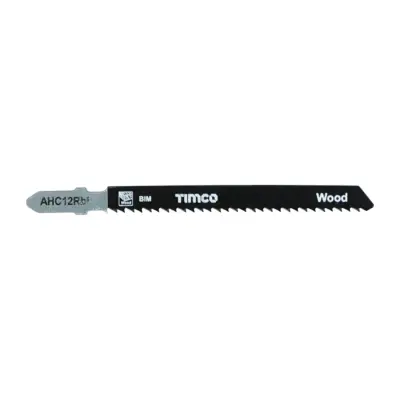
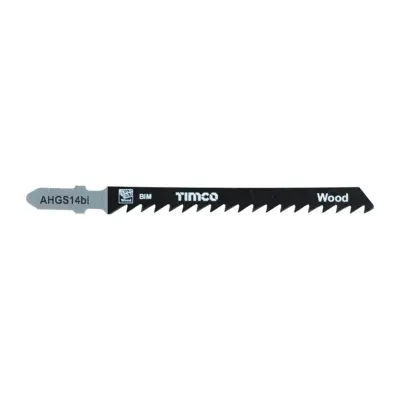
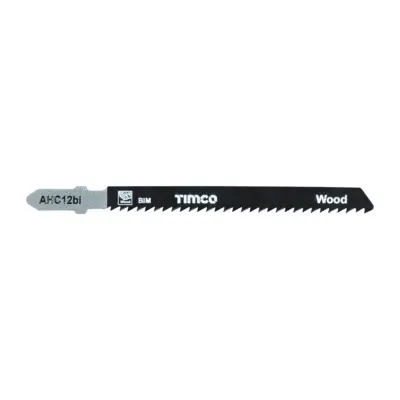
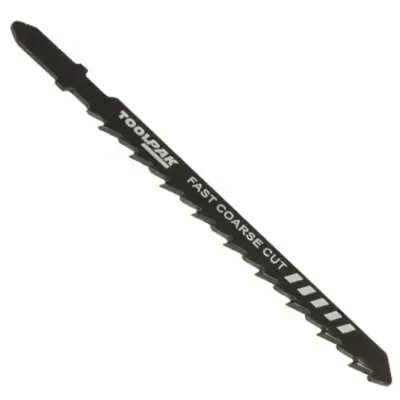
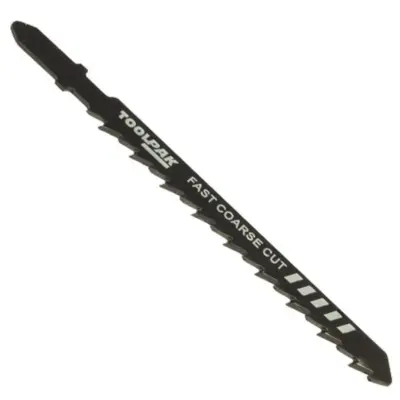
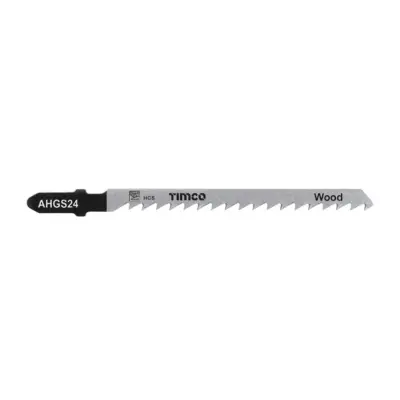
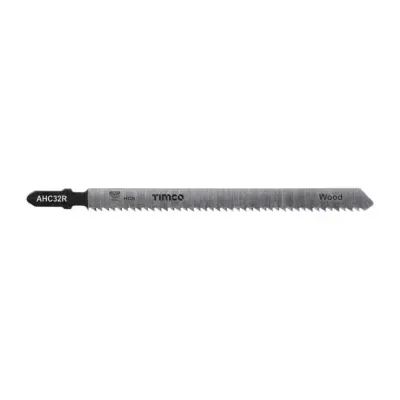
T101BRF bi-metal wood jigsaw blades with a down-cutting action for clean, splinter-free edges on laminated board. HCS body with HSS cutting edge for strength, flexibility and a longer working life than standard blades.
The T101BRF bi-metal wood jigsaw blades are a reliable choice for anyone cutting laminated board, chipboard, or timber where a clean bottom face matters. The down-cutting tooth configuration pulls the cut downward, keeping the show face intact and reducing the splintering you get with standard upward-cutting blades. Anyone who has ruined a sheet of melamine by using the wrong blade will know exactly why this matters.
Bi-metal construction is what separates these from cheap HCS-only blades. The body is high carbon steel, which gives the blade the flexibility to handle curves and tight radii without snapping. The cutting edge is high speed steel, the harder material used for the teeth, which holds its sharpness considerably longer under load. That combination of flex and edge retention is what makes bi-metal the sensible choice for regular cutting work rather than a one-job blade you bin after an hour.
Where T101BRF Bi-Metal Jigsaw Blades Perform Best
These blades are particularly well suited to kitchen fitting, shopfitting, and any joinery work involving veneered or laminated sheet material. They also handle solid timber and general-purpose wood cutting cleanly. The 100mm blade length suits most standard jigsaws and gives enough depth capacity for sheet goods and typical timber thicknesses encountered on site.
Shatter Resistance and Temperature Stability
Bi-metal blades handle heat better than single-material alternatives. At high cutting speeds, or when working through denser sections, the blade stays stable rather than becoming brittle. Shatter resistance is a practical safety point as much as a performance one. A snapped blade is a hazard, and these are built to flex before they fail.
Extended service life is the real cost argument here. Buying cheaper blades and replacing them constantly is a false economy, and on a busy job where you are cutting a lot of sheet material, the T101BRF bi-metal wood jigsaw blades will outlast standard HCS blades by a meaningful margin. Sold in packs of five, so you have spares on hand without having to make a special trip to the merchant.
Pro Tip: When cutting laminated board, apply a strip of masking tape along the cut line before marking up. The down-cutting action of the T101BRF does most of the work, but tape gives the surface fibres extra support and virtually eliminates edge chipping on even the glossiest finishes.
T101BRF bi-metal jigsaw blades are used wherever a clean cut on the underside of the material is the priority. Kitchen fitters reach for them when cutting worktops and cabinet panels. Shopfitters use them on melamine-faced chipboard and veneered ply. Joiners and carpenters use them for general timber cutting, skirting, architrave, and sheet goods. The down-cutting tooth pattern makes them the go-to choice any time splintering on the face side of a cut would cause a problem.
Not suitable for: Not suitable for cutting metal, ceramics, or abrasive materials. These are wood-specific blades and will wear rapidly if used on sheet steel, tile, or similar hard materials.
Fit the blade into the jigsaw with the tool unplugged or the battery removed. T-shank blades click straight into the chuck without tools on most modern jigsaws. Check the blade is fully seated before powering up.
For laminated or veneered sheet, mark your cut line on the underside of the board if possible, since the down-cutting action keeps the bottom face clean. Let the jigsaw reach full speed before entering the material, and keep the baseplate flat against the workpiece throughout the cut. Forcing the blade will slow the cut and shorten blade life. Let the teeth do the work at a steady, consistent feed rate.
Disconnect power or remove the battery before changing blades
Insert the T-shank blade into the jigsaw chuck until it clicks securely into place
Mark your cut line on the underside of laminated material to keep the show face clean
Apply masking tape along the cut line on the top face for extra chip resistance if needed
Bring the jigsaw to full speed before the blade contacts the material
Feed at a steady rate, keeping the baseplate flat against the workpiece throughout
Allow the blade to cool briefly between long cuts to maintain edge life
What does down-cutting mean and why does it matter for laminated board?
A standard jigsaw blade cuts on the upstroke, which can tear and splinter the top face of laminated or veneered material. A down-cutting blade like the T101BRF cuts on the downstroke instead, pressing the surface fibres down rather than lifting them, so the visible face of the board stays clean. For kitchen panels, cabinet carcasses, or anything with a decorative finish, it makes a noticeable difference.
Will these blades fit my jigsaw?
The T101BRF uses a T-shank fitting, which is the most common standard across modern jigsaws from Bosch, Makita, DeWalt, Milwaukee, and most other major brands. If your jigsaw accepts T-shank blades, these will fit. Older machines using a U-shank fitting are not compatible.
How long do bi-metal blades last compared to standard HCS blades?
It depends on the material and cutting volume, but bi-metal blades typically outlast standard HCS blades by a significant margin, particularly in harder or denser timber and sheet materials. The HSS cutting edge holds its sharpness longer under load, so you get more cuts per blade before the teeth start to drag or wander.
The T101BRF is a 100mm T-shank down-cutting jigsaw blade constructed from two materials bonded together. The blade body is high carbon steel, providing the flex needed to resist snapping during curved or tight cuts. The tooth edge is high speed steel, a harder alloy that maintains its cutting geometry at elevated temperatures and through extended use. This bi-metal construction gives better shatter resistance and longer service life than single-material alternatives.
SKU
T101BRF
Blade Length
100mm
Shank Type
T-shank
Construction
Bi-metal (HCS body, HSS cutting edge)
Cut Direction
Down-cutting
Application
Wood, laminated board, veneered sheet
Pack Quantity
5
Box Quantity
5
Size
100mm
Reviews
There are no reviews yet.
Be the first to review “Jigsaw Blades – Wood Cutting – Bi-Metal Blades – T101BRF”Cancel Reply

Reviews
There are no reviews yet.