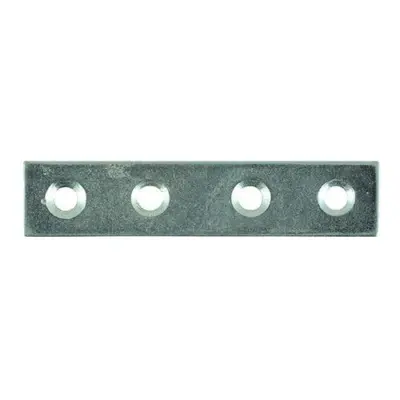
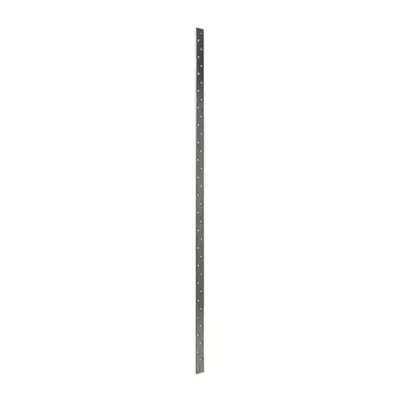
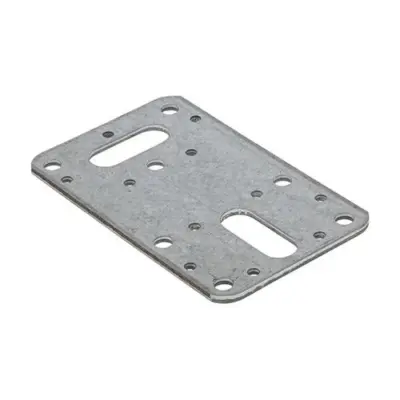
Zinc plated steel mending plates with countersunk holes for a flush finish. Sold in boxes of 50, available in 75x16mm and 100x16mm sizes. Ideal for strengthening, repairing and joining timber on site or in the workshop.
Size
Price
QTY
100 x 16mm
£5.44£6.53
75 x 16mm
£3.38£4.06
Mending plates are one of those items that end up in every joiner’s toolbox, every site cabin, and every van drawer within about a week of starting out. Simple, flat, zinc plated steel plates with countersunk holes at each end, they are used to strengthen a butt joint, bridge a crack, or hold two pieces of timber together where a more complex fixing just isn’t needed. These come in boxes of 50 and are available in 75x16mm and 100x16mm sizes, giving you a sensible choice depending on the scale of the repair or joint in question.
The zinc plating is what keeps these usable once they leave the box. Without it, bare steel plates in a site environment would be showing rust before the job was done. The coating gives reasonable protection against moisture and light weather exposure, making them suitable not just for internal joinery but for outbuildings, garden structures and covered outdoor timber work too. They’re not a marine-grade product, but for typical trade applications they hold up well.
Where Mending Plates Get Used on Site
The countersunk holes are a practical detail worth mentioning. A flat-headed screw pulled flush into a countersink means the plate sits tight against the timber surface with nothing proud. That matters when you’re fixing skirting, lining frames, shelving carcasses, or anything else that will have another surface placed against it. A raised screw head in that situation is the kind of thing that causes a ten-minute problem at the worst possible moment.
Strengthening Joints and Frame Repairs
Mending plates work especially well on lightweight frame repairs, split rails, broken door frames, and anywhere a butt joint needs a bit of backup. They’re also used in furniture repair and rough carpentry where you want a quick, reliable fix without cutting in a new section of timber. Fix from both sides where access allows and the joint will take more load than the surrounding material in most cases.
At this price per box, it makes sense to keep a supply of both sizes on the van. You’ll use them more often than you expect.
Pro Tip: When fitting mending plates across a cracked or split piece of timber, fix the plate to the sounder section first and pull the split closed before driving the second set of screws, rather than fixing both ends loose and hoping it closes up.
Mending plates are used across general carpentry, joinery, site work and DIY repair. Common applications include reinforcing butt joints in stud partitions, repairing split door frames, strengthening shelf supports and bracing lightweight timber frames. They're also widely used in furniture repair, outbuilding construction and garden timber work where a quick, flush-fitting metal strap is all that's needed to bring a joint back up to strength.
Best For
Timber joint strengthening
Door and window frame repairs
Butt joint reinforcement
Stud partition work
Shelf and carcass assembly
Garden and outbuilding timber repairs
Compatible With
Softwood and hardwood timber
Flat-head countersunk screws
MDF and sheet timber products
Rough and planed sawn timber
Key Features
Zinc plated steel construction
Countersunk holes for flush finish
Available in 75x16mm and 100x16mm
Box of 50
Suitable for indoor and covered outdoor use
Not suitable for: Not suitable for structural load-bearing connections where engineered joist hangers or rated brackets are required. Not recommended for fully exposed outdoor use in wet environments over the long term, as zinc plating has limits in sustained damp conditions.
Mark the centre of the joint you're reinforcing, position the mending plate centrally across it and use a bradawl or pilot drill to start the screw holes. The countersunk holes are sized for standard flat-head woodscrews. Choose a screw length that gives good timber engagement without breaking through the back face, typically 25mm to 38mm for most framing timber thicknesses.
Fix one side of the plate first, then draw the joint tight before fixing the second side. On split or cracked timber, a clamp across the repair while you drive the screws makes a noticeable difference to the finished result.
Select the appropriate plate size for the joint or repair, 75x16mm for lighter work, 100x16mm for larger sections
Position the plate centrally across the joint or split, ensuring equal coverage on both sides
Use a bradawl or pilot drill to start each screw hole, following the countersunk holes in the plate
Fix the plate to the sounder or more stable side of the joint first
Draw the joint closed using a clamp if repairing a split before driving the remaining screws
Drive flat-head countersunk screws flush into the plate so no head protrudes above the surface
What size screws should I use with these mending plates?
Flat-head countersunk woodscrews are the correct type. For most framing and joinery timber, a No.8 screw at 25mm to 38mm length works well. Choose the length based on your timber thickness, aiming for good bite without breaking through the back face.
Can these mending plates be used outdoors?
Yes, for covered or semi-exposed outdoor applications such as outbuildings, garden shelters and fencing repairs the zinc plating provides adequate protection. For fully exposed, permanently wet conditions they are less suitable over the long term and a stainless or hot-dip galvanised plate would be a better choice.
What is the difference between the 75mm and 100mm sizes?
The 100x16mm plates span a wider area and are better suited to larger section timber, longer splits or joints that need more coverage. The 75x16mm size works well on lighter framing, furniture repairs and smaller timber sections where the longer plate would be unnecessary or awkward to fit.
These mending plates are manufactured from steel with a zinc electroplate finish, providing corrosion resistance for general trade and construction use. Countersunk holes are pre-punched to accept standard flat-head woodscrews. The flat profile ensures the plate can be drawn tight to the timber surface without rocking, giving consistent clamping pressure across the joint when screws are driven fully home.
Material
Zinc plated steel
Finish
Zinc electroplate
Available Sizes
75 x 16mm, 100 x 16mm
Hole Type
Countersunk
Box Quantity
50
Suitable For
Internal and covered outdoor use
Size
100 x 16mm, 75 x 16mm
Box Quantity
50
Reviews
There are no reviews yet.
Be the first to review “Zinc Plated Mending Plates 100x16mm & 75x16mm Box of 50”Cancel Reply

Reviews
There are no reviews yet.