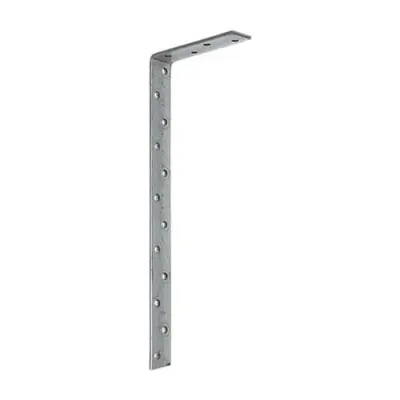
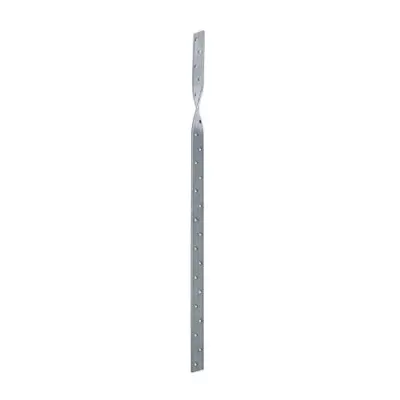
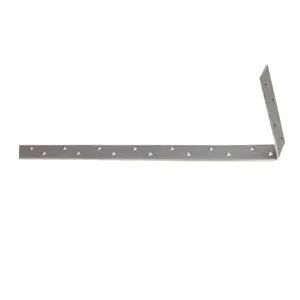
Heavy duty galvanised bent restraint straps for tying roof trusses, rafters and joists to masonry. Manufactured to BS 5268 Part 3. Available in seven sizes with 100mm or 150mm bends. Sold in packs of 10.
Size
Price
QTY
400 x 30 x 100mm Bend
£13.90£16.68
600 x 30 x 100mm Bend
£18.90£22.68
800 x 30 x 100mm Bend
£26.90£32.28
1000 x 30 x 100mm bend
£29.90£35.88
1200 x 30 x 100mm Bend
£32.90£39.48
1200 x 30 x 150mm Bend
£37.90£45.48
1600 x 30 x 150mm Bend
£49.90£59.88
1600 x 30 x 150mm Bend
£49.90£59.88
These heavy duty bent restraint straps are the standard fix for horizontal restraint in timber roof and floor construction. If you’re tying roof trusses, rafters or joists back to a masonry wall, these are the straps you reach for. Manufactured from 30mm x 4mm galvanised steel, they meet the requirements of BS 5268 Part 3 and the relevant Building Regulations for horizontal restraint — so they’re not just the practical choice, they’re the compliant one.
The bend is pre-formed at either 100mm or 150mm depending on the size you order, which saves you the temptation of trying to bend them on site with a boot and some optimism. The galvanised finish gives solid corrosion resistance, which matters in roof spaces where condensation and damp air are a fact of life rather than a concern.
Where Roof Truss Straps and Restraint Applications Fit In
Seven sizes are available, from 400mm up to 1600mm in length, all at 30mm wide. The longer straps are typically used where the truss or joist sits further from the wall, or where building standards call for greater fixing depth. The 100mm bend suits most standard wall plate details, while the 150mm bend gives more engagement on blockwork or where the strap needs to wrap further into the structure.
Sold in packs of 10, these are priced to make sense whether you’re ordering for a single roof or stocking up across multiple plots. At this gauge and specification, they sit firmly in heavy duty territory — noticeably thicker than the lighter straps sometimes found on merchant shelves, and worth the small difference in price when you’re signing off on a build.
Pro Tip: Always fix restraint straps with the correct number and gauge of nails or screws into each timber — under-fixing a strap is one of the most common reasons horizontal restraint fails a building control inspection.
Bent restraint straps are used throughout domestic and commercial construction wherever timber elements need to be tied back to masonry. Roof trusses and cut rafters are the most common application, but they also see regular use on floor joists, particularly at gable ends and party walls. Bricklayers, carpenters and general builders all fit these as part of standard practice on new builds and structural alterations.
Best For
Roof truss restraint to masonry
Rafter and joist tying
Gable end restraint
Party wall floor joist fixing
New build and structural alteration work
Available In
400 x 30 x 100mm Bend
600 x 30 x 100mm Bend
800 x 30 x 100mm Bend
1000 x 30 x 100mm Bend
1200 x 30 x 100mm Bend
1200 x 30 x 150mm Bend
1600 x 30 x 150mm Bend
Key Specifications
30mm x 4mm section
Galvanised steel construction
100mm or 150mm pre-formed bend
Manufactured to BS 5268 Part 3
Meets Building Regulations for horizontal restraint
Sold in packs of 10
Not suitable for: Not suitable for use as vertical restraint or as a structural connector in tension applications beyond their rated horizontal restraint function. Not designed for use with steel frame construction.
Select the strap length based on the distance the timber sits from the wall and the fixing depth required by your structural drawings or building control specification. The pre-formed bend locates against the side of the joist or truss, with the flat section running across the top surface for nailing. Fix through the pre-punched holes using round wire nails or suitable screws into the timber, and bed the bend securely into the masonry using a frame cramp or similar before pointing up.
Check your building regulations or engineer's specification for the required strap spacing and fixing schedule — typically every 2 metres at ceiling level for trussed rafter roofs, but this varies by project.
Select the correct strap length and bend size for your application, referring to structural drawings where applicable
Position the strap so the bend hooks over or against the timber, with the flat run extending onto the wall plate or masonry
Mark and check the strap sits flush against the timber before fixing
Nail or screw through the pre-punched holes into the timber using the specified fixings
Bed the bent end into the mortar joint or fix to masonry as required, ensuring good contact with the blockwork or brickwork
Check spacing meets the Building Regulations requirement for your roof or floor type before signing off
What is the difference between the 100mm and 150mm bend?
The bend measurement is the length of the turned-down section that engages with the masonry or wall structure. A 150mm bend gives more bearing and is typically specified where the strap needs to sit deeper into a wall or where blockwork requires greater engagement. For most standard wall plate details, 100mm is sufficient, but always check your structural or building control specification.
Are these straps suitable for timber frame construction?
These bent restraint straps are designed for masonry construction, where the strap ties a timber element back to a brick or block wall. They are not the right product for timber frame or steel frame systems, which use different connector types.
How many straps do I need per roof?
Building Regulations typically require restraint straps at maximum 2 metre centres along the eaves and gable positions for trussed rafter roofs, but the exact requirement depends on your roof span, truss spacing and local building control guidance. A structural engineer or your approved inspector will confirm the specification for your project.
Manufactured from 4mm thick, 30mm wide galvanised mild steel strip, these straps are pre-bent at 100mm or 150mm to suit standard masonry restraint details. The galvanising process provides corrosion protection suitable for internal roof and floor void environments. Specification complies with BS 5268 Part 3 and satisfies Building Regulations requirements for horizontal restraint in timber roof and floor construction.
Material
Galvanised mild steel
Section
30mm x 4mm
Bend Options
100mm or 150mm
Available Lengths
400mm, 600mm, 800mm, 1000mm, 1200mm, 1600mm
Standard
BS 5268 Part 3
Pack Quantity
10
Finish
Galvanised
Size
1000 x 30 x 100mm bend, 1200 x 30 x 100mm Bend, 1200 x 30 x 150mm Bend, 1600 x 30 x 150mm Bend, 400 x 30 x 100mm Bend, 600 x 30 x 100mm Bend, 800 x 30 x 100mm Bend
Reviews
There are no reviews yet.
Be the first to review “BENT Restraint Straps (Heavy Duty) Galvanised – 10 Pack”Cancel Reply

Reviews
There are no reviews yet.